iasiscare
Why Am I Constipated All the Time—and When Should I See a Doctor?
Written by Georgios Karanastasis, MD
Board-Certified Internal Medicine Physician & Founder of IASIS Boutique Health
What Persistent Constipation Can Mean and When It Needs Medical Evaluation
You realize you have not had a bowel movement in several days.
Or maybe you are going regularly, but every bowel movement feels difficult.
You strain.
Your stool is hard.
You feel like you never fully empty.
Then the problem improves for a while and comes back again.
Constipation is common, and occasional episodes may happen because of changes in diet, travel, hydration, activity, or routine.
But constipation that is persistent, worsening, suddenly different from your normal pattern, or associated with other symptoms deserves more attention.
The important question is not simply how many times you have a bowel movement. It is whether your bowel pattern has changed and whether passing stool has become difficult or incomplete.
What Does Constipation Actually Mean?
Constipation can mean different things to different people.
It may include:
- having fewer bowel movements than usual
- hard or dry stool
- straining
- feeling that stool is difficult to pass
- feeling that the bowel did not completely empty
You do not need to have a bowel movement every day to be healthy.
Your normal pattern matters.
How Often Should You Have a Bowel Movement?
There is a wide range of normal.
Some adults have several bowel movements per day.
Others may go every other day or less often.
The more important questions are:
- Is this normal for you?
- Has the pattern changed?
- Are stools becoming hard?
- Are you straining?
- Do you feel incomplete afterward?
When Should You See a Doctor for Constipation?
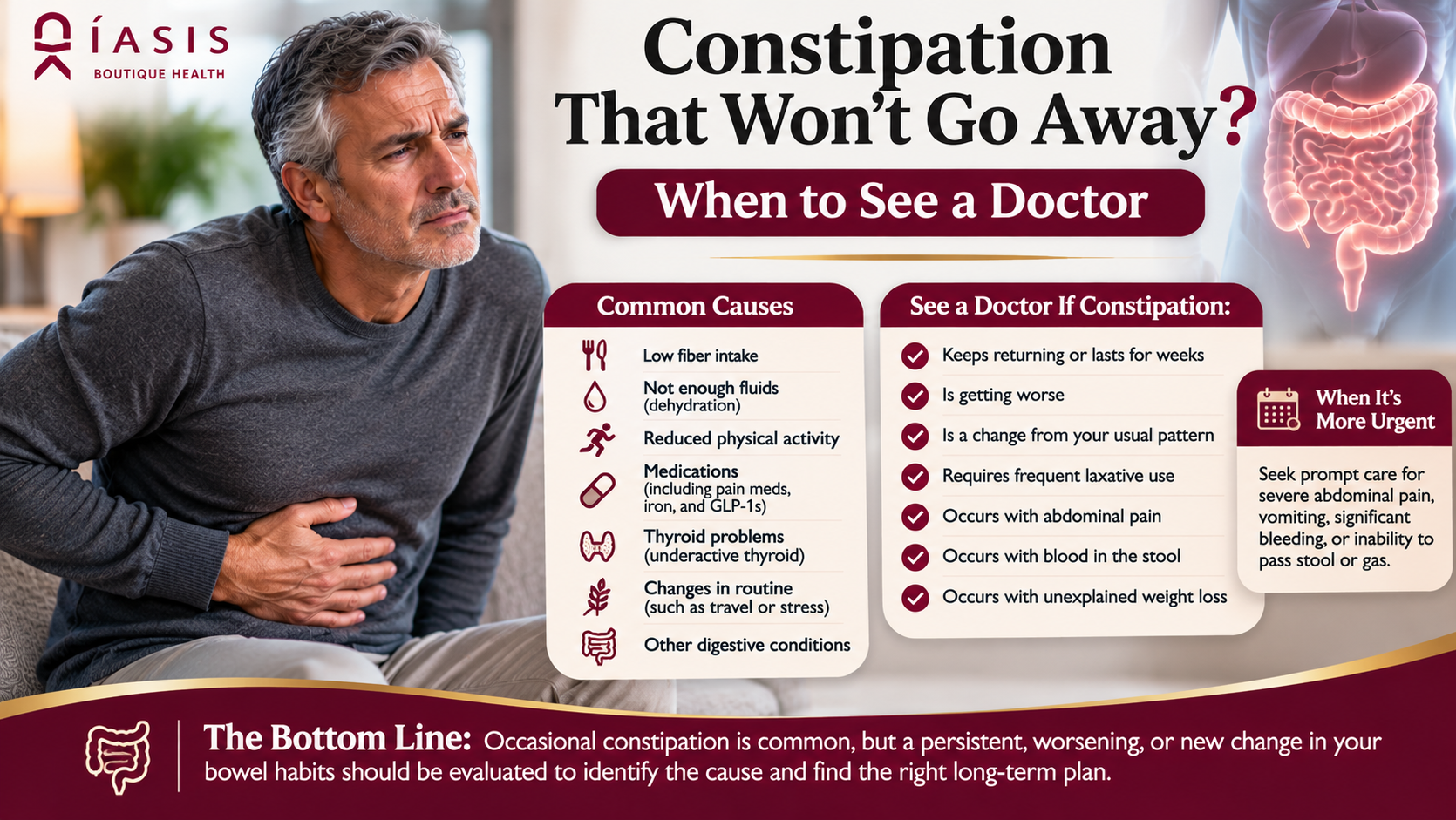
Schedule an evaluation if constipation:
- keeps returning
- lasts for several weeks
- is getting worse
- is a significant change from your usual bowel pattern
- requires frequent laxative use
- occurs with abdominal pain
- occurs with unexplained weight loss
- occurs with blood in the stool
You do not need to wait until constipation becomes severe before discussing a persistent change with your physician.
When Is Constipation More Urgent?
Seek prompt medical care when constipation occurs with symptoms such as:
- severe or rapidly worsening abdominal pain
- persistent vomiting
- significant abdominal swelling
- inability to pass stool or gas
- significant rectal bleeding
- black or tarry stool
- severe weakness or fainting
Severe symptoms may require urgent or emergency evaluation.
What Causes Constipation?
There are many possible contributors.
Your physician may consider:
- low fiber intake
- inadequate fluids
- reduced physical activity
- medications
- changes in routine
- thyroid problems
- blood sugar problems
- pelvic-floor dysfunction
- other gastrointestinal conditions
Sometimes several factors are present at the same time.
Can Not Eating Enough Fiber Cause Constipation?
Yes.
Fiber adds bulk and helps stool move through the digestive tract.
Low-fiber eating patterns may contribute to constipation in some people.
Sources of fiber can include:
- vegetables
- fruit
- whole grains
- beans
- lentils
But simply adding large amounts of fiber overnight is not appropriate for every patient.
Some people become more bloated or uncomfortable if fiber is increased too quickly.
Can Dehydration Cause Constipation?
It can contribute.
When fluid intake is low, stool may become harder and more difficult to pass.
This may be more noticeable during:
- hot weather
- travel
- illness
- heavy exercise
But persistent constipation should not automatically be blamed on dehydration if the problem continues despite normal fluid intake.
Can Sitting Too Much Cause Constipation?
Reduced physical activity can contribute in some people.
This may occur after:
- surgery
- illness
- injury
- long periods of sedentary work
Regular movement may help bowel function, but activity is only one part of the picture.
Why Does Travel Make Me Constipated?
Travel can change several things at once:
- your diet
- fluid intake
- activity
- sleep
- bathroom routine
Some people also ignore the urge to have a bowel movement when they are away from home.
That can contribute to temporary constipation.
Can Stress Cause Constipation?
Stress can affect digestive function and bowel habits.
It may also change:
- diet
- sleep
- activity
- daily routine
But persistent constipation should not automatically be attributed to stress without considering other causes.
Can Anxiety Affect Bowel Movements?
Yes.
The digestive tract and nervous system are closely connected.
Anxiety may alter bowel habits in different ways.
Some people develop diarrhea.
Others may become more constipated.
The pattern should still be evaluated if it is new or persistent.
Can Medications Cause Constipation?
Yes.
Medication is an important possible contributor.
Some medications may slow bowel movement or make stool more difficult to pass.
Examples can include certain medications used for:
- pain
- blood pressure
- mood or anxiety
- allergies
- other chronic conditions
If constipation began after a new medication or dose change, tell your physician.
Do not stop an important prescription on your own.
Can Pain Medication Cause Constipation?
Yes.
Opioid pain medications are especially well known for slowing bowel function.
If you are prescribed an opioid after surgery or for another medical reason, ask what bowel regimen is appropriate.
Constipation from these medications can become significant if ignored.
Can Iron Supplements Cause Constipation?
Yes.
Iron supplements can make stool harder or more difficult to pass in some patients.
If you were prescribed iron and develop significant constipation, discuss the problem rather than stopping treatment on your own.
Your physician may need to review:
- the reason you are taking iron
- the dose
- the formulation
- other treatment options
What If You Take Several Medications?
A complete medication review becomes especially useful.
Bring an updated list of:
- prescriptions
- over-the-counter medications
- vitamins
- supplements
Sometimes several medications may contribute to the same symptom.
If your medication list has become complicated, read what to ask your doctor when you are taking several medications.
Can GLP-1 Medications Cause Constipation?
They can in some patients.
Medications used for diabetes or weight management that affect digestion may cause gastrointestinal side effects, including constipation.
If constipation becomes persistent or severe after starting a GLP-1 medication, tell the clinician managing the treatment.
Do not assume you simply need to tolerate significant symptoms.
IASIS discusses these medications separately in our guide to GLP-1 weight-loss medications and medical follow-up.
Can Thyroid Problems Cause Constipation?
Yes.
An underactive thyroid can slow several body processes and may contribute to constipation.
Other symptoms can include:
- fatigue
- feeling unusually cold
- weight gain
- dry skin
- other metabolic changes
Your physician can determine whether thyroid testing is appropriate based on the full symptom pattern.
Can Blood Sugar Problems Affect Bowel Habits?
They can in some situations.
Long-term diabetes may affect nerves involved in digestion.
Blood sugar problems may also occur alongside:
- medication changes
- diet changes
- dehydration
If you were recently told your A1C is elevated, read what to do after a prediabetes diagnosis.
Can Constipation Cause Bloating?
Yes.
Constipation may cause:
- abdominal fullness
- bloating
- pressure
- mild cramping
If bloating is severe, worsening, or associated with vomiting, inability to pass gas, or significant pain, seek more prompt evaluation.
Can Constipation Cause Abdominal Pain?
It can.
Stool buildup may create cramping or discomfort.
But abdominal pain should not automatically be blamed on constipation, particularly when pain is:
- severe
- localized to one area
- rapidly worsening
- associated with fever or vomiting
What If I Feel Like I Never Completely Empty?
This is an important symptom to mention.
You may have a bowel movement but still feel as though stool remains.
Your physician may ask about:
- straining
- stool consistency
- how long you spend on the toilet
- whether you need to return shortly afterward
This pattern may suggest a different problem than simply having infrequent bowel movements.
What If I Have to Strain Every Time?
Frequent straining is not something you should simply accept as normal.
Persistent straining may contribute to:
- hemorrhoids
- rectal discomfort
- other complications
Discuss the pattern with your physician, particularly if it is new or worsening.
What Does Hard, Pellet-Like Stool Mean?
Small, hard stools often suggest that stool has remained in the colon long enough for more water to be absorbed.
This can occur with constipation.
Your physician may ask about:
- fluid intake
- fiber intake
- activity
- medications
What If My Stool Suddenly Becomes Very Thin?
An occasional change in stool shape is not necessarily concerning.
But a persistent new change in stool caliber, especially when accompanied by bleeding, weight loss, abdominal symptoms, or another major bowel change, should be discussed with your physician.
What If There Is Blood in the Stool?
Tell your physician.
Blood may come from relatively common conditions such as hemorrhoids, but rectal bleeding should not automatically be assumed to be hemorrhoids.
Seek more urgent care for:
- significant bleeding
- black or tarry stool
- dizziness or fainting
- severe weakness
Can Hemorrhoids Cause Constipation?
Hemorrhoids do not usually cause the underlying constipation.
Instead, constipation and repeated straining may contribute to hemorrhoids.
Pain from hemorrhoids can then make some people avoid bowel movements, potentially worsening the cycle.
What If Constipation Starts Suddenly?
A new change deserves more attention than a pattern you have experienced intermittently for years.
Your physician may ask:
- when it began
- whether medications changed
- whether your diet changed
- whether abdominal pain is present
- whether there is bleeding
- whether your weight changed
What If I Am Losing Weight Too?
Unintentional weight loss plus a persistent bowel change deserves evaluation.
It does not automatically mean something serious is wrong.
But your physician should understand both symptoms together.
If weight is also falling without effort, read when unexplained weight loss should be evaluated.
What If I Am Always Tired Too?
Mention both symptoms.
Fatigue and constipation can occur together for many reasons, including:
- sleep problems
- thyroid conditions
- medications
- dietary issues
- other medical conditions
If fatigue is persistent, read when ongoing fatigue should be evaluated.
Does Constipation Become More Common With Age?
It can.
Older adults may be more likely to experience constipation because of:
- medications
- lower activity levels
- changes in diet
- medical conditions
- difficulty maintaining adequate fluid intake
But persistent constipation should not simply be dismissed as normal aging.
Why Is Constipation Important in Older Adults?
Severe constipation may become more difficult to manage in older adults and may contribute to:
- pain
- reduced appetite
- confusion in vulnerable patients
- difficulty passing stool
If you are helping manage an older family member's care, medication review and bowel changes both deserve attention.
Read how to find a primary care doctor for an aging parent.
Can You Become Impacted From Constipation?
Yes.
Fecal impaction occurs when a hard mass of stool becomes difficult or impossible to pass normally.
Symptoms may include:
- significant rectal pressure
- abdominal discomfort
- difficulty passing stool
- sometimes small amounts of liquid stool around the impaction
Significant symptoms should be medically evaluated.
Why Can Diarrhea Sometimes Happen With Severe Constipation?
Liquid stool may sometimes pass around retained hard stool.
This can make severe constipation look like diarrhea.
If an older adult or someone with longstanding constipation suddenly develops unusual leakage or watery stool, mention the full bowel history to the physician.
Is It Safe to Use a Laxative?
Many over-the-counter constipation treatments can be used safely in appropriate situations.
But the correct choice depends on the patient and the type of constipation.
Options may include:
- fiber supplements
- osmotic laxatives
- stool softeners
- stimulant laxatives
These products do not all work the same way.
Is It Bad to Use Laxatives Frequently?
If you repeatedly need laxatives to have a bowel movement, discuss that pattern with your physician.
The issue may not be that every laxative is inherently unsafe.
The question is why regular treatment is necessary and whether there is a better long-term plan.
Should You Take Fiber Every Day?
Fiber can help many people with constipation.
But the appropriate amount varies.
Increasing fiber without enough fluid may worsen symptoms in some patients.
And certain types of constipation may not respond well to simply adding more fiber.
Does Coffee Help Constipation?
Coffee may stimulate bowel activity in some people.
But relying on large amounts of caffeine is not a substitute for evaluating persistent constipation.
High caffeine intake may also affect sleep, heart rate, or other symptoms.
Can Probiotics Fix Constipation?
Some patients try probiotics for bowel symptoms.
The evidence and response vary depending on the product and individual.
They should not replace evaluation of persistent or concerning bowel changes.
Should You Change Your Diet Before Seeing a Doctor?
You can make reasonable changes such as:
- increasing plant-based foods gradually
- maintaining appropriate hydration
- staying physically active
But do not delay medical evaluation if you have:
- bleeding
- significant weight loss
- severe pain
- vomiting
- a major new bowel change
Should You Keep a Bowel Diary?
This can help when constipation is recurring.
Track:
- how often you have a bowel movement
- stool consistency
- whether you strain
- abdominal symptoms
- medications or laxatives used
- dietary changes
A simple record can make patterns easier to identify.
What Will Your Doctor Ask About Constipation?
Your physician may ask:
- How often do you have bowel movements?
- What is normal for you?
- When did the pattern change?
- Do you strain?
- Do you feel completely empty?
- Is there blood?
- Do you have abdominal pain?
- Have you lost weight?
- What medications do you take?
The answers help determine whether testing is necessary.
What Tests Might Be Needed?
Not every patient with constipation needs extensive testing.
Depending on the situation, your physician may consider:
- blood counts
- thyroid testing
- blood sugar
- electrolytes
- other targeted testing
Age, symptoms, screening history, and the physical examination may also influence whether further gastrointestinal evaluation is appropriate.
Do You Need a Colonoscopy Because of Constipation?
Not automatically.
A colonoscopy may be considered based on factors such as:
- age and screening status
- blood in the stool
- unintentional weight loss
- persistent major bowel changes
- family history
- other concerning findings
Constipation alone does not mean every patient needs a colonoscopy.
Does Family History Matter?
Yes.
Tell your physician about significant family history of:
- colon cancer
- other major gastrointestinal conditions
- certain inherited disorders
The relative's age at diagnosis may also matter.
If you are unsure what information to collect, read what family medical history you should tell your doctor.
Do You Need a Gastroenterologist?
Not always.
Primary care or internal medicine can often begin the evaluation.
A gastroenterologist may be appropriate when:
- symptoms remain persistent despite treatment
- significant bleeding is present
- specialized testing is needed
- a gastrointestinal disorder is suspected
- the initial evaluation does not explain the symptoms
If you are unsure where to begin, read Primary Care Doctor vs. Specialist.
What If My Tests Are Normal but I Am Still Constipated?
Follow up.
Normal initial laboratory testing can be reassuring without necessarily explaining the problem.
Your physician may need to reconsider:
- diet
- medications
- bowel habits
- pelvic-floor function
- whether gastroenterology evaluation is appropriate
If repeated testing has become confusing, read what to do when medical testing continues without a clear plan.
What Questions Should You Ask Your Doctor?
Consider asking:
- Could one of my medications be causing this?
- Should my thyroid be checked?
- Could a supplement be contributing?
- How much fiber should I actually eat?
- Which laxative is appropriate for me?
- Do I need blood tests?
- Am I due for colon cancer screening?
- Do I need a gastroenterologist?
Why Continuity Matters When Bowel Habits Change
An established physician may already know:
- your usual bowel pattern
- medications
- thyroid history
- blood sugar history
- weight trends
- screening history
A new change can be easier to interpret when there is a known baseline.
This longitudinal perspective is part of adult primary care in Orland Park.
How IASIS Boutique Health Approaches Persistent Constipation
At IASIS Boutique Health in Orland Park, Georgios Karanastasis, MD, provides membership-based adult primary care and internal medicine through a limited-panel practice.
When a patient reports persistent constipation, the goal is not simply to recommend more fiber without understanding the pattern.
Depending on the individual situation, that may include reviewing:
- the patient's normal bowel pattern
- when symptoms changed
- diet and fluid intake
- medications and supplements
- weight changes
- abdominal symptoms
- thyroid or metabolic history
- screening history
Testing, treatment, or gastroenterology referral can then be considered based on what the history and examination suggest.
For adults who want more time to evaluate persistent or difficult-to-explain symptoms in context, learn more about internal medicine in Orland Park and concierge primary care at IASIS Boutique Health.
Frequently Asked Questions
How long is too long to be constipated?
Occasional short episodes are common. See your physician when constipation persists for several weeks, repeatedly returns, significantly changes from your normal bowel pattern, or occurs with other concerning symptoms.
Is it normal not to poop every day?
Yes. Normal bowel frequency varies. Some healthy adults do not have a bowel movement every day. Stool consistency, straining, discomfort, and changes from your normal pattern matter more than one specific number.
Can medications cause constipation?
Yes. Several prescription and over-the-counter medications can contribute to constipation. Tell your physician if symptoms began after a medication was started or adjusted.
Can thyroid problems cause constipation?
Yes. An underactive thyroid can slow body processes and may contribute to constipation, often along with other symptoms such as fatigue, cold intolerance, or weight changes.
Can GLP-1 medications cause constipation?
Yes. Gastrointestinal side effects can occur with GLP-1 medications. Persistent or severe constipation should be discussed with the clinician managing the medication.
When is constipation an emergency?
Seek urgent care for severe abdominal pain, persistent vomiting, significant abdominal swelling, inability to pass stool or gas, significant bleeding, fainting, or other severe or rapidly worsening symptoms.
Do I need a colonoscopy because I am constipated?
Not automatically. The decision depends on your age, screening history, family history, bleeding, weight loss, bowel-pattern changes, and other findings.
Should I see a gastroenterologist for constipation?
Not necessarily as the first step. Primary care or internal medicine can usually begin the evaluation and determine whether gastroenterology referral is needed.
What if my blood tests are normal but I am still constipated?
Follow up. Persistent constipation can still involve diet, medications, bowel mechanics, pelvic-floor dysfunction, or gastrointestinal causes even when initial laboratory results are normal.
The Bottom Line
Constipation is common.
But persistent constipation should not simply be accepted without understanding why it is happening.
Ask:
Has my normal bowel pattern changed?
Am I straining?
Is the stool consistently hard?
Do I feel completely empty afterward?
Did a medication recently change?
Is there bleeding?
Am I losing weight?
Do I have significant abdominal symptoms?
The goal is not simply to take more laxatives.
It is to determine whether the problem is related to diet, medications, routine, metabolism, bowel function, or another medical condition and create a sustainable plan.
At IASIS Boutique Health, Dr. Georgios Karanastasis provides adult primary care in Orland Park through a limited-panel membership model centered on longer appointments, continuity, direct physician communication, medication review, preventive care, and thoughtful evaluation of ongoing health concerns.
About the Author
Georgios Karanastasis, MD is a board-certified internal medicine physician and founder of IASIS Boutique Health in Orland Park, Illinois. He earned his medical degree from the University of Athens in Greece and completed his internal medicine residency at John H. Stroger Jr. Hospital of Cook County.
Dr. Karanastasis provides adult primary care with a focus on preventive medicine, cardiovascular health, medication management, chronic disease management, and long-term physician-patient relationships.
Through IASIS Boutique Health, he provides membership-based care through a limited-panel practice designed to allow longer appointments, direct physician communication, continuity, and more time to understand each patient's broader health picture.
Medical Review: Georgios Karanastasis, MD
Last Reviewed: November 16, 2026
Medical Disclaimer
This article is intended for general educational purposes only and does not replace individualized medical advice, diagnosis, or treatment. Constipation has many possible causes, and the appropriate evaluation depends on bowel pattern, medications, diet, associated symptoms, medical history, examination, and individual risk factors. Seek urgent or emergency medical care for severe abdominal pain, persistent vomiting, inability to pass stool or gas, significant bleeding, fainting, or other severe or rapidly worsening symptoms.