iasiscare
Fasting Before Your Physical: What Patients Should Know
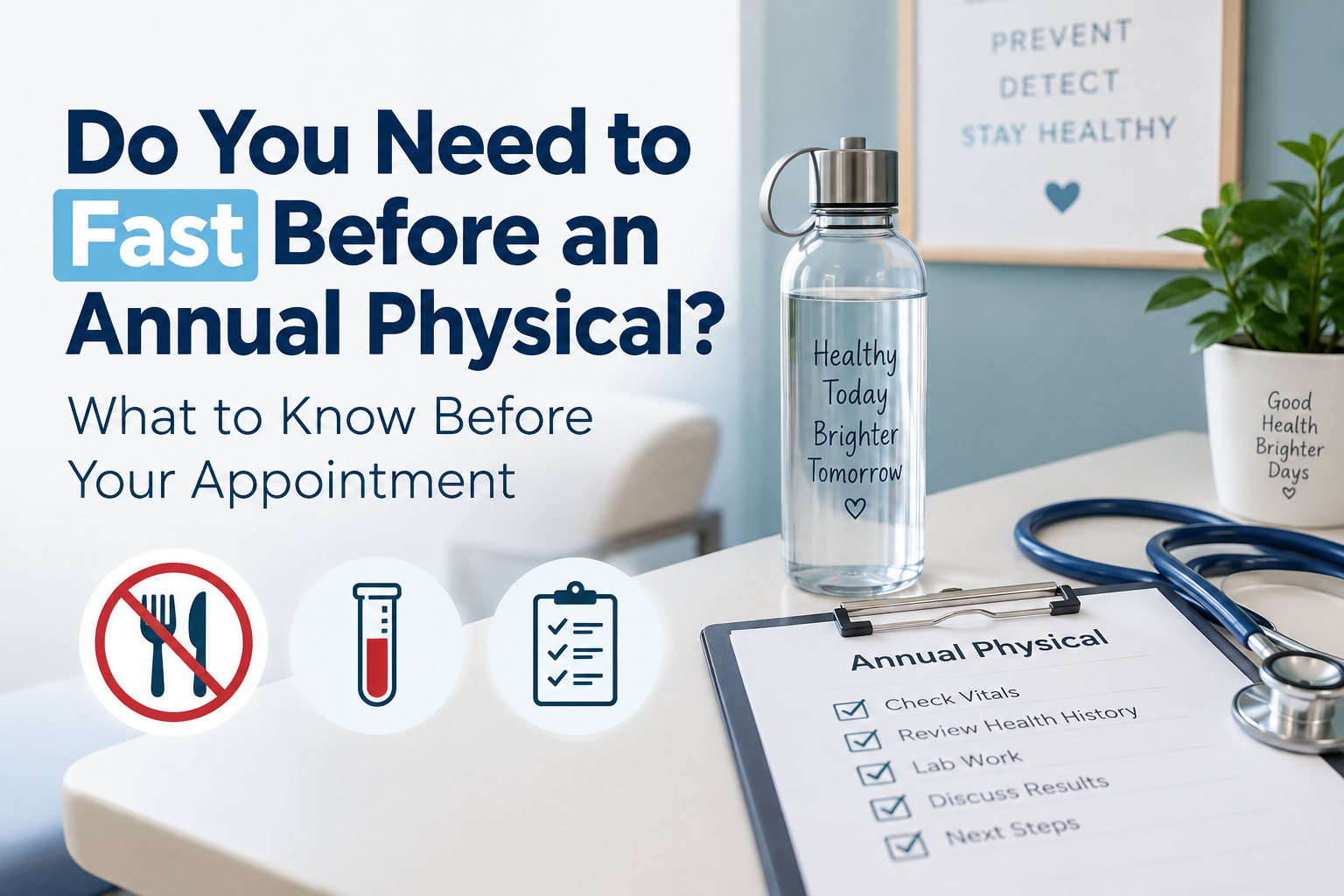
Do You Need to Fast Before an Annual Physical? What to Know Before Your Appointment
If you have an annual physical coming up, you may be wondering whether you need to skip breakfast before your appointment. The answer depends less on the physical itself and more on whether your physician has ordered specific blood tests that require fasting.
Quick Answer: Do You Need to Fast Before an Annual Physical?
Not necessarily.
The annual physical itself usually does not require fasting. However, your doctor may order blood tests as part of your visit, and certain tests may require you to avoid food and some drinks for several hours beforehand.
Whether you should fast depends on which laboratory tests your physician orders and your individual health needs.
That means you should not automatically skip breakfast before every physical. The safest approach is to follow the specific instructions provided by your doctor's office.
If you're preparing for a yearly checkup, start with our complete guide to what is included in an annual physical. If you are looking for comprehensive preventive care locally, you can also learn more about annual physical exams in Orland Park at IASIS Boutique Health.
Why Would You Need to Fast Before Bloodwork?
Food and beverages can temporarily change the amount of certain substances circulating in your bloodstream.
That can affect the results of some laboratory tests.
According to MedlinePlus, fasting for a blood test generally means avoiding food and drinks other than plain water for a specified period before testing.
Your physician may ask you to fast when a test needs to measure your body under fasting conditions rather than shortly after you have eaten.
The important distinction is this:
You are not fasting because you are having a physical. You are fasting because a particular laboratory test may require it.
Which Blood Tests May Require Fasting?
Different laboratory tests have different preparation requirements.
Some of the tests that may involve fasting include:
- Fasting blood glucose
- Certain cholesterol or lipid testing
- Some metabolic panels
- Certain liver or kidney-related tests
- Other specialized laboratory tests ordered by your physician
Not every patient needs the same bloodwork, and not every version of these tests requires fasting.
That is why following the instructions for your specific laboratory order is more important than following a general rule you found online.
Fasting Blood Glucose
A fasting blood glucose test measures your blood sugar after you have gone without food for a specified amount of time.
MedlinePlus explains that a fasting blood glucose test generally involves fasting for at least eight hours.
Your physician may use glucose testing when evaluating diabetes or prediabetes risk.
However, there are other ways to evaluate blood sugar that do not necessarily require fasting.
A1C Testing Usually Does Not Require Fasting
An A1C test is different from a fasting glucose test.
A1C estimates your average blood sugar level over roughly the previous two to three months rather than measuring your glucose at one specific moment.
The Centers for Disease Control and Prevention states that you do not need to fast for an A1C test.
This is a good example of why patients should not assume that every blood sugar test requires fasting.
Do You Have to Fast for a Cholesterol Test?
Not always.
Cholesterol testing is one of the biggest reasons people assume they automatically need to fast before annual bloodwork.
But recommendations and testing practices have changed.
The American Heart Association explains that a lipid panel may be performed as either a fasting or non-fasting test, depending on the patient's situation.
A lipid panel may measure:
- Total cholesterol
- LDL cholesterol
- HDL cholesterol
- Triglycerides
Your physician may prefer fasting testing in certain situations, while a non-fasting lipid panel may be appropriate in others.
Again, the right answer depends on why the test is being ordered and what your doctor is evaluating.
How Long Do You Usually Fast Before Bloodwork?
When fasting is required, the instructions often involve avoiding food for approximately 8 to 12 hours, although the exact amount of time depends on the test.
MedlinePlus recommends following the specific time period provided by your healthcare professional.
For many patients, this is why fasting blood tests are scheduled in the morning.
For example, if your physician asks you to fast overnight, you may be able to finish dinner the evening before, sleep through most of the fasting period, complete your bloodwork the next morning and then eat afterward.
Do not extend your fast simply because you think a longer fast will produce "better" results.
Follow the instructions you were given.
Can You Drink Water While Fasting for Bloodwork?
Usually, plain water is allowed when fasting for a blood test unless your physician gives you different instructions.
Staying reasonably hydrated may also make it easier to draw blood.
But water is not the same as other beverages.
Unless your physician tells you otherwise, avoid assuming that the following count as part of your fast:
- Coffee
- Coffee with cream or sugar
- Tea
- Juice
- Soda
- Energy drinks
- Sports drinks
- Alcohol
- Sweetened water
Even beverages that seem low in calories may affect certain testing conditions.
If you're unsure, ask the doctor's office before your appointment.
Can You Drink Black Coffee Before Fasting Bloodwork?
If you have specifically been told to fast, plain water is generally the safest choice.
Even black coffee can affect certain physiological measurements, and adding cream, milk or sugar clearly breaks a traditional fast.
If coffee is part of your normal morning routine, ask your physician whether it is permitted before your particular blood tests rather than assuming it is okay.
What About Gum, Smoking or Exercise?
Fasting instructions may involve more than avoiding breakfast.
MedlinePlus advises that when fasting for certain blood tests, patients may also be instructed to avoid:
- Chewing gum
- Smoking
- Exercise
These activities can potentially affect certain measurements.
The specific instructions depend on the tests being performed, so follow the directions provided by your healthcare professional.
Should You Take Your Medications Before Fasting Bloodwork?
Do not stop prescription medication on your own just because you are fasting.
Some medications should be taken as usual. Others may need special timing in relation to laboratory testing.
This is especially important if you take medication for conditions such as:
- Diabetes
- High blood pressure
- Thyroid disease
- Heart disease
- Kidney disease
- Other chronic medical conditions
The same applies to vitamins, supplements and over-the-counter medications.
Before your appointment, make sure your doctor knows what you take.
If you're preparing a list of things to discuss, our guide to questions to ask your primary care doctor can help you organize your visit.
What If You Accidentally Eat Before a Fasting Blood Test?
Tell your doctor's office or the person drawing your blood.
Do not try to hide it because you're worried the appointment will need to be changed.
Eating or drinking something other than what was permitted may affect certain test results.
Depending on the test, your healthcare professional may:
- Continue with tests that do not require fasting
- Interpret the results as non-fasting
- Reschedule a particular test
- Provide different instructions
It is better for your physician to know the circumstances surrounding a laboratory result than to interpret a result believing you had fasted when you had not.
Should You Fast Before Your Annual Physical "Just in Case"?
Usually, no.
You should not fast simply because you assume bloodwork might happen.
MedlinePlus specifically advises patients not to fast unless their healthcare provider tells them to do so.
Unnecessary fasting can also be uncomfortable and may be particularly inappropriate for some people depending on their medications, health conditions or other circumstances.
If you have an upcoming appointment and have not received instructions, contact your physician's office and ask:
"Will I be having bloodwork at my physical, and do any of the tests require fasting?"
That one question can eliminate most of the confusion.
How to Prepare the Night Before an Annual Physical
Preparing for an annual physical involves much more than deciding whether to eat breakfast.
Consider getting the following information together before your appointment:
- Current prescription medications
- Over-the-counter medications
- Vitamins and supplements
- Recent laboratory results
- Recent specialist reports
- Home blood pressure readings
- Home blood sugar readings when applicable
- Changes in your symptoms
- New family medical history
- Questions you want to ask
- Preventive screenings you may be due for
If your doctor instructed you to fast, confirm when the fasting period should begin and what you are permitted to drink.
A little preparation can help your annual visit focus on your actual health instead of spending the appointment trying to remember important details.
For adults entering their 40s and beyond, preventive priorities may also begin to change. Our guide to why preventive care matters after 40 explains which health risks and screening conversations may become more important over time.
What Bloodwork Might Be Discussed During an Annual Physical?
There is no single laboratory panel that every adult needs every year.
Testing should reflect factors such as:
- Age
- Medical history
- Family history
- Current medications
- Previous laboratory results
- Symptoms
- Chronic conditions
- Cardiovascular risk
- Diabetes risk
- Other individual health concerns
Depending on the patient, a physician may consider tests related to blood count, cholesterol, blood sugar, kidney function, liver function and other health markers.
For a deeper explanation of which tests may be considered based on age, medical history, symptoms and risk factors, read our guide to what blood tests adults may need each year.
The goal should not be to order every available test.
The goal is to use appropriate testing to better understand your health and decide what needs attention.
For a broader look at the examination, laboratory review, screenings, medications and preventive discussions that may occur during your yearly visit, see our annual physical checklist and guide.
Annual Physicals at IASIS Boutique Health
At IASIS Boutique Health in Orland Park, annual preventive care is designed to be more than a quick appointment and a set of laboratory numbers.
Dr. Georgios Karanastasis is a board-certified internal medicine physician who works with adults to review their medical history, medications, risk factors, laboratory results and preventive healthcare needs.
IASIS members receive annual comprehensive laboratory testing, with the specific testing selected according to individual medical needs.
Patients also have more time to discuss what their results actually mean and what should happen next.
How often you should see a physician depends on your age, health history, medications, symptoms and ongoing conditions. If you are unsure whether one yearly visit is enough, read our guide on how often adults should see a primary care doctor.
If you're looking for a more comprehensive yearly health evaluation, learn more about annual physical exams in Orland Park.
Frequently Asked Questions About Fasting Before an Annual Physical
Do all annual physicals require fasting?
No. An annual physical itself does not automatically require fasting. Fasting may be necessary when specific laboratory tests ordered as part of the visit require it.
How many hours should I fast before an annual physical?
If fasting bloodwork has been ordered, the fasting period is commonly around 8 to 12 hours, but you should follow the exact instructions provided by your healthcare professional.
Can I drink water while fasting?
Plain water is generally permitted for many fasting blood tests unless your doctor gives you different instructions.
Can I have coffee before my physical?
You may be able to have coffee if fasting is not required. If you were instructed to fast, ask your healthcare provider before drinking coffee. Plain water is generally the safest option.
Does an A1C test require fasting?
No. The CDC states that fasting is not required for an A1C test.
Do cholesterol tests require fasting?
Not always. The American Heart Association notes that lipid testing may be performed fasting or non-fasting depending on the circumstances.
Should I stop taking my medications before fasting bloodwork?
Do not stop medications unless your healthcare provider specifically instructs you to do so. Ask how your prescriptions, vitamins and supplements should be handled before testing.
What should I do if I accidentally eat before my blood test?
Tell your healthcare provider or laboratory staff. Some testing may still be completed, while certain tests may need to be interpreted differently or rescheduled.
Annual Physical Resources & Guides
If you are preparing for your yearly visit or want to understand what preventive care may involve, these related IASIS guides can help:
- What Is Included in an Annual Physical?
- What Blood Tests Should I Get Every Year?
- Annual Physical vs. Medicare Annual Wellness Visit
- Questions to Ask Your Primary Care Doctor
- How Often Should Adults See a Primary Care Doctor?
- Why Preventive Care Matters After 40
For local care, visit our Annual Physical Exam in Orland Park service page.
The Bottom Line
You do not automatically need to fast simply because you are having an annual physical.
Whether fasting is necessary depends primarily on the laboratory tests your physician plans to order.
Some tests, such as fasting blood glucose, may require an overnight fast. Others, including A1C testing, do not. Cholesterol testing may be fasting or non-fasting depending on your circumstances.
Rather than guessing, ask your doctor's office before your appointment.
And remember that laboratory preparation is only one part of a useful yearly visit. Your annual physical should also give you time to discuss your health history, medications, symptoms, preventive screenings, risk factors and what you should focus on during the year ahead.
If you're ready for a more personalized approach to preventive care, explore annual physical exams at IASIS Boutique Health in Orland Park.
This article is for general educational purposes and does not replace individualized medical advice. Always follow the preparation instructions provided by your physician or laboratory.
Related posts
iasiscare Medicare Wellness Visit vs. Annual Physical: What Patients Should Know iasiscare
Can I Call My Doctor to Ask a Question?
iasiscare
Can I Call My Doctor to Ask a Question?
 iasiscare
What Does a Primary Care Doctor Do? A Complete Guide for Adults
iasiscare
What Does a Primary Care Doctor Do? A Complete Guide for Adults
 iasiscare
Primary Care Doctor vs. Specialist: Who Should You See First?
iasiscare
Primary Care Doctor vs. Specialist: Who Should You See First?
 iasiscare
What to Expect at Your First Primary Care Appointment
iasiscare
What to Expect at Your First Primary Care Appointment