iasiscare
Preventive Care After 40 | 7 Health Checks That Matter

Why Preventive Care Matters After 40
Turning 40 does not mean something suddenly goes wrong with your health. Many people in their 40s feel active, busy, and generally healthy.
But after 40, preventive care becomes more important because small changes can start showing up before you feel symptoms. Blood pressure may rise quietly. Cholesterol may change. Blood sugar may move into a prediabetic range. Weight, stress, sleep, hormones, family history, and lifestyle can all begin to affect long-term health in more noticeable ways.
That is why preventive care after 40 should not be treated like a quick yearly formality. It should be a real conversation with a doctor who has time to review your health, explain your numbers, and help you make a plan.
At IASIS Boutique Health, Dr. Georgios Karanastasis provides personalized concierge primary care for adults who want more than a rushed annual visit. With longer appointments, annual comprehensive labs, direct physician access, and telehealth when appropriate, patients can take a more proactive approach to their health.
If you are due for a yearly preventive visit, learn more about annual physical exams in Orland Park at IASIS Boutique Health. You can also review our cornerstone guide to what is included in an annual physical.
Quick Answer: Why Does Preventive Care Matter More After 40?
Preventive care matters more after 40 because many common health risks become easier to identify during this stage of life, even before symptoms appear.
These may include:
- High blood pressure
- High cholesterol
- Prediabetes or type 2 diabetes
- Heart disease risk
- Weight-related health changes
- Thyroid concerns
- Sleep problems
- Stress-related health issues
- Cancer screening needs
- Medication changes
- Family-history-related risks
The goal is not to make patients anxious. The goal is to catch problems early, understand your personal risk, and make informed decisions before small issues become bigger ones.
The CDC describes preventive care as services like checkups, screenings, vaccines, and counseling that can help prevent disease or find problems earlier when they may be easier to treat.
Preventive Care Is Not Just “Getting Bloodwork”
Many patients think preventive care means getting basic labs once a year. Bloodwork is important, but it is only one part of the picture.
A good preventive care visit should look at your full health story.
That includes:
- Your current symptoms, even if they seem minor
- Your blood pressure trends
- Cholesterol and cardiovascular risk
- Blood sugar and diabetes risk
- Weight changes
- Sleep quality
- Stress level
- Exercise habits
- Nutrition patterns
- Family history
- Medication list
- Cancer screening status
- Vaccination status
- Mental health and energy levels
- Any changes since your last visit
Preventive care works best when your doctor has enough time to connect the dots. A lab number by itself does not always tell the full story. The real value is understanding what the number means for you.
For a deeper look at which laboratory tests may be appropriate at different ages and risk levels, read our guide to what blood tests adults may need each year.
1. Blood Pressure Becomes Even More Important After 40
High blood pressure is one of the most important things to monitor after 40 because it often has no obvious symptoms.
A person can feel completely normal and still have elevated blood pressure. Over time, uncontrolled blood pressure can increase the risk of heart disease, stroke, kidney disease, and other serious problems.
That is why blood pressure should not only be checked once and forgotten. It should be tracked over time.
A preventive visit should ask:
- Is your blood pressure consistently normal?
- Has it changed compared to last year?
- Is it higher at home, work, or the doctor’s office?
- Are stress, sleep, caffeine, weight, or medications affecting it?
- Do you need lifestyle changes, monitoring, or medication adjustment?
The USPSTF recommends screening adults for high blood pressure, and notes annual screening for adults age 40 or older or adults at increased risk.
At IASIS Boutique Health, blood pressure concerns can be reviewed as part of ongoing concierge primary care, not just during a rushed yearly appointment.
2. Cholesterol and Heart Risk Need a Real Conversation
Cholesterol is another major part of preventive care after 40, but it should not be reduced to one number.
Patients often hear that their cholesterol is “fine,” “borderline,” or “high,” but they are not always told what that means for their actual heart risk.
A better conversation includes:
- LDL cholesterol
- HDL cholesterol
- Triglycerides
- Blood pressure
- Blood sugar
- Weight and waist changes
- Smoking history
- Family history of heart disease
- Exercise habits
- Diet patterns
- Inflammation and other risk factors when appropriate
Heart health is not only about whether one lab number is high. It is about your overall risk profile.
This is where a strong doctor-patient relationship matters. When your physician knows your history, they can explain your numbers in context and help you decide what to monitor, what to change, and when medication may or may not be appropriate.
Patients who want more time for these conversations may also want to read What Does a Concierge Doctor Do?.
3. Blood Sugar Can Change Before You Feel Symptoms
Prediabetes and type 2 diabetes can develop gradually. Many patients do not feel symptoms in the early stages.
That is why preventive care after 40 should include a conversation about blood sugar, especially if you have risk factors such as:
- Family history of diabetes
- Weight gain
- High blood pressure
- High cholesterol
- Sedentary lifestyle
- History of gestational diabetes
- Increased abdominal weight
- Poor sleep
- High stress
Blood sugar issues are much easier to address early than after diabetes has progressed.
A preventive visit may include reviewing fasting glucose, A1C, lifestyle habits, nutrition, exercise, weight changes, and other metabolic risk factors.
This is also where follow-up matters. If your blood sugar is trending upward, your doctor should not simply say, “watch your diet” and move on. You should understand what changed, what your goal is, and when to recheck.
For patients already managing diabetes or prediabetes, concierge medicine for chronic conditions can provide more consistent monitoring and support.
4. Annual Physicals Should Become More Personalized
After 40, an annual physical should not feel like the same checklist for every patient.
Your visit should reflect your actual life, risks, symptoms, and goals.
For example, a 42-year-old with a family history of heart disease may need a different conversation than a 48-year-old with thyroid symptoms, high stress, and rising blood pressure. A 55-year-old with diabetes risk needs a different plan than someone whose main concern is fatigue, sleep, and weight changes.
A personalized annual physical may include:
- Review of current concerns
- Complete medication review
- Blood pressure check
- Comprehensive lab review
- EKG testing when appropriate
- Cardiovascular risk discussion
- Diabetes and metabolic screening
- Thyroid evaluation when appropriate
- Preventive screening review
- Vaccination review
- Lifestyle and stress discussion
- Follow-up plan
MedlinePlus explains that regular provider visits, even when you feel healthy, can help screen for medical issues, assess future risk, encourage healthy lifestyle choices, update vaccines, and build a relationship with your provider.
That last point matters. Preventive care is better when your doctor knows you before something goes wrong.
If laboratory testing is planned as part of your physical, preparation depends on the tests ordered. See our guide on whether you need to fast before an annual physical.
5. Cancer Screenings Become Part of the Conversation
After 40, cancer screening discussions become more important.
The right screenings depend on your age, sex, family history, symptoms, risk factors, and previous results. Not everyone needs the same schedule, but everyone should understand what they are due for and why.
Screening conversations may include:
- Colon cancer screening
- Breast cancer screening
- Cervical cancer screening
- Prostate health discussion
- Skin checks when appropriate
- Lung cancer screening for certain higher-risk patients
- Family-history-based screening needs
The goal is not to order every test for every person. The goal is to make sure nothing important is being missed.
This is one of the reasons rushed primary care can be frustrating. Preventive screening decisions take time. Patients need a doctor who can explain what is recommended, what is optional, what depends on risk, and what needs follow-up.
6. Medication Reviews Matter More Over Time
By the time many patients reach their 40s, 50s, or 60s, they may be taking more medications or supplements than they did before.
Some medications may still be necessary. Some may need adjustment. Some may interact with other prescriptions or over-the-counter products. Some symptoms may even be related to medication side effects.
A preventive care visit should include a real medication review.
That means discussing:
- What medications you currently take
- Why you take each one
- Whether the dose still makes sense
- Possible side effects
- Interactions with supplements
- Whether anything should be changed
- Whether a medication is still needed
- Whether labs should be monitored because of a medication
This is especially important for patients managing blood pressure, diabetes, cholesterol, thyroid disease, anxiety, sleep issues, pain, or multiple chronic conditions.
Patients who feel like their current care is too rushed may want to compare concierge doctor vs. primary care.
7. Prevention Helps You Make Better Long-Term Decisions
Preventive care is not just about avoiding disease. It is about making better decisions with better information.
After 40, many patients start asking bigger health questions:
- Am I doing enough to prevent heart disease?
- Why am I more tired than I used to be?
- Are my labs normal or just “not bad enough”?
- Should I be worried about my blood pressure?
- Is my cholesterol actually a problem?
- What screenings am I due for?
- How do I lower my long-term risk?
- Are my medications still right for me?
- What should I focus on first?
These questions deserve time.
A strong preventive care visit should leave you with a clearer understanding of your health, not just a copy of lab results and a vague message that says everything is “normal.”
Why Preventive Care Often Gets Missed in Traditional Primary Care
Most people are not avoiding preventive care because they do not care about their health. Many are avoiding it because the system makes it difficult.
Common barriers include:
- Appointments booked weeks or months out
- Short visits
- Limited time for questions
- Confusing lab results
- Portal messages instead of real conversations
- Difficulty reaching the doctor
- Lack of follow-up after abnormal results
- Feeling rushed or dismissed
- Seeing different providers each time
When primary care feels rushed, prevention becomes reactive. Patients may only get attention once something is already wrong.
This is why some patients consider concierge medicine. They want a doctor who has time to talk through prevention, not just respond to problems.
What Is Included in an IASIS Boutique Health Membership?
At IASIS Boutique Health, concierge medicine is designed to make preventive care easier to access and more personal. Members receive more time with Dr. Karanastasis, more direct communication, and a care model that supports both immediate concerns and long-term health planning.
Membership includes:
- Unlimited office visits for included primary care services
- Annual comprehensive labs to help monitor overall health
- Unlimited telehealth visits when virtual care is appropriate
- EKG testing for heart and cardiovascular screening when needed
- Point-of-care testing for certain in-office concerns
- Direct access to Dr. Karanastasis
- No copays for included services
- Same-day and next-day appointment availability for members
The individual membership is $209 per month or $2,500 annually. The family plan is $4,000 per year for two adults.
For patients who want more time, better follow-up, and a stronger relationship with their physician, this model can make preventive care feel more complete.
Preventive Care and Telehealth
Not every preventive care conversation requires an in-office visit.
Some follow-ups can be handled through telehealth when appropriate, including:
- Lab review
- Medication questions
- Blood pressure follow-up
- Blood sugar follow-up
- Lifestyle check-ins
- Care plan updates
- Chronic condition follow-up
- Questions after specialist visits
This can be helpful for patients across Orland Park, Chicago, Hinsdale, Burr Ridge, Western Springs, Clarendon Hills, Oak Brook, Naperville, and surrounding suburbs who want access to their doctor without every question requiring a full office visit.
Telehealth should not replace every exam or screening, but it can make preventive care easier to maintain between in-person visits.
Who Benefits Most from Preventive Care After 40?
Preventive care after 40 is important for almost everyone, but it may be especially valuable for patients who:
- Have a family history of heart disease, diabetes, stroke, or cancer
- Have high blood pressure
- Have high cholesterol
- Have prediabetes or diabetes
- Take multiple medications
- Feel more tired than usual
- Have gained weight or noticed body changes
- Have a stressful job or lifestyle
- Have not had a physical in years
- Do not understand their lab results
- Want to stay proactive instead of waiting for symptoms
This kind of care is not only for people who are already sick. It is for people who want to stay ahead of problems before they become harder to manage.
How to Prepare for a Preventive Care Visit After 40
To get more value from your visit, come prepared with more than “I’m here for a checkup.”
Before your appointment, write down:
- Any symptoms, even if they seem small
- Current medications and supplements
- Family history updates
- Recent urgent care or ER visits
- Blood pressure readings if you check at home
- Changes in sleep, stress, weight, or energy
- Questions about screenings
- Questions about lab results
- Health goals for the next year
This helps your doctor understand what is happening between visits, not just what shows up during the appointment.
To make the appointment more useful, you can also prepare a short list using our guide to questions to ask your primary care doctor.
How Often Should You Follow Up After 40?
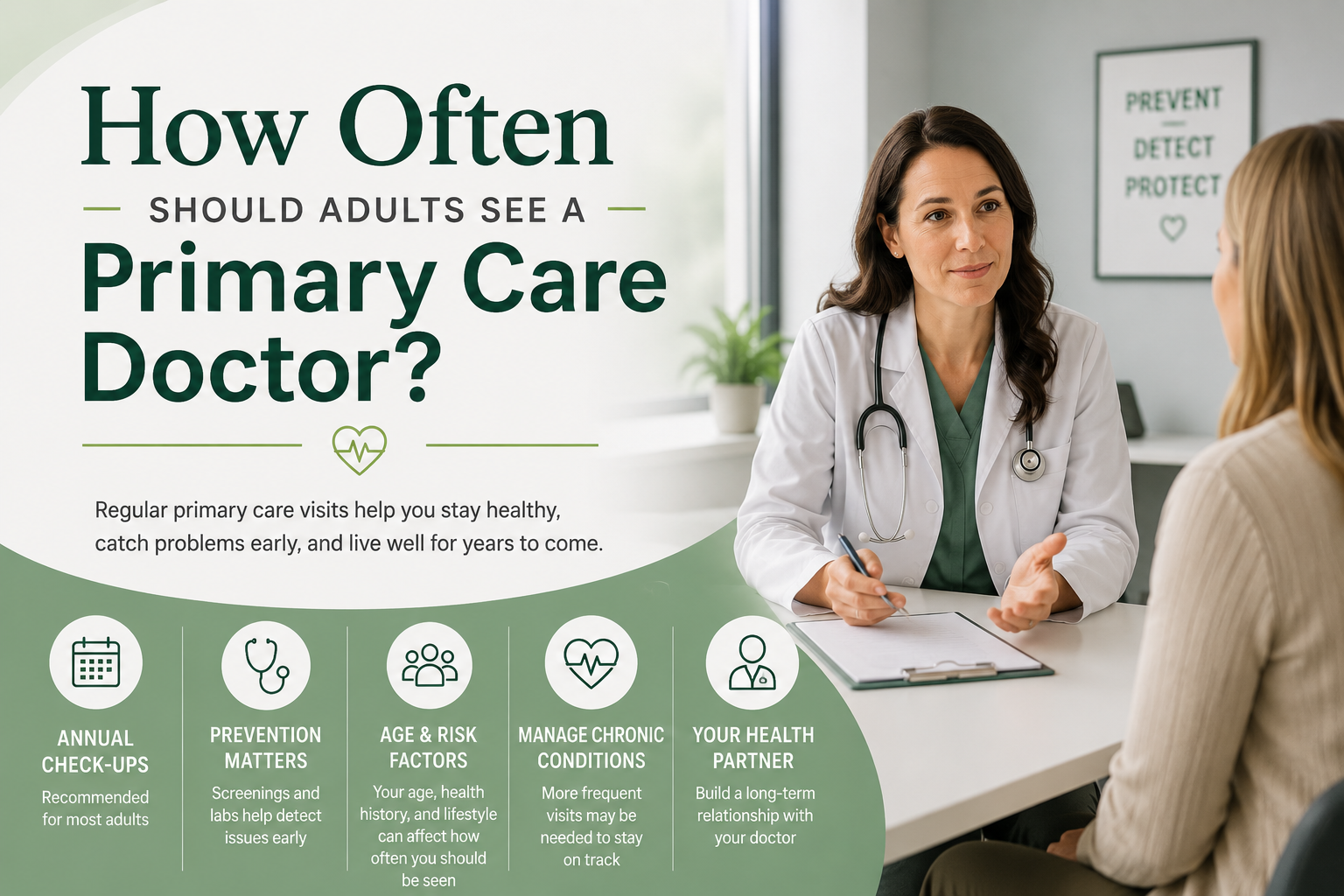
There is no single visit schedule that fits every adult after 40. Your follow-up frequency depends on your health history, medications, blood pressure, laboratory results, symptoms, chronic conditions, and individual risk factors.
Our guide on how often adults should see a primary care doctor explains when routine visits may be enough and when more frequent follow-up may be appropriate.
If you have Medicare, remember that a traditional annual physical and a Medicare Annual Wellness Visit are different services. Read our comparison of annual physicals vs. Medicare Annual Wellness Visits.
Annual Physical Resources & Guides
Continue exploring the IASIS Annual Physical and preventive-care cluster:
- What Is Included in an Annual Physical?
- Do You Need to Fast Before an Annual Physical?
- Annual Physical vs. Medicare Annual Wellness Visit
- What Blood Tests Should I Get Every Year?
- Questions to Ask Your Primary Care Doctor
- How Often Should Adults See a Primary Care Doctor?
For local care, visit our Annual Physical Exam in Orland Park service page.
Final Thoughts: After 40, Prevention Should Be Personal
Preventive care after 40 should not feel rushed, generic, or confusing.
This is the stage of life when many health risks become easier to identify early. Blood pressure, cholesterol, blood sugar, heart risk, medications, screenings, stress, sleep, and family history all deserve more attention.
The goal is not to create fear. The goal is to give you better information, better follow-up, and a stronger relationship with a doctor who has time to understand your health.
At IASIS Boutique Health, Dr. Georgios Karanastasis provides concierge medicine for patients who want more direct access, longer visits, preventive care, chronic condition management, and a more personal doctor-patient relationship.