iasiscare
How to Switch to a Concierge Doctor Without Losing Your Medical Records (2026 Guide)
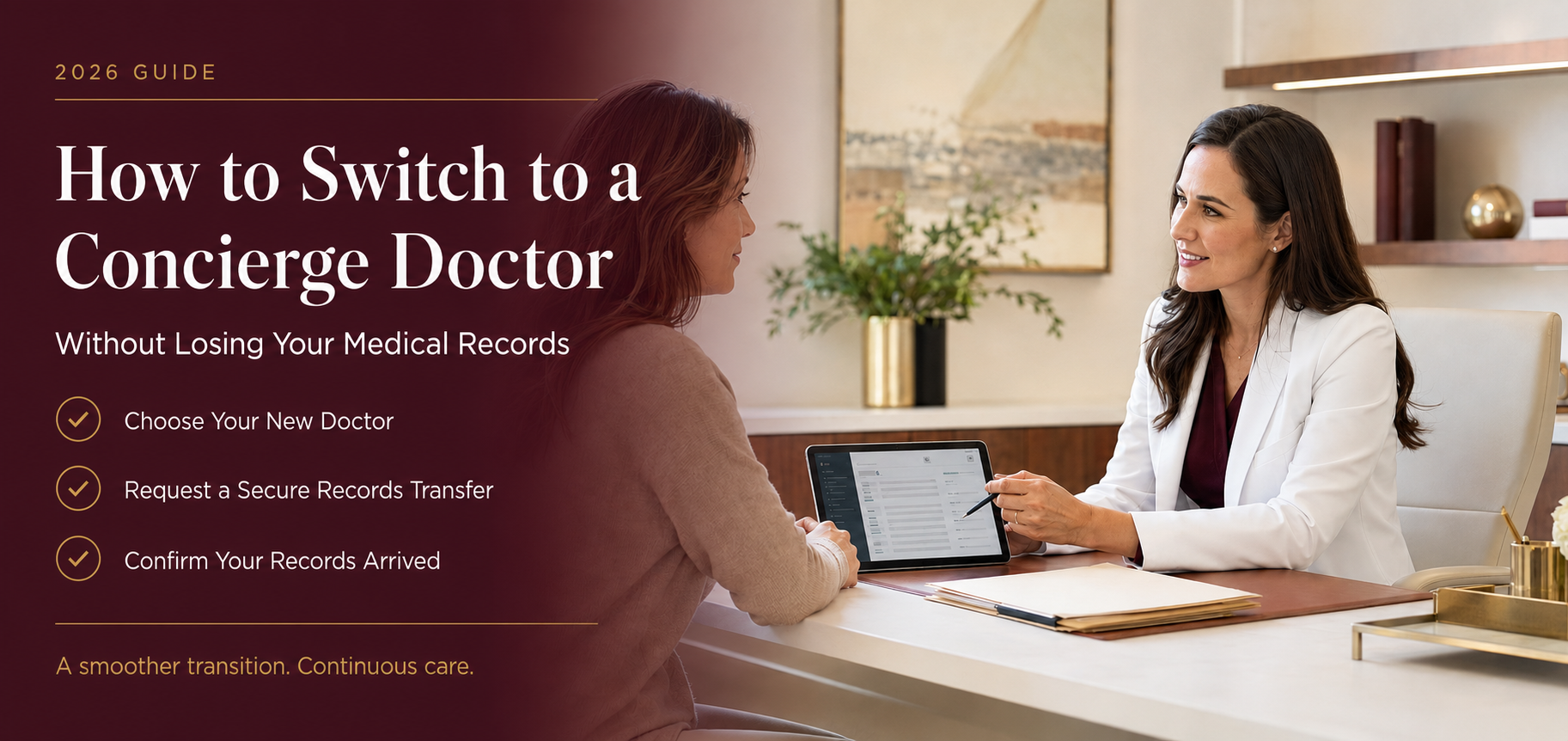
Switching to a Concierge Doctor? Here's How to Transfer Your Medical Records the Right Way
You've decided a concierge doctor makes sense for you. Longer visits, same-day access, a physician who actually knows your history — the value is clear. But then comes the question that stalls a lot of people right before they make the move:
"What happens to my medical records? Do I have to start from zero?"
The good news: switching to a concierge practice like IASIS Boutique Health does not mean losing your history. It means transferring it — and the process is more straightforward than most patients expect. Here's exactly what to do.
Step 1: Request Your Medical Records From Your Current Provider
Every patient has a legal right to their own medical records under HIPAA. You don't need your current doctor's permission to leave, and you don't need to justify the switch.
To request your records:
- Call or email your current provider's office and ask for a medical records release form (sometimes called an authorization to release records).
- Specify what you want included: visit notes, lab results, imaging reports, vaccination history, and current medication list at minimum.
- Ask how they deliver records — most offices will send electronically through a secure portal, fax them directly to your new doctor, or provide a printed copy for pickup.
Most practices are required to process this request within a reasonable timeframe (often 30 days or less, depending on state law), though many offices with electronic health records can turn it around much faster.
Step 2: Give Your New Concierge Doctor's Office the Details
Once you've decided to join IASIS Boutique Health, our team can help coordinate this transfer rather than leaving you to manage it alone. When you onboard, we'll typically ask for:
- The name and contact information of your previous primary care provider
- Any specialists whose records should also be requested (cardiologist, endocrinologist, etc.)
- A signed release authorizing us to request and receive your records directly
In many cases, our office can request records on your behalf, which removes a step from your plate entirely.
Step 3: Don't Forget Prescriptions and Pharmacy Continuity
Medical records aren't the only thing that needs to transfer smoothly. Make sure your new doctor has:
- A current list of all medications and dosages
- Your preferred pharmacy, so prescriptions can be sent there without a gap in refills
- Any recent changes to medications that may not yet appear in your official chart
This step matters most for patients managing chronic conditions like hypertension, diabetes, or thyroid disorders, where a missed refill or unclear medication history can create real disruption.
Step 4: Keep Your Insurance — You're Not Losing Coverage
One common misconception: switching to a concierge doctor means giving up your insurance. It doesn't. As we cover in more detail in Is Concierge Medicine Covered by Insurance?, the concierge membership covers your relationship with your primary care physician — it's a separate arrangement from your health insurance, not a replacement for it.
You'll want to:
- Keep your existing insurance active for specialists, imaging, hospitalizations, and anything outside the concierge membership
- Confirm with your new practice which services are included in the membership versus what still runs through insurance
- Update your insurance records with your new primary care physician's information if your plan requires it
Step 5: Schedule Your First Visit Before You Officially Leave Your Old Practice
There's no requirement to have a gap in care. Many patients schedule their first appointment with their new concierge doctor before formally ending the relationship with their previous provider, so there's continuous coverage and no window where they're without a primary care physician.
This is especially useful if you're mid-treatment for something, or due for a physical, lab work, or a prescription renewal.
What This Looks Like at IASIS Boutique Health
When you switch to IASIS Boutique Health, Dr. Georgios Karanastasis reviews your full history personally before your first visit — not a rushed skim five minutes before you walk in. That means your first appointment isn't spent re-explaining your health history from scratch. It's spent actually addressing it. Curious what that first appointment actually looks like? See What Happens During a Concierge Doctor Visit? for a full walkthrough.
Our team helps coordinate the records request, confirms your medication list and pharmacy, and makes sure nothing falls through the cracks during the transition. The goal is simple: you shouldn't have to choose between better care and keeping your history intact.
Ready to Make the Switch?
If you've been putting off switching to a concierge doctor because the logistics felt complicated, that's the one thing you no longer need to worry about. Still weighing whether it's the right move? Take a look at Is Concierge Medicine Worth It? and Who Should Get a Concierge Doctor? When you're ready, schedule a conversation with our team and we'll walk you through exactly what the transition looks like for your specific situation.
Related posts
iasiscare GLP-1 Weight Loss Medications: What a Concierge Doctor Can Offer That a Weight-Loss Clinic Can't iasiscare
How to Choose the Right Concierge Doctor: 7 Questions to Ask Before You Join
iasiscare
How to Choose the Right Concierge Doctor: 7 Questions to Ask Before You Join
 iasiscare
What to Do When Your Doctor Won’t Listen | 7 Steps
iasiscare
What to Do When Your Doctor Won’t Listen | 7 Steps
 iasiscare
What Questions Should You Ask Your Primary Care Doctor?
iasiscare
What Questions Should You Ask Your Primary Care Doctor?