iasiscare
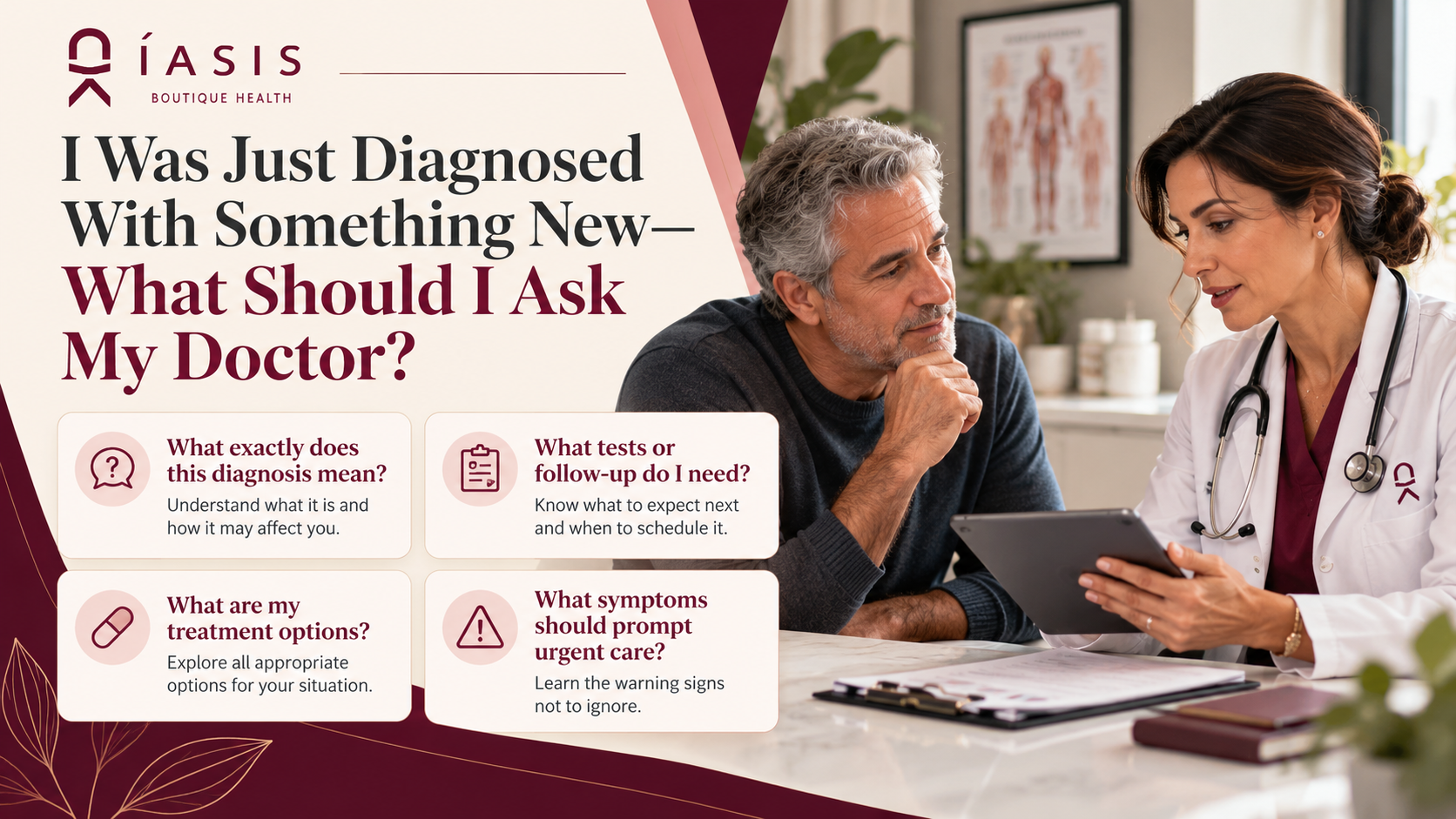
I Was Just Diagnosed With Something New—What Should I Ask My Doctor?
Written by Georgios Karanastasis, MD
Board-Certified Internal Medicine Physician & Founder of IASIS Boutique Health
What to Do After Receiving a New Medical Diagnosis
Hearing a new medical diagnosis can be overwhelming.
Sometimes the diagnosis is expected.
Other times, it comes after a routine blood test, imaging study, specialist visit, emergency room evaluation, or annual physical.
You may hear the name of the condition and immediately start thinking:
What does this actually mean?
How serious is it?
Do I need treatment right away?
Is this something I will have forever?
Do I need to see a specialist?
What should I be doing differently now?
It is normal to leave a medical appointment and realize later that you did not ask everything you wanted to ask.
The most important thing is to understand not only the name of the diagnosis, but also what it means for your health and what happens next.
What Is the First Question You Should Ask After a New Diagnosis?
Start with:
“What exactly does this diagnosis mean for me?”
A diagnosis may sound intimidating because the medical term is unfamiliar.
Your physician should be able to explain:
- what the condition is
- what part of the body it affects
- whether it is temporary or chronic
- how it was diagnosed
- what symptoms it may cause
- what the next step is
Understanding the diagnosis itself makes every other decision easier.
How Was the Diagnosis Made?
This is an important question.
Ask what information led to the diagnosis.
That may include:
- your symptoms
- a physical examination
- laboratory testing
- imaging
- another diagnostic test
- a specialist evaluation
You can ask:
“What specifically showed that I have this condition?”
This helps you understand whether the diagnosis is very clear or whether additional evaluation is still needed.
Is the Diagnosis Confirmed or Still Being Evaluated?
Sometimes a doctor may discuss a likely diagnosis before every piece of the evaluation is complete.
There is a difference between:
“This is definitely the diagnosis.”
and:
“This is what we currently think is most likely.”
If you are not sure, ask.
You can say:
“Is this diagnosis confirmed, or are we still ruling out other possibilities?”
How Serious Is This Condition?
Try not to judge the seriousness of a diagnosis by its name alone.
The same condition can have very different implications depending on:
- severity
- stage
- how early it was found
- your overall health
- other medical conditions
Ask:
“How concerned should I be about this right now?”
Your physician can help put the diagnosis into context.
Is This Something That Needs Treatment Right Away?
Not every diagnosis requires immediate treatment.
Some conditions may need:
- medication
- lifestyle changes
- additional testing
- specialist care
- monitoring
Others may simply need observation for now.
If your doctor recommends monitoring instead of treatment, ask:
“What exactly are we monitoring, and when are we checking it again?”
If you have already been told to watch something over time, read what it means when your doctor says “let’s monitor it”.
What Happens If I Do Nothing?
This can be a very useful question.
Ask what is likely to happen if the condition is left untreated or unmonitored.
For some diagnoses, delaying treatment may not create an immediate problem.
For others, early management matters.
Understanding the natural course of the condition can help you understand why a particular plan is being recommended.
Do I Need Medication?
Maybe.
Ask:
- Why is this medication being recommended?
- What benefit should I expect?
- How long will I take it?
- What side effects should I watch for?
- Do I need bloodwork while taking it?
Do not assume every diagnosis automatically requires medication.
But also do not assume medication can be avoided simply because you feel well.
Treatment decisions should be based on the diagnosis, severity, risk, and individual situation.
What If I Am Already Taking Several Medications?
Tell your physician.
A new diagnosis may affect your existing medication plan.
Your doctor may need to review:
- potential interactions
- kidney or liver function
- blood pressure
- blood sugar
- other chronic conditions
If your medication list has become long or confusing, read what to ask your doctor when you are taking several medications.
Do I Need to Change My Diet or Lifestyle?
Some diagnoses are affected by lifestyle factors.
Your physician may discuss:
- nutrition
- exercise
- weight
- sleep
- smoking
- alcohol
- stress
Ask for specific recommendations rather than vague advice.
For example:
“What is the most important change I can make first?”
Do I Need More Testing?
A diagnosis may be the beginning of the evaluation rather than the end.
Additional testing may be needed to:
- confirm the diagnosis
- determine severity
- identify complications
- establish a baseline
- monitor treatment
Ask:
“What additional tests do I need, and what are we looking for?”
What If I Already Had a Lot of Testing?
Ask your physician to explain what has already been learned.
You should understand:
- which tests were important
- what they showed
- what they ruled out
- what still needs evaluation
If testing has become confusing, read what to do when you have had many medical tests but still do not understand the overall plan.
Do I Need to See a Specialist?
Not every new diagnosis requires specialty care.
Primary care physicians manage many adult health conditions directly.
A specialist may be appropriate when:
- the diagnosis is complex
- specialized testing is needed
- treatment requires specialty expertise
- the condition is not responding as expected
Ask:
“Can this be managed in primary care, or do I need a specialist?”
If you are unsure about where different conditions belong, read Primary Care Doctor vs. Specialist.
If I See a Specialist, Does My Primary Care Doctor Still Need to Be Involved?
Usually, yes.
Specialists may manage a specific condition, while primary care continues to look at your broader health.
Your PCP may still need to consider:
- medications
- other chronic conditions
- preventive care
- laboratory trends
- specialist recommendations
If several doctors become involved, read who coordinates your care when you have multiple doctors.
What Symptoms Should I Watch For?
Ask whether there are symptoms that should make you:
- call the office
- schedule an earlier appointment
- seek urgent care
- go to the emergency room
You should leave knowing what changes matter.
How Will We Know Whether Treatment Is Working?
This is another important question.
Ask what success looks like.
Depending on the diagnosis, your physician may monitor:
- symptoms
- blood pressure
- blood sugar
- laboratory values
- weight
- other measurements
Knowing the goal makes follow-up more meaningful.
How Often Do I Need Follow-Up?
The schedule depends on the condition.
Ask:
“When should I see you again?”
and:
“What would make me come back sooner?”
Do not leave a new diagnosis without understanding the next follow-up point.
Is This a Chronic Condition?
A chronic condition is generally one that requires ongoing management over time.
If your diagnosis is chronic, ask:
- What do we monitor?
- How often?
- What are the treatment goals?
- What complications are we trying to prevent?
Learn more about chronic disease management in Orland Park.
Will This Diagnosis Affect My Other Health Conditions?
Possibly.
Your physician should consider the whole medical picture.
For example, a new diagnosis may affect:
- medication choices
- blood pressure goals
- blood sugar management
- kidney function
- cardiovascular risk
This is one reason a diagnosis should not be managed in complete isolation from the rest of your health.
What If I Do Not Have Any Symptoms?
Some conditions are discovered before they cause obvious symptoms.
High blood pressure, high cholesterol, prediabetes, and other health changes may be identified during routine care.
Feeling well does not automatically mean the diagnosis does not matter.
Ask your physician what risk the condition creates over time and what treatment or monitoring is appropriate.
Should I Search the Diagnosis Online?
You probably will.
Just remember that general online information may not describe your specific situation.
The same diagnosis can have different severity, treatment needs, and long-term implications in different patients.
Use online information to help generate questions, not to replace your physician’s interpretation of your individual case.
What If Everything I Read Online Sounds Worse Than What My Doctor Told Me?
Ask your physician.
You can say:
“I read some information that made this sound very serious. Can you explain how my situation compares?”
Your doctor can help distinguish general possibilities from what actually applies to you.
Should I Get a Second Opinion?
A second opinion may be reasonable when:
- the diagnosis is uncertain
- a major treatment or procedure is being considered
- the condition is unusual or complex
- different physicians have given different recommendations
- you do not understand the reasoning behind the plan
A second opinion does not automatically mean the first doctor was wrong.
Sometimes it simply provides more information and confidence in the plan.
What If Different Doctors Give Me Different Recommendations?
Do not try to decide which doctor is “right” based only on one sentence from each visit.
Differences may reflect:
- different areas of expertise
- different information available to each doctor
- different interpretations of risk
Bring the recommendations together and ask your primary care physician or the physician overseeing the condition to help clarify the plan.
What If I Do Not Fully Understand the Diagnosis?
Ask for a simpler explanation.
You can say:
“Can you explain this in plain language?”
or:
“What are the three most important things I need to understand about this diagnosis?”
Understanding your condition is part of good medical care.
What If I Forgot Everything the Doctor Said After I Got Home?
This happens.
A new diagnosis can make it difficult to absorb a lot of information at once.
Write down questions as they come to you.
Depending on the situation, you may be able to call the office, send a message, or schedule follow-up to clarify the plan.
If you are not sure whether a question requires another appointment, read whether you can call your doctor to ask a medical question.
Should You Bring Someone With You to the Next Appointment?
Sometimes that can help.
A trusted family member may help:
- remember questions
- take notes
- hear the plan
- help organize follow-up
This can be particularly helpful for older adults or complicated diagnoses.
What If the Diagnosis Is in Your Portal but Nobody Explained It?
Do not assume you fully understand the diagnosis from the portal alone.
Contact the appropriate physician and ask for clarification.
A diagnosis label in a medical chart may require context.
If you are also seeing unexplained test results in your portal, read what to do when your test results appear before your doctor explains them.
What Should You Write Down Before Your Next Appointment?
Keep it simple.
Write down:
- the diagnosis
- your current medications
- new symptoms
- questions about treatment
- questions about testing
- questions about follow-up
This helps keep the next discussion focused.
What Should You Know Before Leaving the Appointment?
Ideally, you should be able to answer:
What is the diagnosis?
How was it diagnosed?
How serious is it?
Do I need treatment?
Do I need more testing?
Do I need a specialist?
When should I follow up?
What symptoms should make me call sooner?
If you cannot answer those questions, ask for clarification.
Why Primary Care Matters After a New Diagnosis
A new diagnosis often affects more than one appointment.
Primary care can help connect the diagnosis with:
- your existing medical conditions
- current medications
- preventive care
- laboratory trends
- specialists
- long-term health risks
This broader perspective is part of adult primary care in Orland Park.
How IASIS Boutique Health Approaches a New Diagnosis
At IASIS Boutique Health in Orland Park, Georgios Karanastasis, MD, provides membership-based adult primary care and internal medicine through a limited-panel practice.
When a patient receives a new diagnosis, the goal is not simply to add another condition to the medical chart.
The diagnosis needs to be understood in the context of the patient's overall health.
Depending on the individual situation, that may include:
- reviewing how the diagnosis was made
- reviewing relevant test results
- discussing treatment options
- reviewing medications
- considering related health risks
- deciding whether specialist care is needed
- creating a follow-up plan
For adults who want more time to understand a new diagnosis and what it means for their overall health, learn more about internal medicine in Orland Park and concierge primary care at IASIS Boutique Health.
Frequently Asked Questions
What should I ask my doctor after getting a new diagnosis?
Ask what the diagnosis means, how it was confirmed, how serious it is, whether treatment is needed, whether additional testing or specialist care is appropriate, what symptoms to watch for, and when to follow up.
Should I get a second opinion after a new diagnosis?
Not every diagnosis requires a second opinion. It may be reasonable when the diagnosis is uncertain, treatment is significant, the condition is complex, or you want additional perspective before making an important decision.
Do all new diagnoses require medication?
No. Some conditions may require medication, while others may be managed with monitoring, lifestyle changes, additional testing, or another treatment approach.
How do I know whether the diagnosis is confirmed?
Ask your physician directly whether the diagnosis is established or whether it remains the leading possibility while additional evaluation continues.
Should my primary care doctor know about a diagnosis made by a specialist?
Yes. Your PCP should generally know about important new diagnoses because they may affect medications, chronic-condition management, preventive care, and the broader medical picture.
What if I do not understand the medical terminology?
Ask your physician to explain the diagnosis in plain language. You should understand what the condition means and what you are expected to do next.
What if I feel fine even though I was diagnosed with something?
Some medical conditions can be present before they cause noticeable symptoms. Ask your physician what the diagnosis means for your future health and whether treatment or monitoring is recommended.
The Bottom Line
A new diagnosis should not leave you with only a medical term.
You should understand:
What is it?
How was it diagnosed?
How serious is it?
What do we do about it?
What happens next?
When do we check it again?
Who is managing it?
Even when the diagnosis itself cannot be changed, understanding the plan can make the next steps much clearer.
At IASIS Boutique Health, Dr. Georgios Karanastasis provides adult primary care in Orland Park through a limited-panel membership model centered on longer appointments, continuity, direct physician communication, preventive care, and a more complete view of each patient's health.
About the Author
Georgios Karanastasis, MD is a board-certified internal medicine physician and founder of IASIS Boutique Health in Orland Park, Illinois. He earned his medical degree from the University of Athens in Greece and completed his internal medicine residency at John H. Stroger Jr. Hospital of Cook County.
Dr. Karanastasis provides adult primary care with a focus on preventive medicine, cardiovascular health, medication management, chronic disease management, and long-term physician-patient relationships.
Through IASIS Boutique Health, he provides membership-based care through a limited-panel practice designed to allow longer appointments, direct physician communication, continuity, and more time to understand each patient's broader health picture.
Medical Review: Georgios Karanastasis, MD
Last Reviewed: October 20, 2026
Medical Disclaimer
This article is intended for general educational purposes only and does not replace individualized medical advice, diagnosis, or treatment. The meaning and management of a diagnosis depend on the specific condition and the individual patient's history, symptoms, examination, test results, medications, and risk factors. Seek urgent or emergency medical care for severe, sudden, rapidly worsening, or potentially life-threatening symptoms.
Related posts
iasiscare My Doctor Said “Let’s Monitor It”—What Does That Actually Mean? iasiscare
I’m Home From the Hospital—What Am I Supposed to Do Next?
 iasiscare
Why Do I Keep Seeing a Different Doctor Every Time I Need Primary Care?
 iasiscare
I Have Several Health Concerns—Can I Talk About All of Them at One Doctor Visit?
 iasiscare
I’m Taking So Many Medications—Do I Still Need All of Them?
 iasiscare
I’m Tired All the Time—When Is Fatigue Something I Should See a Doctor About?
 iasiscare
What Family Medical History Should I Tell My Doctor About?
 iasiscare
I’m Healthy and Rarely Get Sick—Do I Really Need a Primary Care Doctor?
 iasiscare
I’m Losing Weight Without Trying—When Should I Be Concerned?
 iasiscare
My Doctor Said I Have Prediabetes—What Should I Do Now?
 iasiscare
My Heart Keeps Fluttering or Skipping Beats—Should I Be Worried?
 iasiscare
I Keep Feeling Dizzy or Lightheaded—When Should I See a Doctor?