iasiscare
I’m Healthy and Rarely Get Sick—Do I Really Need a Primary Care Doctor?

Written by Georgios Karanastasis, MD
Board-Certified Internal Medicine Physician & Founder of IASIS Boutique Health
Why Healthy Adults Can Still Benefit From Having an Established Primary Care Doctor
You feel healthy.
You are not taking several medications.
You do not have diabetes, heart disease, or another major chronic condition.
You might go years without needing medical care.
So it is reasonable to wonder:
“Why do I need a primary care doctor if nothing is wrong?”
For healthy adults, the value of primary care is not simply having somewhere to go when you are sick.
Primary care can help establish a baseline for your health, identify risk factors before they become symptoms, keep preventive care current, review changes over time, and give you an established physician to contact when something does change.
You do not need to be sick to benefit from having a doctor who knows your health history.
Do Healthy Adults Actually Need a Primary Care Doctor?
For many adults, having an established primary care physician is useful even when they feel well.
That does not mean every healthy person needs frequent appointments or medical testing.
The appropriate amount of care depends on your:
- age
- personal medical history
- family history
- blood pressure
- medications
- lifestyle
- risk factors
- preventive screening needs
A healthy 28-year-old may need a very different follow-up schedule from a healthy 58-year-old.
The point is not to create unnecessary appointments.
The point is to establish appropriate preventive care before a health problem forces you to find a doctor quickly.
What Does a Primary Care Doctor Do If You Are Not Sick?
Primary care is not limited to treating illnesses.
When you are healthy, your physician may focus more on:
- preventive care
- blood pressure
- cardiovascular risk
- appropriate laboratory testing
- screening recommendations
- family medical history
- vaccination history
- lifestyle and long-term health risks
The goal is not to search aggressively for disease in someone who feels well.
It is to understand your baseline and identify areas where prevention may matter.
What Does It Mean to Establish a Health Baseline?
A baseline is an understanding of what is normal for you before something changes.
That may include:
- your usual blood pressure
- weight
- cholesterol
- blood sugar
- medication history
- family history
- previous laboratory results
This information can become more useful over time.
For example, one laboratory result gives your doctor a snapshot.
Results collected over several years can show a trend.
A blood pressure that is slightly higher than it used to be may deserve attention even if you still feel perfectly normal.
Can You Have a Health Problem Without Feeling Sick?
Yes.
Some common health conditions may not cause obvious symptoms early on.
Examples can include:
- high blood pressure
- high cholesterol
- prediabetes or diabetes
- certain kidney problems
- some early-stage cancers
This is one reason prevention and appropriate screening matter.
Feeling well is valuable, but it does not provide complete information about every aspect of your health.
Why Does Blood Pressure Matter If You Feel Fine?
High blood pressure often does not create obvious symptoms.
That means someone can feel completely normal while blood pressure is consistently above the ideal range.
Your physician may want to know whether an elevated reading is:
- an isolated measurement
- related to stress or circumstances
- part of a repeated pattern
When necessary, home blood pressure readings can help provide additional context.
Why Would a Healthy Adult Need Cholesterol Checked?
Cholesterol is one component of cardiovascular risk.
You generally cannot feel whether your cholesterol is elevated.
Your physician may interpret cholesterol results alongside:
- age
- blood pressure
- smoking history
- diabetes
- family history
- other cardiovascular risk factors
A cholesterol result should not be viewed as an isolated number.
Its importance depends on the broader patient.
What About Blood Sugar?
Blood sugar changes can also develop before a person feels obviously unwell.
Your physician may consider screening based on your age, weight, family history, previous results, and other risk factors.
The goal is not to assume every healthy adult has diabetes.
It is to identify meaningful risk when appropriate.
Do Healthy Adults Need Blood Tests Every Year?
Not necessarily.
There is no single laboratory panel that every healthy adult automatically needs every year.
The appropriate testing depends on the individual.
Your physician may consider:
- age
- previous laboratory results
- family history
- medications
- medical conditions
- new symptoms
- preventive needs
More testing is not automatically better medicine.
The goal is to order tests that answer a useful medical question.
For a deeper explanation, read what blood tests adults may discuss with their doctor each year.
What Preventive Care Might a Healthy Adult Need?
Preventive care varies by age, sex, history, and risk factors.
It may include discussions about:
- blood pressure
- cholesterol
- blood sugar
- cancer screening
- vaccinations
- weight
- smoking
- alcohol use
- exercise
- family history
Preventive care should be individualized rather than reduced to the exact same checklist for every adult.
Does Family History Matter If You Are Healthy?
Yes.
Your own health can be excellent while your family history still provides useful information about future risk.
Tell your physician about significant conditions affecting close relatives, especially:
- heart disease
- stroke
- diabetes
- significant cholesterol problems
- certain cancers
- blood clots
- known inherited conditions
The age at which relatives developed those conditions can also matter.
For more detail, read what family medical history you should tell your doctor about.
Why Find a Primary Care Doctor Before You Actually Need One?
This is one of the biggest practical advantages.
Finding a doctor is much easier when you feel well.
Imagine trying to establish primary care for the first time when:
- you suddenly develop persistent symptoms
- you have an abnormal test result
- you need medication follow-up
- you leave the emergency room and need outpatient care
- a specialist tells you to follow up with your PCP
Now you are not only trying to deal with the health concern.
You are also searching for a physician, completing new-patient paperwork, transferring records, and waiting for an appointment.
Having an established physician removes some of that uncertainty.
What If You Only Use Urgent Care When You Get Sick?
Urgent care can be useful for many immediate, non-life-threatening medical concerns.
But urgent care and primary care serve different purposes.
Urgent care usually focuses on the problem that brought you in that day.
Primary care can connect that problem with:
- your previous history
- laboratory trends
- medications
- preventive needs
- family history
- other ongoing concerns
You may use urgent care occasionally and still benefit from having a regular physician.
If you are trying to decide which type of care you need for a same-day problem, read same-day primary care vs. urgent care.
What If You Haven’t Seen a Doctor in Several Years?
Do not assume you have done something wrong.
Many adults go several years without primary care because they feel healthy.
The next step is simply to establish care.
Your physician can review:
- your medical history
- family history
- current medications and supplements
- previous surgeries or hospitalizations
- preventive screening needs
- whether any laboratory testing is appropriate
You do not need to arrive with perfect records.
What If You Don’t Remember Your Last Blood Tests?
That is common.
If previous results are available, bring them or ask the prior practice to send them.
If they are not available, your physician can decide what information is actually needed now.
There is no need to recreate every test you have ever had simply because you cannot remember it.
Do You Need an Annual Physical Every Single Year?
The appropriate frequency of preventive visits depends on the patient.
Age, medical history, medications, risk factors, previous findings, and preventive needs all matter.
Some adults require more frequent follow-up than others.
The key is to have an appropriate plan rather than assuming the same schedule applies to everyone.
IASIS covers this question separately in how often adults should see a primary care doctor.
What If You Exercise, Eat Well, and Have a Healthy Weight?
Those are valuable health behaviors.
But good lifestyle habits do not replace every aspect of medical prevention.
A person who exercises regularly and maintains a healthy weight can still have:
- high cholesterol
- high blood pressure
- a significant family history
- an age-related screening need
Healthy habits lower many risks, but they do not make every other risk disappear.
What If You Are Young and Healthy?
You may need much less medical follow-up than an older adult with chronic conditions.
That is appropriate.
Primary care for a healthy younger adult may focus largely on:
- establishing history
- blood pressure
- preventive recommendations
- family history
- appropriate screening
- having somewhere to turn when a new problem develops
Good primary care does not require creating unnecessary medical visits.
What Changes as You Get Into Your 40s and 50s?
Age changes which health risks and screening discussions become relevant.
Even people who still feel excellent may need more attention to:
- cardiovascular risk
- blood pressure
- cholesterol
- blood sugar
- age-appropriate cancer screening
- weight and metabolic health
This is one reason preventive care becomes increasingly important even when symptoms are absent.
For more information, read why preventive care matters after age 40.
What If You Have No Family History of Major Disease?
That is reassuring information, but it does not eliminate every health risk.
Family history is only one component of risk.
Your physician still considers your own:
- age
- blood pressure
- laboratory results
- lifestyle
- medical history
What If You Feel Healthy but Your Blood Work Is Abnormal?
Do not panic.
A result outside a laboratory reference range does not automatically mean you have a disease.
Your physician may consider:
- how abnormal the result is
- previous results
- related values
- medications
- your medical history
Some results need follow-up.
Others may simply need to be monitored.
If results appear in your portal without an explanation, read what to do when your test results appear before your doctor calls.
Can Having a Primary Care Doctor Help if You Suddenly Develop a New Symptom?
Yes.
An established physician already has some context.
They may know:
- your baseline health
- previous test results
- family history
- medications
- previous symptoms
That context can make it easier to determine whether a new change is significant.
What If You Suddenly Need a Specialist?
Primary care can help determine which specialty is appropriate and provide the relevant background information.
Your PCP can also remain involved after the specialist visit.
If you are unsure which type of doctor to start with, read Primary Care Doctor vs. Specialist.
What If You End Up in the Emergency Room?
This is another situation where having an established physician can be valuable.
The emergency department focuses on the immediate problem.
After discharge, your regular physician may need to review:
- the ER diagnosis
- medication changes
- laboratory results
- imaging
- pending follow-up
Read what to do after an emergency room visit for more information about that transition.
Does Having a Primary Care Doctor Mean You Have to Go for Every Minor Problem?
No.
Not every headache, cold, or temporary symptom requires an office visit.
Part of having an established medical relationship is knowing where to turn when you are unsure.
Depending on the concern, your practice may advise:
- home monitoring
- an office appointment
- telehealth
- urgent care
- emergency evaluation
If you are unsure whether a question requires an appointment, read can I call my doctor to ask a question?
What Should You Look for in a Primary Care Doctor When You Are Healthy?
Do not choose solely based on who can see you tomorrow.
Consider:
- the physician's credentials
- whether they focus on adult care
- appointment availability
- continuity
- communication
- preventive-care approach
- how laboratory results are reviewed
- what happens when you become sick
You are establishing a relationship you may rely on more in the future than you do today.
What Questions Should a Healthy Adult Ask at a Primary Care Visit?
Useful questions include:
- Are there any health risks I should be paying attention to?
- Is my blood pressure where it should be?
- Do I need any blood work?
- Am I due for any screening?
- Does my family history change anything?
- How often should I follow up?
- What should I do if a new health concern develops?
What If Your Doctor Finds Nothing Wrong?
That is a good outcome.
Preventive care is not unsuccessful because no disease was discovered.
Sometimes the outcome is simply:
Your health looks good. Continue what you are doing, keep up with appropriate prevention, and follow up at an appropriate interval.
Medicine should not create problems where none exist.
Why Continuity Can Still Matter When You Are Healthy
Continuity becomes valuable over time.
A physician who has seen you when you are healthy may have a better understanding of your normal baseline if something changes later.
Over several years, your doctor may be able to recognize changes in:
- blood pressure
- weight
- cholesterol
- blood sugar
- medications
- family history
This long-term perspective is part of adult primary care in Orland Park.
How IASIS Boutique Health Approaches Primary Care for Healthy Adults
At IASIS Boutique Health in Orland Park, Georgios Karanastasis, MD, provides membership-based adult primary care and internal medicine through a limited-panel practice.
Not every member needs frequent treatment for illness.
For healthy adults, the focus may be more preventive.
Depending on the individual patient, that can include:
- understanding medical and family history
- establishing health baselines
- reviewing blood pressure and cardiovascular risk
- reviewing appropriate laboratory trends
- discussing preventive screening
- addressing new health changes when they arise
The value of an ongoing physician relationship is not limited to the number of times a person gets sick.
It is having a physician who understands the broader health picture before a problem becomes complicated.
Adults looking for that type of ongoing relationship can learn more about internal medicine in Orland Park and concierge primary care at IASIS Boutique Health.
Frequently Asked Questions
Do I need a primary care doctor if I am healthy?
Having an established primary care physician can still be useful for preventive care, screening, blood pressure and risk assessment, establishing baseline health information, and having a physician to contact when something changes.
Do healthy adults need to see a doctor every year?
Not everyone needs the exact same visit schedule. The appropriate frequency depends on age, medical history, family history, medications, risk factors, previous findings, and preventive needs.
Why would I need blood work if I feel fine?
Some health changes can develop without obvious symptoms. However, not every healthy adult needs the same laboratory testing. Your physician should determine testing based on your individual health profile.
Can I just use urgent care instead of having a primary care doctor?
Urgent care can treat many immediate problems, but it generally does not provide the same long-term preventive care, trend review, medication history, screening oversight, and continuity as established primary care.
What if I have not seen a doctor in several years?
You can simply establish care now. Bring whatever medical history, medication information, and previous records you have. Your physician can determine what information or testing is actually needed going forward.
What if I exercise and eat well?
Healthy habits are extremely valuable but do not replace all preventive medical care. Blood pressure, cholesterol, family history, age-related screenings, and other risks may still deserve attention.
Should I find a primary care doctor before I get sick?
Ideally, yes. Establishing care while you feel well can be easier than trying to find a physician while simultaneously dealing with an unexpected medical problem.
What kind of doctor should a healthy adult choose for primary care?
Adults commonly receive primary care from internal medicine or family medicine physicians. Internal medicine physicians focus specifically on adult medicine.
The Bottom Line
You do not need to be sick to have a reason for primary care.
For a healthy adult, primary care may be mostly about:
knowing your baseline
understanding your risk factors
keeping preventive care current
watching meaningful changes over time
having a physician already established when something changes
If everything looks good, that is exactly what you want to hear.
The goal of preventive medicine is not to find something wrong with every healthy person.
It is to help people stay healthy while recognizing important risks early enough to do something about them.
At IASIS Boutique Health, Dr. Georgios Karanastasis provides adult primary care in Orland Park through a limited-panel membership model centered on preventive medicine, longer appointments, continuity, direct physician communication, and long-term health planning.
About the Author
Georgios Karanastasis, MD is a board-certified internal medicine physician and founder of IASIS Boutique Health in Orland Park, Illinois. He earned his medical degree from the University of Athens in Greece and completed his internal medicine residency at John H. Stroger Jr. Hospital of Cook County.
Dr. Karanastasis provides adult primary care with a focus on preventive medicine, cardiovascular health, medication management, chronic disease management, and long-term physician-patient relationships.
Through IASIS Boutique Health, he provides membership-based care through a limited-panel practice designed to allow longer appointments, direct physician communication, continuity, and more time to understand each patient's broader health picture.
Medical Review: Georgios Karanastasis, MD
Last Reviewed: October 26, 2026
Medical Disclaimer
This article is intended for general educational purposes only and does not replace individualized medical advice, diagnosis, or treatment. Preventive-care and screening needs vary based on age, sex, medical history, family history, medications, risk factors, and previous results. Discuss your individual preventive-care plan with an appropriate healthcare professional.
Related posts
iasiscare Why Do I Keep Seeing a Different Doctor Every Time I Need Primary Care? iasiscare
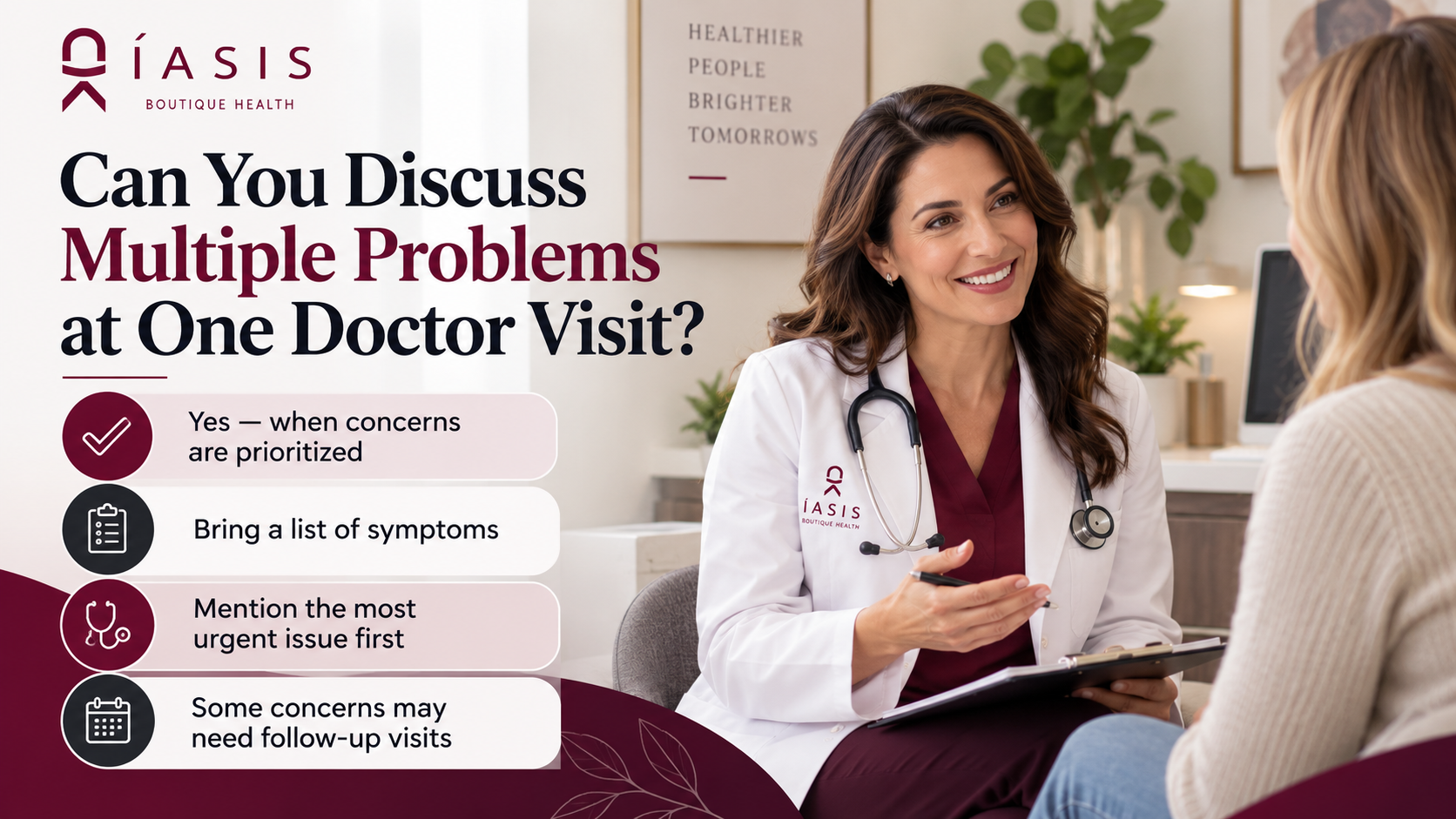
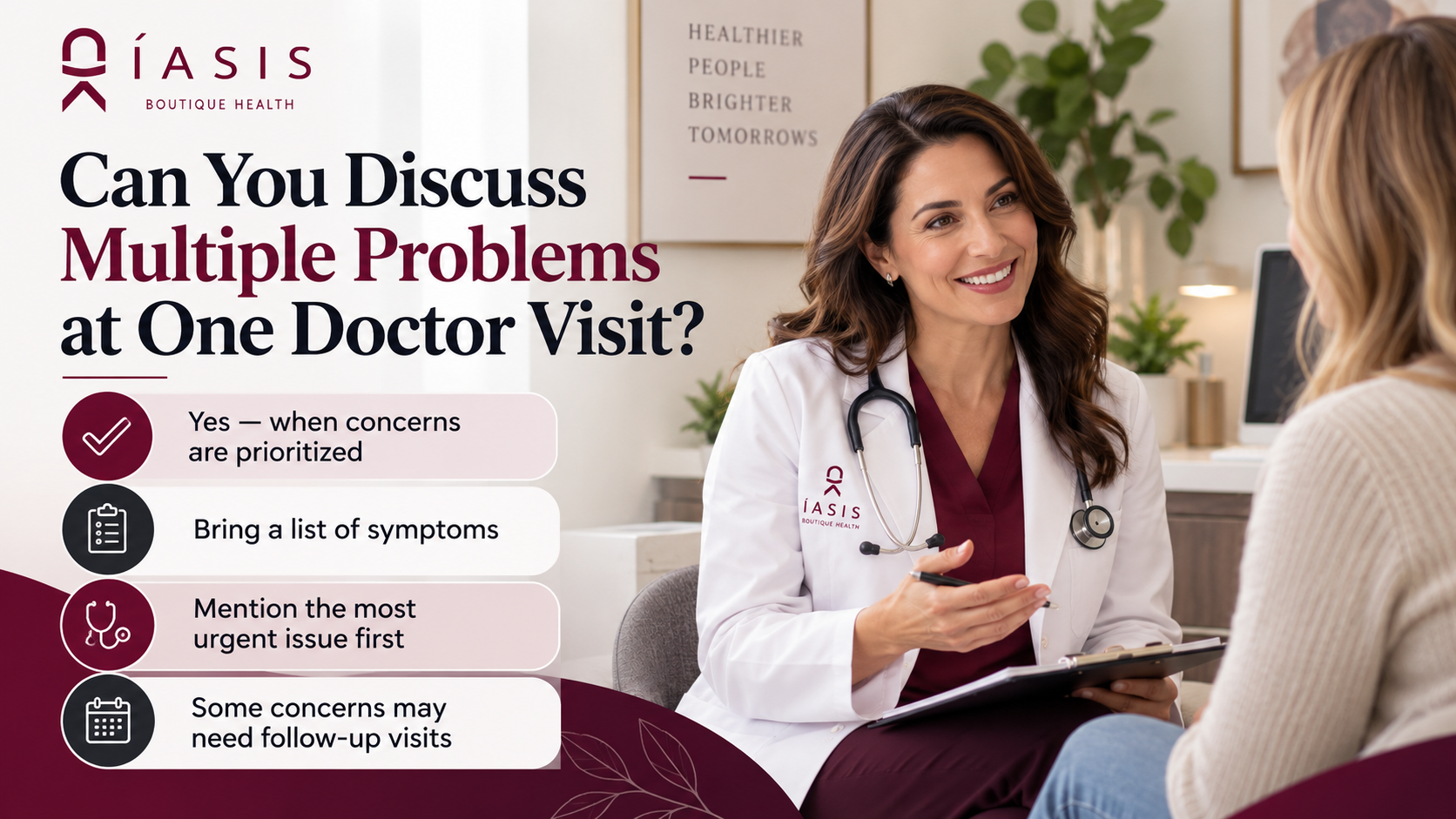
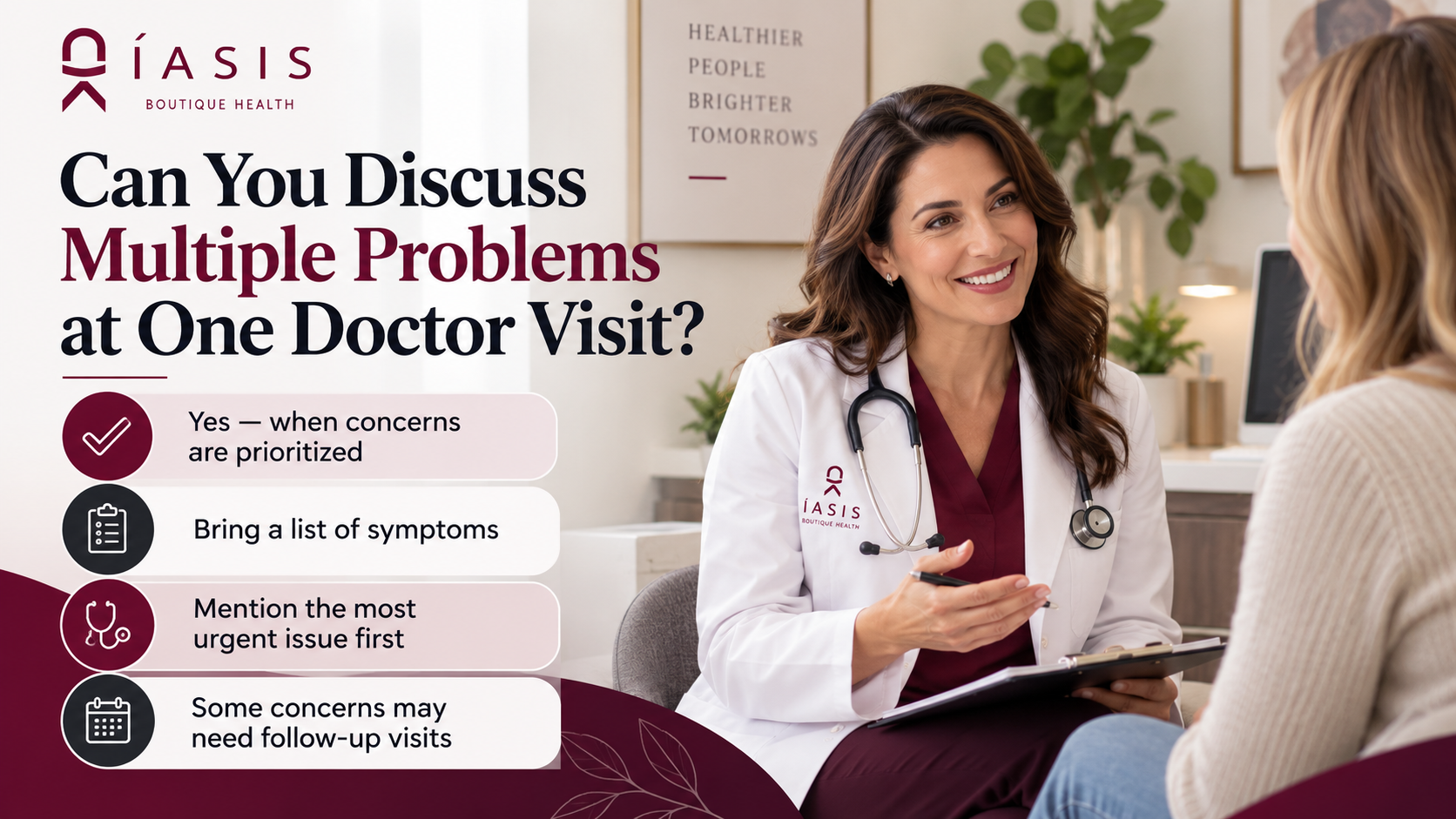
I Have Several Health Concerns—Can I Talk About All of Them at One Doctor Visit?
 iasiscare
I’m Taking So Many Medications—Do I Still Need All of Them?
 iasiscare
I’m Tired All the Time—When Is Fatigue Something I Should See a Doctor About?
 iasiscare
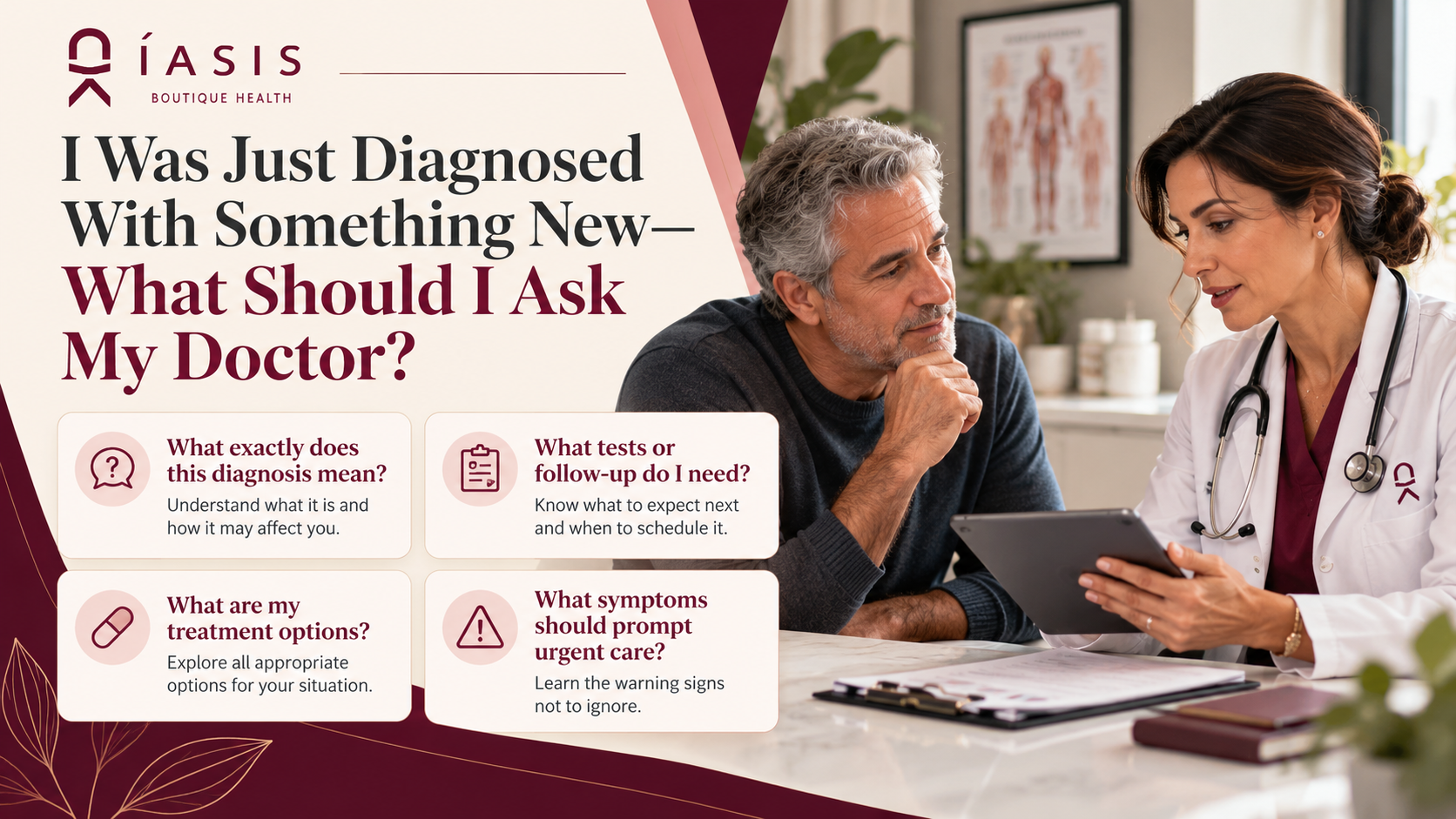
I Was Just Diagnosed With Something New—What Should I Ask My Doctor?
 iasiscare
What Family Medical History Should I Tell My Doctor About?
 iasiscare
I’m Losing Weight Without Trying—When Should I Be Concerned?
 iasiscare
My Heart Keeps Fluttering or Skipping Beats—Should I Be Worried?
 iasiscare
I Keep Feeling Dizzy or Lightheaded—When Should I See a Doctor?
 iasiscare
My Hands or Feet Keep Going Numb or Tingling—When Should I See a Doctor?
 iasiscare
Why Are My Ankles or Feet Swollen—and When Should I See a Doctor?