iasiscare
My Heart Keeps Fluttering or Skipping Beats—Should I Be Worried?

Written by Georgios Karanastasis, MD
Board-Certified Internal Medicine Physician & Founder of IASIS Boutique Health
What Heart Palpitations Can Mean and When to See a Doctor
You are sitting at your desk when suddenly your heart feels like it skips a beat.
Or maybe it starts pounding for no obvious reason.
You feel a flutter in your chest.
Then it stops.
A few hours later, it happens again.
Heart palpitations can feel like:
- fluttering
- pounding
- racing
- skipped beats
- an extra beat
- your heart “flip-flopping” in your chest
Sometimes palpitations are brief and harmless.
Other times, they may be related to an abnormal heart rhythm or another medical issue that deserves evaluation.
The sensation alone does not tell us the cause.
What matters is the pattern, how long it lasts, what triggers it, whether other symptoms occur, and what your overall health history looks like.
What Are Heart Palpitations?
Heart palpitations are the sensation of being unusually aware of your heartbeat.
You may feel as though your heart is:
- beating too fast
- beating too hard
- beating irregularly
- skipping a beat
- adding an extra beat
Palpitations may last only a few seconds.
They may continue for several minutes.
Some people experience them rarely.
Others notice them every day.
Are Heart Palpitations Always Dangerous?
No.
Many palpitations are not caused by a dangerous heart problem.
They may occur with:
- stress
- caffeine
- poor sleep
- dehydration
- exercise
- certain medications
- alcohol
- anxiety
However, palpitations can also occur with abnormal heart rhythms or other medical conditions.
That is why persistent, frequent, new, or worsening palpitations should not automatically be dismissed.
When Should You See a Doctor for Heart Palpitations?
Make an appointment if palpitations:
- are new for you
- keep returning
- are becoming more frequent
- last longer than they used to
- occur during exercise
- wake you from sleep
- occur with dizziness or weakness
- cause you significant concern
Primary care or internal medicine is often a reasonable place to start for non-emergency palpitations.
When Are Heart Palpitations an Emergency?
Palpitations need more urgent evaluation when they occur with symptoms such as:
- chest pain or pressure
- significant shortness of breath
- fainting
- near-fainting
- severe dizziness
- new confusion
- severe weakness
Call 911 or seek emergency medical care when symptoms appear severe, sudden, or potentially life-threatening.
What Can Cause Heart Palpitations?
There are many possible causes.
Your physician may consider:
- normal extra heartbeats
- abnormal heart rhythms
- stress or anxiety
- caffeine
- alcohol
- dehydration
- poor sleep
- thyroid problems
- anemia
- electrolyte abnormalities
- medication effects
- other heart conditions
The goal of evaluation is to determine which possibilities fit your situation.
Can Stress Cause Palpitations?
Yes.
Stress can increase adrenaline and make you more aware of your heartbeat.
Some people notice palpitations during:
- work stress
- emotional stress
- panic
- lack of sleep
But new or recurrent palpitations should not automatically be blamed on stress without considering other causes.
Can Anxiety Cause Heart Fluttering?
It can.
Anxiety can cause:
- a racing heartbeat
- pounding
- chest awareness
- shortness of breath
- lightheadedness
At the same time, having palpitations can make a person anxious.
That can create a cycle in which the symptom and the fear of the symptom reinforce each other.
If palpitations are new or changing, medical evaluation can help determine whether another cause should be considered.
Can Caffeine Cause Palpitations?
Yes.
Some people are more sensitive to caffeine than others.
Possible sources include:
- coffee
- energy drinks
- tea
- pre-workout products
- some supplements
If palpitations seem to occur after caffeine, pay attention to the amount and timing.
You do not necessarily need to eliminate caffeine permanently, but reducing intake may help determine whether it is contributing.
Can Energy Drinks Cause a Racing Heart?
They can.
Energy drinks may contain significant amounts of caffeine and other stimulants.
If you experience palpitations after drinking them, stop and discuss the symptom with your physician, especially if the episodes are recurrent or intense.
Can Alcohol Cause Palpitations?
Yes.
Some people notice palpitations after drinking alcohol, particularly after larger amounts.
If there is a clear relationship between drinking and palpitations, tell your physician.
The pattern itself can be useful diagnostic information.
Can Dehydration Cause Heart Palpitations?
It can contribute.
Dehydration may affect heart rate and electrolyte balance.
Palpitations may occur after:
- heavy exercise
- illness with vomiting or diarrhea
- significant sweating
- not drinking enough fluids
Persistent palpitations should still be evaluated rather than assuming dehydration is always the cause.
Can Lack of Sleep Cause Palpitations?
Yes.
Poor sleep can affect stress hormones and increase awareness of your heartbeat.
If palpitations occur during periods of significant sleep loss, mention that pattern.
Sleep should still be considered alongside other possible causes.
Can Thyroid Problems Cause Palpitations?
Yes.
An overactive thyroid can increase heart rate and may cause symptoms such as:
- palpitations
- tremor
- heat intolerance
- unintentional weight loss
- anxiety or restlessness
Your physician can determine whether thyroid testing is appropriate based on your symptoms and medical history.
Can Anemia Cause Palpitations?
It can.
Anemia may make the heart work harder to deliver oxygen throughout the body.
Other symptoms may include:
- fatigue
- weakness
- shortness of breath
- dizziness
- reduced exercise tolerance
If you are also experiencing persistent fatigue, read when fatigue should be evaluated by a doctor.
Can Medications Cause Palpitations?
Yes.
Some medications and over-the-counter products can affect heart rate or make palpitations more noticeable.
Possible examples may include certain:
- decongestants
- stimulant medications
- asthma medications
- thyroid medications
- weight-loss medications or supplements
Do not stop prescription medication on your own.
Instead, tell your physician when the palpitations began and whether they appeared after a medication was started or changed.
If you take several prescriptions, read what to ask your doctor when your medication list keeps getting longer.
What Does It Mean When Your Heart “Skips a Beat”?
Patients often describe an extra heartbeat as a skipped beat.
Sometimes an early beat occurs, followed by a brief pause, making the next heartbeat feel stronger.
This may feel like:
- a pause
- a thump
- a flip in the chest
Occasional extra beats can occur in otherwise healthy people.
Frequent or new symptoms should still be discussed with your physician.
Why Does My Heart Feel Like It Suddenly Flutters?
A fluttering sensation can mean different things to different patients.
It may represent:
- extra beats
- a brief faster rhythm
- increased awareness of a normal heartbeat
The sensation alone cannot identify the rhythm.
If the episodes recur, your doctor may want to capture what the heart is actually doing during one.
What If My Heart Suddenly Starts Racing While I’m Sitting Still?
Tell your physician how suddenly the episode begins and ends.
Helpful details include:
- how fast the heart seems to be beating
- how long the episode lasts
- whether it starts suddenly
- whether it stops suddenly
- what you were doing at the time
- whether dizziness or shortness of breath occurs
Those details can help determine what type of evaluation may be appropriate.
What If Palpitations Only Last a Few Seconds?
Brief palpitations are common and are not automatically dangerous.
But frequency matters.
One brief episode every few months is different from dozens of episodes every day.
Tell your physician:
- how often they occur
- how long they last
- whether the pattern is changing
What If Palpitations Last Several Minutes?
Longer episodes deserve more attention, particularly when they recur.
If possible, note:
- what time the episode began
- how long it lasted
- your heart rate if you can measure it safely
- what symptoms occurred at the same time
Do not delay emergency care to collect data if you are having severe symptoms.
What If Palpitations Happen During Exercise?
Tell your physician.
Your heart rate normally rises during exercise.
But a new sensation of irregular beating, sudden racing, chest discomfort, severe shortness of breath, dizziness, or fainting during exertion deserves medical evaluation.
Severe symptoms during exercise require urgent attention.
What If Palpitations Happen When I Lie Down?
Some people notice their heartbeat more when lying quietly because there are fewer distractions.
Body position may also make the heartbeat feel more noticeable.
But if lying down consistently triggers palpitations, mention the pattern to your physician.
Why Do I Notice Palpitations at Night?
Palpitations may seem more obvious at night because you are resting in a quiet environment.
Nighttime episodes may also relate to:
- alcohol
- caffeine consumed later in the day
- stress
- poor sleep
- medications
If they repeatedly wake you from sleep, tell your doctor.
What If Palpitations Happen After Eating?
Track the pattern.
Tell your physician whether episodes occur:
- after large meals
- after caffeine
- after alcohol
- after particular supplements
A consistent pattern can be useful when trying to identify triggers.
What If I Feel Dizzy With Palpitations?
Dizziness is important to mention.
It may suggest that the episode is affecting blood pressure or circulation, although dizziness can have many other causes.
If dizziness is severe or you feel as though you may faint, seek more urgent medical evaluation.
What If I Almost Faint?
Near-fainting with palpitations deserves prompt evaluation.
Fainting or nearly fainting can be more concerning than palpitations alone because it may indicate that the heart rhythm or another medical problem is affecting blood flow.
Seek urgent care based on the severity of the symptoms.
What If I Have Chest Pain With Palpitations?
Do not assume chest pain is simply anxiety.
Palpitations accompanied by significant chest pain or pressure need urgent medical evaluation.
Call 911 when symptoms appear severe or potentially life-threatening.
What If I Have Shortness of Breath With Palpitations?
Mild awareness of breathing can occur during anxiety or a faster heart rate.
But significant difficulty breathing combined with palpitations deserves prompt evaluation.
Severe shortness of breath should be treated as an emergency.
Can a Smartwatch Tell Me What Is Wrong?
Wearable devices can sometimes provide useful information about heart rate or rhythm.
They can also create confusion.
A watch notification is not the same as a complete medical evaluation.
If your device records an unusual rhythm or repeated high heart rates, save the information and show it to your physician.
Do not rely on a normal smartwatch reading to dismiss serious symptoms.
Should You Check Your Pulse During Palpitations?
If you can do so safely, it may be useful to note:
- whether the pulse feels fast
- whether it feels regular or irregular
- approximately how long the episode lasts
Do not become so focused on measuring your pulse that you delay care for concerning symptoms.
What Should You Track Before Seeing Your Doctor?
Keep a simple record of:
- when the palpitations happen
- how long they last
- what you were doing beforehand
- caffeine intake
- alcohol intake
- exercise
- medication timing
- other symptoms
Patterns can sometimes be more useful than trying to describe one isolated event from memory.
If the symptom repeatedly comes and goes, read when recurring symptoms deserve primary care follow-up.
What Will Your Doctor Ask About Palpitations?
Your physician may ask:
- When did they start?
- How often do they happen?
- How long do they last?
- Do they start and stop suddenly?
- Do they happen with exercise?
- Do you get dizzy?
- Do you have chest pain?
- Do you have shortness of breath?
- How much caffeine or alcohol do you use?
- What medications do you take?
Your family medical history may also matter.
Does Family History Matter With Palpitations?
Yes.
Tell your physician if close relatives have had:
- significant heart rhythm problems
- sudden cardiac death
- heart disease at a young age
- known inherited heart conditions
If you are not sure which family information matters, read what family medical history you should tell your doctor.
What Tests Might Be Done for Heart Palpitations?
The appropriate evaluation depends on your symptoms and history.
Your physician may consider:
- a physical examination
- an electrocardiogram
- blood testing
- heart rhythm monitoring
- other cardiac testing when appropriate
Not every patient needs every test.
What Does an EKG Show?
An electrocardiogram, often called an EKG or ECG, records the heart's electrical activity at that moment.
It may identify:
- certain abnormal rhythms
- heart-rate abnormalities
- other electrical patterns
But there is one important limitation:
If your palpitations are not happening during the EKG, the test may not capture the episode.
What If My EKG Is Normal?
A normal EKG can be reassuring, but it does not necessarily explain intermittent symptoms.
If palpitations happen only occasionally, your physician may consider whether longer rhythm monitoring would be useful.
The next step depends on how often the episodes occur and what other symptoms are present.
What Is a Holter Monitor?
A Holter monitor is a portable device that records the heart's electrical activity over an extended period.
It can sometimes help correlate symptoms with the actual heart rhythm.
Other types of longer-term monitors may also be used depending on how frequently the symptoms occur.
Why Might Blood Tests Be Needed?
Blood testing may be considered when your physician wants to evaluate possible contributors such as:
- anemia
- thyroid abnormalities
- electrolyte changes
- other medical issues suggested by your history
There is no single universal palpitations blood panel.
Testing should be based on the clinical picture.
Do Palpitations Mean You Need a Cardiologist?
Not always.
Primary care or internal medicine can often begin the evaluation.
A cardiologist may be appropriate when:
- an abnormal rhythm is identified
- symptoms are frequent or concerning
- there is known heart disease
- additional cardiac testing is needed
- the initial evaluation suggests specialty care
If you are unsure where to start, read Primary Care Doctor vs. Specialist.
What If the Cardiologist Says Everything Is Fine but Palpitations Continue?
That is still useful information.
A reassuring cardiac evaluation may make dangerous heart causes less likely.
Your primary care physician may then need to consider other contributors such as:
- medications
- thyroid function
- anemia
- sleep
- stress
- caffeine
If a specialist sends you back to primary care, read what follow-up with your primary care doctor means after a specialist visit.
What If You Have Had Multiple Tests but Still Have No Answer?
Ask your physician to step back and review the entire workup.
You should understand:
- what has already been ruled out
- what is still possible
- what you should monitor
- what would trigger more testing
If testing has become confusing, read what to do when you have had many medical tests but still do not have a clear answer.
What Questions Should You Ask Your Doctor About Palpitations?
Consider asking:
- What are the most likely causes in my situation?
- Do I need an EKG?
- Could medication be contributing?
- Could caffeine or alcohol be a trigger?
- Do I need blood tests?
- Would a heart monitor be useful?
- Do I need a cardiologist?
- What symptoms should send me to the emergency room?
Why Continuity Matters When Palpitations Come and Go
Intermittent symptoms can be difficult because your heart may feel completely normal by the time you reach the office.
An established physician can look at the pattern over time.
That may include reviewing:
- previous heart rates
- blood pressure trends
- medication changes
- thyroid results
- blood counts
- prior cardiac testing
- specialist recommendations
This longitudinal view is part of adult primary care in Orland Park.
How IASIS Boutique Health Approaches Heart Palpitations
At IASIS Boutique Health in Orland Park, Georgios Karanastasis, MD, provides membership-based adult primary care and internal medicine through a limited-panel practice.
When a patient reports palpitations, the goal is not to assume that every flutter is dangerous or that every episode is caused by anxiety.
The first step is understanding the pattern.
Depending on the individual patient, that may include reviewing:
- when the episodes began
- how often they happen
- how long they last
- associated symptoms
- medications
- caffeine and alcohol intake
- blood pressure
- family history
- previous laboratory results
Testing or cardiology referral can then be considered based on what the history and examination suggest.
For adults who want more time to evaluate recurring or unexplained symptoms in context, learn more about internal medicine in Orland Park and concierge primary care at IASIS Boutique Health.
Frequently Asked Questions
Are occasional heart palpitations normal?
Occasional brief palpitations can occur in otherwise healthy adults. New, frequent, worsening, or prolonged episodes should be discussed with a physician.
What do heart palpitations feel like?
Patients may describe palpitations as fluttering, racing, pounding, skipping, extra beats, or a flip-flopping sensation in the chest.
Can anxiety cause heart palpitations?
Yes. Anxiety and stress can increase heart rate and make the heartbeat more noticeable. However, recurrent palpitations should not automatically be assumed to be anxiety without considering other causes.
Can caffeine cause palpitations?
Yes. Some people are sensitive to caffeine, particularly larger amounts from coffee, energy drinks, supplements, or pre-workout products.
When should I go to the ER for heart palpitations?
Seek urgent or emergency medical care when palpitations occur with significant chest pain, severe shortness of breath, fainting, near-fainting, severe dizziness, or other severe or rapidly worsening symptoms.
Can I have palpitations even if my EKG is normal?
Yes. An EKG records the heart rhythm during a short period. If the episode is intermittent and does not occur during the test, longer rhythm monitoring may sometimes be considered.
What doctor should I see for palpitations?
For non-emergency palpitations, primary care or internal medicine is often a reasonable starting point. Cardiology referral may be appropriate depending on the symptoms and initial evaluation.
Can thyroid problems cause palpitations?
Yes. An overactive thyroid may increase heart rate and contribute to palpitations, sometimes along with symptoms such as tremor, heat intolerance, or unexplained weight loss.
Should I use my smartwatch to track palpitations?
Wearable data can sometimes be useful to show your physician, but it should not replace medical evaluation or be used to dismiss serious symptoms.
The Bottom Line
Heart palpitations are common, and many are not dangerous.
But the important questions are:
How often are they happening?
How long do they last?
What triggers them?
Do you feel dizzy?
Do you have chest pain or shortness of breath?
Are they becoming more frequent?
What does your medical history look like?
The sensation of a flutter or skipped beat cannot tell you the cause by itself.
A thoughtful evaluation looks at the pattern, associated symptoms, medications, risk factors, and whether testing is actually needed.
At IASIS Boutique Health, Dr. Georgios Karanastasis provides adult primary care in Orland Park through a limited-panel membership model centered on longer appointments, continuity, direct physician communication, preventive care, and evaluation of ongoing health concerns.
About the Author
Georgios Karanastasis, MD is a board-certified internal medicine physician and founder of IASIS Boutique Health in Orland Park, Illinois. He earned his medical degree from the University of Athens in Greece and completed his internal medicine residency at John H. Stroger Jr. Hospital of Cook County.
Dr. Karanastasis provides adult primary care with a focus on preventive medicine, cardiovascular health, medication management, chronic disease management, and long-term physician-patient relationships.
Through IASIS Boutique Health, he provides membership-based care through a limited-panel practice designed to allow longer appointments, direct physician communication, continuity, and more time to understand each patient's broader health picture.
Medical Review: Georgios Karanastasis, MD
Last Reviewed: November 2, 2026
Medical Disclaimer
This article is intended for general educational purposes only and does not replace individualized medical advice, diagnosis, or treatment. Heart palpitations
Related posts
iasiscare I’m Taking So Many Medications—Do I Still Need All of Them? iasiscare
I’m Tired All the Time—When Is Fatigue Something I Should See a Doctor About?
 iasiscare
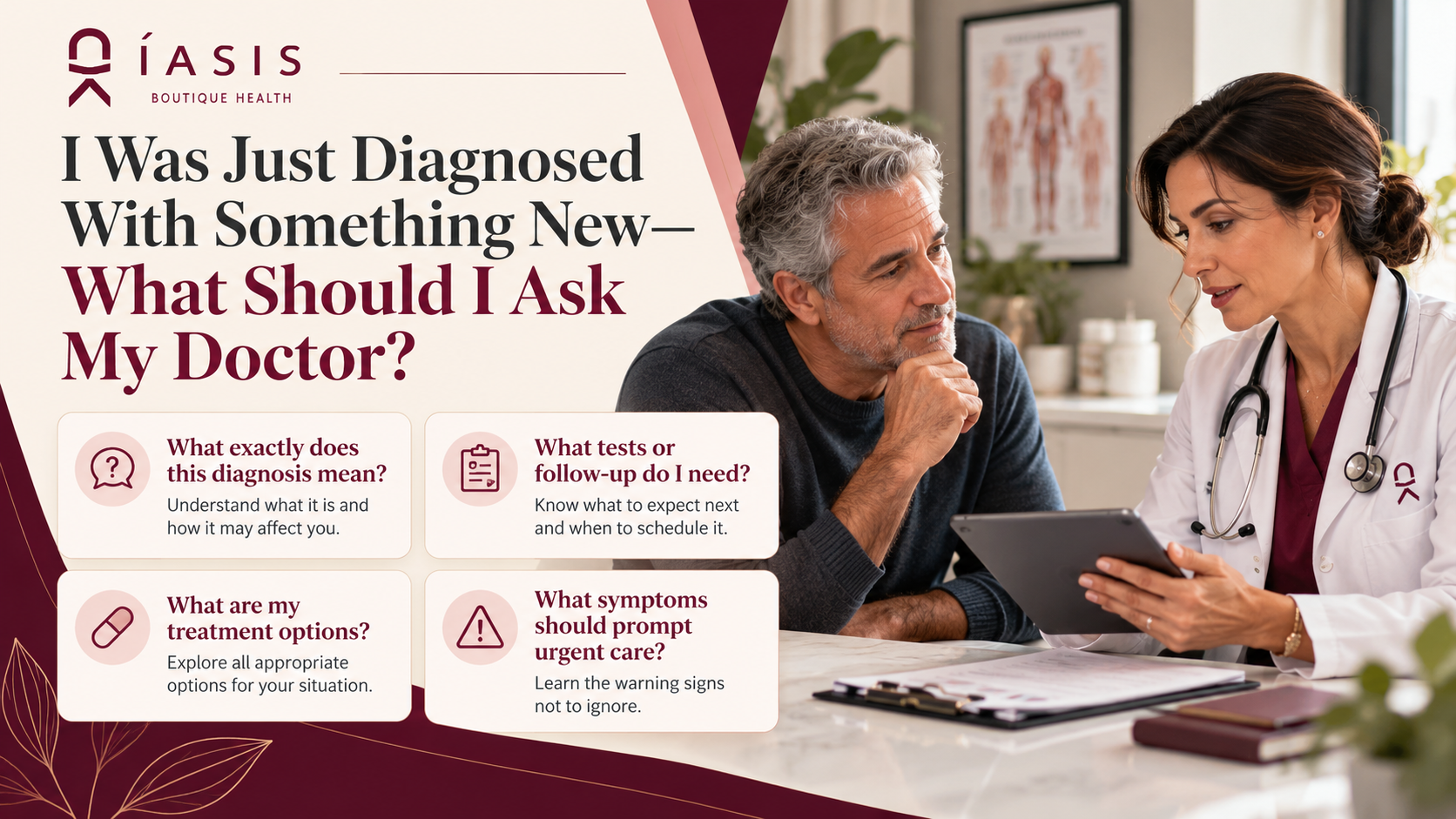
I Was Just Diagnosed With Something New—What Should I Ask My Doctor?
 iasiscare
What Family Medical History Should I Tell My Doctor About?
 iasiscare
I’m Healthy and Rarely Get Sick—Do I Really Need a Primary Care Doctor?
 iasiscare
I’m Losing Weight Without Trying—When Should I Be Concerned?
 iasiscare
My Doctor Said I Have Prediabetes—What Should I Do Now?
 iasiscare
I Keep Feeling Dizzy or Lightheaded—When Should I See a Doctor?
 iasiscare
My Hands or Feet Keep Going Numb or Tingling—When Should I See a Doctor?
 iasiscare
Why Are My Ankles or Feet Swollen—and When Should I See a Doctor?
 iasiscare
Why Am I Bruising So Easily All of a Sudden?
 iasiscare
Why Am I Getting Short of Breath Doing Things That Used to Be Easy?
 iasiscare
Why Do I Keep Waking Up to Pee at Night?