iasiscare
Doctor Visits Feel Rushed? Get More Time With Your Physician

What to Do If You Feel Rushed at the Doctor
A doctor visit should leave you feeling heard, understood, and clear about what happens next. But many patients leave appointments feeling the opposite. They waited weeks to get in, had only a few minutes with the doctor, forgot half their questions, and walked out with instructions that still felt unclear.
If you have ever felt rushed at the doctor, you are not alone. It is one of the most common frustrations patients have with traditional primary care. Most people are not asking for anything unreasonable. They simply want enough time to explain what is going on, ask questions, review results, and understand their health.
The good news is that there are ways to make your visits more useful. There are also different care models, like concierge medicine, that are built around longer visits, better access, and a stronger doctor-patient relationship.
Why Do Doctor Visits Feel So Rushed?
Most rushed doctor visits are not caused by a doctor not caring. In many cases, the problem is the system around the visit.
Traditional primary care offices often schedule patients in short time blocks. Doctors may be responsible for large patient panels, full schedules, portal messages, lab reviews, refills, paperwork, and follow-up tasks all at the same time. That creates pressure on everyone: the doctor, the staff, and the patient.
When the schedule is packed, even a good physician may not have enough time to slow down and fully explain everything. The patient may feel like they are being processed instead of cared for.
Signs Your Doctor Visit Was Too Rushed
Sometimes patients leave a visit with a vague feeling that something was missing. Other times, it is obvious.
You may have felt rushed if:
- You did not get to explain all of your symptoms
- You forgot to ask important questions
- Your lab results were mentioned but not clearly explained
- You were given a medication but did not understand why
- You left unsure about the next step
- Your doctor seemed distracted or pressed for time
- You had multiple concerns but only one was discussed
- You felt uncomfortable slowing the visit down
One rushed visit can be frustrating. Repeated rushed visits can start to affect how confident you feel in your care.
Why Rushed Appointments Can Be a Problem
Short visits may seem like a minor inconvenience, but they can create bigger problems over time.
Important details can be missed
Symptoms often need context. When did they start? What makes them better or worse? Are they connected to medications, stress, sleep, diet, blood pressure, blood sugar, or something else?
If there is not enough time to talk through the full picture, important details may not come up.
Patients may not understand their results
Lab results can be confusing. A number may be technically “normal” but still trending in the wrong direction. Another result may be slightly abnormal but not urgent. Without explanation, patients may either worry too much or not realize something needs attention.
A good visit should help you understand what your results mean, what matters most, and what should happen next.
Medication questions may not get enough attention
Many patients take more than one medication. They may have questions about side effects, interactions, dosage changes, or whether a medication is still necessary.
Those conversations take time. If they are rushed, patients may leave uncertain or avoid asking altogether.
Prevention gets pushed aside
Preventive care often gets skipped when appointments are focused only on the most urgent issue. But prevention is one of the most important parts of primary care.
Blood pressure, cholesterol, diabetes risk, cancer screenings, heart health, weight changes, sleep, stress, and family history all deserve attention before there is a crisis.
For more on this, read our guide on why preventive care matters after 40.
What to Do Before Your Next Doctor Visit
If your appointments often feel rushed, preparation can help you get more out of the time you have.
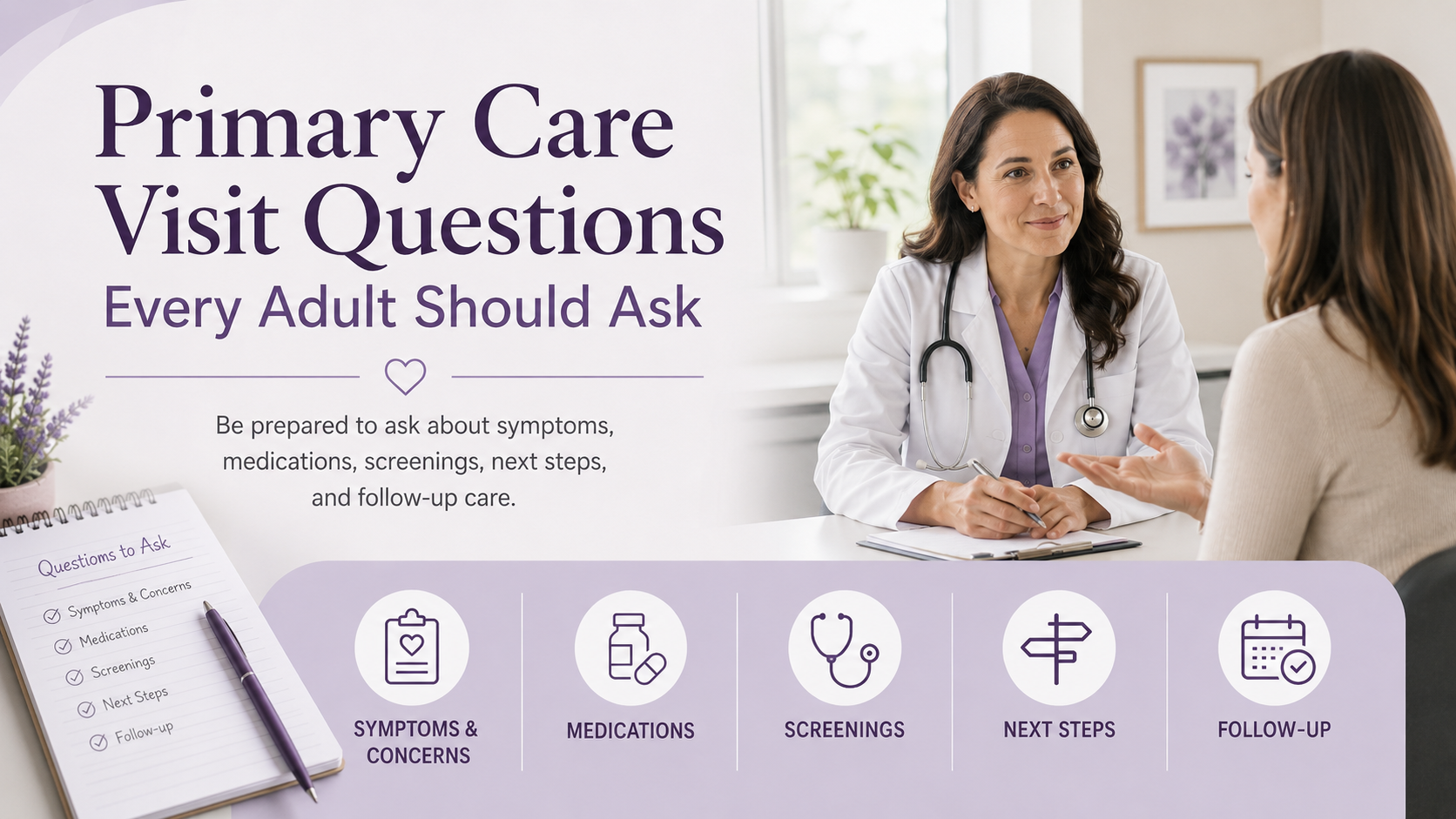
Write down your top concerns before the visit
Before your appointment, make a short list of what you want to discuss. Put the most important concern first.
Try to separate your list into:
- The main reason for the visit
- Symptoms you are having
- Medication questions
- Lab or test questions
- Preventive care questions
- Follow-up items from specialists or urgent care
This helps you avoid forgetting something once the appointment starts.
Be clear about what worries you most
Patients sometimes describe symptoms but do not explain what they are worried about. For example, a patient may say they have chest tightness, fatigue, headaches, or dizziness, but not mention the fear behind it.
It is okay to say, “I am worried this could be related to my heart,” or “I am concerned this medication is causing side effects.” That helps the doctor understand what needs to be addressed directly.
Bring your medication list
If you take prescriptions, supplements, or over-the-counter medications, bring an updated list. Include the dose and how often you take each one.
Medication review is especially important if you see multiple doctors or recently had a change after an urgent care, emergency room, or specialist visit.
Ask what should happen next
Before the visit ends, ask for the next step. This can help prevent confusion after you leave.
Useful questions include:
- What are we watching for?
- When should I follow up?
- What symptoms should make me call sooner?
- What should I do if the medication causes side effects?
- Are there labs or tests I need?
- What would change the plan?
We also have a full guide on what happens during a concierge doctor visit if you want to compare how a longer appointment can feel.
What to Say If You Feel Rushed During the Appointment
It can feel awkward to slow the visit down, but your health questions matter. You are allowed to ask for clarity.
Here are a few simple ways to speak up:
- “I want to make sure I understand the plan before I leave.”
- “Can we go over my lab results in plain language?”
- “I have a few concerns, but this one worries me most.”
- “What should I do if this does not improve?”
- “Can you explain why you recommend this medication?”
- “When should I follow up with you?”
A good doctor should want you to understand your care. If you consistently feel like there is no room for your questions, it may be time to consider a different primary care experience.
When a Rushed Visit May Not Be Enough
Some concerns need more time than a short appointment can provide. This is especially true when symptoms are unclear, ongoing, or connected to other health issues.
You may need a more thorough visit if you are dealing with:
- Ongoing fatigue
- Blood pressure concerns
- Blood sugar changes
- Medication side effects
- Multiple symptoms at once
- Abnormal labs
- New chest discomfort, shortness of breath, or severe symptoms
- Chronic conditions that are not well controlled
- Follow-up after an urgent care or emergency room visit
Severe symptoms should always be handled urgently through emergency care. But for non-emergency concerns that still deserve attention, better primary care access can make a major difference.
How Concierge Medicine Helps Patients Who Feel Rushed
Concierge medicine is designed for patients who want more time and access with their doctor. Instead of trying to fit every concern into a crowded schedule, the model gives the doctor-patient relationship more room to work.
At IASIS Boutique Health, patients work directly with Dr. Georgios Karanastasis, a board-certified internal medicine physician. Membership includes unlimited office visits, annual comprehensive labs, unlimited telehealth when appropriate, EKG testing, point-of-care testing, direct physician access, and no copays for included services.
Longer visits
Longer appointments give patients time to explain what is going on. They also give the doctor time to ask follow-up questions, review history, look at labs, discuss medications, and explain the plan clearly.
Same-day and next-day appointment access
When a concern comes up, members typically have access to same-day or next-day appointments. That can help patients avoid waiting weeks or using urgent care for issues that belong with a primary care doctor.
For more on this, read same-day primary care vs. urgent care.
Direct physician access
Direct access helps patients stay connected after the visit. This can be especially helpful for lab follow-up, medication questions, chronic condition management, and care-plan updates.
Telehealth when appropriate
Not every follow-up needs to happen in person. Telehealth can be useful for reviewing labs, discussing medication questions, checking in on symptoms, and talking through next steps when a physical exam is not needed.
One doctor who knows your history
Seeing the same physician over time makes care more personal and more useful. Dr. Karanastasis can follow your health history, lab trends, medications, risk factors, and goals in a more continuous way.
You can learn more about him here: Meet Dr. Georgios Karanastasis.
Is It Time to Change Your Primary Care Experience?
If you feel rushed once, it may simply be a busy day. But if you feel rushed every time, it may be a sign that the care model is not giving you what you need.
It may be time to look for a different option if you want:
- More time with your physician
- Clearer explanations
- Direct access when questions come up
- Same-day or next-day availability
- Annual labs included
- Telehealth when appropriate
- Better follow-up after tests or medication changes
- A doctor who knows your health history
If you are comparing care models, our guide on concierge doctors vs. traditional primary care explains the difference in more detail.
Primary Care Should Give You Time to Understand Your Health
Feeling rushed at the doctor can make healthcare feel confusing, frustrating, and impersonal. Patients deserve enough time to ask questions, understand their results, and leave with a plan that makes sense.
At IASIS Boutique Health, Dr. Georgios Karanastasis offers concierge primary care for patients who want a more personal relationship with their physician. Membership includes longer visits, same-day and next-day availability for members, annual labs, telehealth when appropriate, direct doctor access, and no copays for included services.
If you are ready for primary care that gives you more time and clearer answers, you can book an appointment with IASIS Boutique Health.
Related posts
iasiscare Why Is It So Hard to Get a Primary Care Appointment? iasiscare
Concierge Medicine vs Insurance-Based Care: What’s the Real Difference?
iasiscare
Concierge Medicine vs Insurance-Based Care: What’s the Real Difference?
 iasiscare
GLP-1 Weight Loss Medications: What a Concierge Doctor Can Offer That a Weight-Loss Clinic Can't
iasiscare
GLP-1 Weight Loss Medications: What a Concierge Doctor Can Offer That a Weight-Loss Clinic Can't
 iasiscare
What to Do When Your Doctor Won’t Listen | 7 Steps
iasiscare
What to Do When Your Doctor Won’t Listen | 7 Steps
 iasiscare
What Questions Should You Ask Your Primary Care Doctor?
iasiscare
What Questions Should You Ask Your Primary Care Doctor?