iasiscare
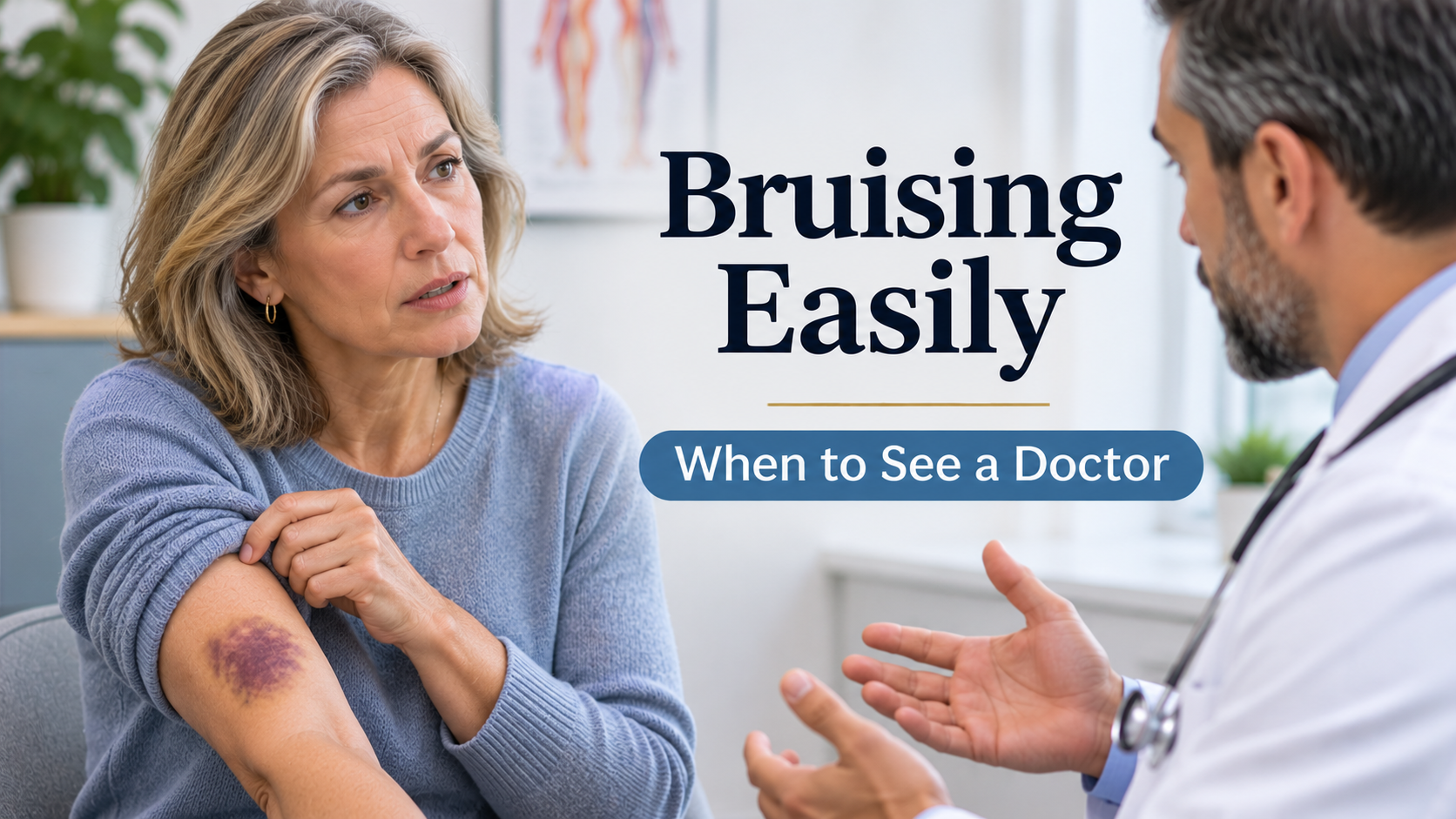
Why Am I Bruising So Easily All of a Sudden?
Written by Georgios Karanastasis, MD
Board-Certified Internal Medicine Physician & Founder of IASIS Boutique Health
What Easy Bruising Can Mean and When You Should See a Doctor
You notice a bruise on your arm and cannot remember bumping into anything.
Then another appears on your leg.
Maybe you have always bruised easily.
Or maybe this is completely new.
That naturally raises questions:
Why am I bruising so easily?
Could one of my medications be causing this?
Do I need blood work?
When is bruising something I should actually worry about?
Bruises happen when small blood vessels beneath the skin are damaged and blood leaks into the surrounding tissue.
Many bruises are harmless and happen after minor bumps you may not even remember.
But a new pattern of frequent, large, unexplained, or unusually severe bruising deserves more attention.
The important questions are not simply whether you bruise, but whether the pattern has changed, where the bruises are appearing, how large they are, and whether other bleeding symptoms are present.
What Causes a Bruise?
A bruise forms when small blood vessels under the skin break after pressure or injury.
Blood then collects beneath the skin.
Bruises may initially appear:
- red
- purple
- blue
- dark brown
As the body reabsorbs the blood, the color commonly changes before the bruise disappears.
Is It Normal to Bruise Without Remembering an Injury?
Sometimes.
You may bump into:
- a desk
- a countertop
- a door frame
- exercise equipment
without paying much attention at the time.
A bruise may not become noticeable until later.
An occasional unexplained bruise is very different from suddenly developing numerous bruises with no clear reason.
When Should You See a Doctor for Easy Bruising?
Schedule an evaluation if bruising:
- has suddenly become much more frequent
- occurs without an obvious injury
- produces unusually large bruises
- appears in unusual locations
- occurs along with other bleeding
- began after a medication change
- continues to worsen
Your physician can determine whether the change is likely benign or whether medications, blood counts, clotting, liver function, or another issue deserves review.
When Is Bruising More Urgent?
Seek prompt medical evaluation if bruising occurs with symptoms such as:
- significant bleeding that is difficult to stop
- blood in the stool
- black or tarry stool
- blood in the urine
- vomiting blood
- severe weakness or fainting
- new severe headache after a head injury
If bleeding appears severe or potentially life-threatening, seek emergency care.
Why Am I Bruising More Easily as I Get Older?
Bruising often becomes easier with age.
Skin becomes thinner, and the tissues that help protect blood vessels may become less substantial.
That means relatively minor contact may produce a visible bruise.
Older adults may also be more likely to take medications that increase bruising.
However, a sudden major change in bruising should not simply be dismissed as aging.
Can Blood Thinners Cause Bruising?
Yes.
Medications that reduce blood clotting can make bruises appear more easily or become larger after relatively minor trauma.
If you take a blood thinner, tell your physician if:
- bruising suddenly becomes much worse
- you develop repeated large bruises
- you also have nosebleeds
- your gums bleed excessively
- you notice blood in urine or stool
Do not stop an anticoagulant on your own.
Stopping these medications without guidance can create serious risk.
Can Aspirin Cause Easy Bruising?
Yes.
Aspirin affects platelets, which play an important role in blood clotting.
That can make bruising or bleeding easier in some patients.
If aspirin was prescribed for a specific medical reason, do not discontinue it without discussing the decision with your physician.
Can Ibuprofen or Naproxen Make You Bruise More Easily?
They can contribute in some patients.
Nonsteroidal anti-inflammatory medications can affect platelet function and may increase bleeding risk, particularly when combined with other medications.
Tell your physician how frequently you use over-the-counter pain medications.
Patients sometimes forget to include them when reviewing their medication list.
Can Steroids Cause Easy Bruising?
Long-term corticosteroid use can affect the skin and tissues and may contribute to easier bruising in some patients.
The effect depends on factors such as:
- dose
- duration
- route of administration
- individual susceptibility
If bruising developed during steroid treatment, mention it to the clinician managing the medication.
What If You Take Several Medications?
This makes medication review especially important.
Bring a complete list that includes:
- prescription medications
- over-the-counter medications
- vitamins
- herbal products
- supplements
Some combinations may increase the chance of bleeding or bruising.
If your medication list has become difficult to manage, read what to ask your doctor when you are taking several medications.
Can Supplements Make You Bruise Easily?
Some supplements may affect bleeding or interact with prescription medications.
This is one reason your physician should know everything you take, even if it was purchased without a prescription.
“Natural” does not automatically mean a product cannot affect medication or bleeding risk.
Can Vitamin Deficiencies Cause Bruising?
Certain nutritional deficiencies can sometimes contribute to abnormal bruising or bleeding.
However, easy bruising does not automatically mean you are deficient in a vitamin.
Your physician may consider:
- dietary history
- weight changes
- digestive problems
- other symptoms
- relevant laboratory findings
Do not assume that taking large doses of vitamins will solve unexplained bruising.
Can Low Platelets Cause Bruising?
Yes.
Platelets help the blood clot.
A low platelet count can contribute to:
- easy bruising
- small red or purple skin spots
- nosebleeds
- gum bleeding
- other unusual bleeding
A complete blood count can measure platelet levels when testing is appropriate.
What Are Tiny Red or Purple Dots on the Skin?
Very small red or purple spots may sometimes represent tiny areas of bleeding beneath the skin.
They are different from a typical large bruise.
If you suddenly develop many unexplained spots, especially with fever, illness, unusual bleeding, or other concerning symptoms, seek medical evaluation.
Can Anemia Cause Bruising?
Anemia itself is not always the direct cause of bruising.
However, a condition causing blood loss or affecting blood-cell production could potentially lead to both anemia and abnormal bruising or bleeding.
If you are also experiencing:
- fatigue
- weakness
- shortness of breath
- dizziness
tell your physician.
If persistent fatigue is also a major concern, read when fatigue should be evaluated by a doctor.
Can Liver Problems Cause Easy Bruising?
Yes.
The liver is involved in producing proteins necessary for normal clotting.
Significant liver disease can sometimes contribute to abnormal bruising or bleeding.
Your physician may consider liver-related evaluation if bruising occurs with other findings such as:
- yellowing of the skin or eyes
- abdominal swelling
- known liver disease
- abnormal liver tests
Easy bruising alone does not mean you have liver disease.
Can Alcohol Contribute to Bruising?
Heavy or prolonged alcohol use may affect liver function, nutrition, and blood-cell production in ways that can contribute to abnormal bleeding or bruising.
Tell your physician honestly about alcohol intake.
That information can be medically important.
Can a Blood Disorder Cause Easy Bruising?
Yes, although blood disorders are far from the only explanation.
Conditions involving:
- platelets
- clotting proteins
- blood-cell production
can sometimes lead to abnormal bruising.
Your physician will decide whether the bruising pattern and other symptoms justify laboratory evaluation.
Does Easy Bruising Mean Leukemia?
No.
This is a common fear when people search unexplained bruising online.
Leukemia and other blood disorders can cause bruising in some patients, but bruising has many much more common explanations.
The appropriate response is not to assume the worst.
It is to evaluate a significant change in bruising alongside your other symptoms and blood counts when appropriate.
What Other Symptoms Matter With Easy Bruising?
Tell your physician if bruising occurs with:
- persistent fever
- unintentional weight loss
- significant fatigue
- repeated infections
- nosebleeds
- gum bleeding
- blood in urine or stool
Symptoms that occur together can provide more useful information than the bruises alone.
What If You Are Also Losing Weight Without Trying?
Mention both symptoms.
Unintentional weight loss has many possible causes and does not automatically indicate a serious disease.
But when it occurs alongside another new unexplained symptom, your physician should understand the complete pattern.
Read when unexplained weight loss should be evaluated.
Can Exercise Cause Bruising?
Yes.
Exercise, sports, and weight training can cause minor tissue trauma that leads to bruising.
This is more likely if you:
- perform contact sports
- lift weights
- use equipment that presses against the skin
- recently increased exercise intensity
The location of the bruises may help explain the cause.
Why Do I Get Bruises on My Legs So Easily?
The legs frequently experience minor bumps during everyday activities.
Bruises on the shins and thighs can occur without a person remembering the exact injury.
What is more important is whether:
- the bruises are unusually large
- there are many at once
- they appear without any likely trauma
- the pattern is new for you
What If Bruises Appear on My Arms?
Arm bruises can also occur after minor everyday trauma.
In older adults, thinner skin can make forearm bruising especially common.
But frequent spontaneous bruising in multiple areas deserves review.
Are Bruises on the Abdomen or Back More Concerning?
Bruises in areas that are less likely to experience everyday bumps may deserve more attention, particularly when there is no remembered injury.
Tell your physician where the bruises are appearing rather than simply saying you are bruising “everywhere.”
What If the Bruises Are Very Large?
Large bruises may occur after significant trauma or in people taking medications that affect clotting.
If large bruises appear repeatedly without a clear injury, tell your physician.
Size, frequency, and location all help determine whether evaluation is appropriate.
Why Do My Bruises Take So Long to Go Away?
Bruises can take days or several weeks to fully resolve depending on their size and depth.
Healing can also appear slower in older adults.
If a bruise continues enlarging, becomes very painful, or does not seem to improve at all, it should be examined.
What If a Bruise Feels Hard or Has a Lump?
A larger collection of blood beneath the skin can sometimes form a hematoma.
This may feel firm or swollen.
Large, painful, expanding, or unexplained hematomas deserve medical evaluation.
What If You Bruise After Every Blood Draw?
A small bruise at a blood-draw site is common.
Pressure after the needle is removed usually helps reduce bleeding beneath the skin.
If you develop very large bruises after routine blood draws or continue bleeding for an unusually long time, tell your physician.
Can Bruising Start After a New Medication?
Yes.
The timeline is important.
If bruising begins soon after:
- a new prescription
- a dose increase
- adding aspirin
- adding an over-the-counter medication
- adding a supplement
bring that information to your physician.
This is one reason medication lists should be updated regularly.
What If Several Doctors Prescribed Different Medications?
Make sure one physician has the complete list.
A cardiologist, primary care physician, specialist, and urgent-care clinician may each prescribe something without seeing every medication change immediately.
This increases the importance of coordination.
If multiple doctors are involved in your care, read who should coordinate the whole medical picture when you see several physicians.
What Will Your Doctor Ask About Easy Bruising?
Your physician may ask:
- When did the bruising change?
- How often are new bruises appearing?
- Where are they located?
- Are they unusually large?
- Do you have nosebleeds or gum bleeding?
- Do you have blood in urine or stool?
- What medications and supplements do you take?
- Do you have liver disease?
- Is there a family history of bleeding disorders?
The answers help determine whether testing is needed.
Does Family History Matter?
Yes.
Tell your physician if relatives have been diagnosed with:
- bleeding disorders
- platelet disorders
- abnormal clotting conditions
If you are not sure what other family information matters, read what family medical history you should tell your doctor.
What Blood Tests Might Be Done for Easy Bruising?
There is no one test that every person with bruising automatically needs.
Depending on the history and examination, your physician may consider tests that evaluate:
- red and white blood cells
- platelets
- clotting function
- liver function
- other targeted concerns
The goal is to answer a specific medical question rather than order every possible test.
What Does a CBC Tell Your Doctor?
A complete blood count, or CBC, provides information about several types of blood cells.
It can show:
- hemoglobin
- red blood-cell measures
- white blood cells
- platelets
That can be useful when abnormal bruising occurs with fatigue, infections, or other symptoms.
What If My CBC Is Normal?
That can be reassuring.
But a normal CBC does not answer every possible question about bruising.
Your physician may still need to consider:
- medications
- supplements
- skin changes
- clotting function
- liver health
- the actual bruising pattern
What If All My Tests Are Normal but I Still Bruise Easily?
Follow up if the pattern continues or worsens.
Normal initial testing may make some concerning causes less likely.
Your physician can then reconsider whether:
- medication is the likely explanation
- minor trauma is contributing
- age-related skin changes explain the pattern
- additional evaluation is actually necessary
If you have already undergone many tests and still do not understand the next step, read what to do when medical testing keeps expanding without a clear plan.
Should You See a Hematologist for Easy Bruising?
Not automatically.
Primary care or internal medicine is often a reasonable place to begin.
A hematology referral may be appropriate when:
- blood counts are abnormal
- clotting tests are abnormal
- significant bleeding accompanies the bruising
- a blood or bleeding disorder is suspected
If you are unsure which physician to see first, read Primary Care Doctor vs. Specialist.
Should You Take Photos of Your Bruises?
That can be useful.
Bruises may fade before your appointment.
A photo can help document:
- size
- location
- number of bruises
- how the appearance changes over time
You do not need to photograph every minor bruise.
But documenting a new or unusual pattern may help your physician understand what has been happening.
What Should You Track Before the Appointment?
Write down:
- when the bruising became more frequent
- where bruises appear
- whether they happen after minor trauma
- new medications
- over-the-counter medications
- supplements
- other bleeding symptoms
If several other health concerns are happening at the same time, read how to discuss multiple health concerns during one primary care appointment.
What Questions Should You Ask Your Doctor About Easy Bruising?
Consider asking:
- Could one of my medications be causing this?
- Does this bruising pattern look unusual?
- Do I need a blood count?
- Should my platelets be checked?
- Do I need clotting tests?
- Could supplements be contributing?
- Do I need a specialist?
- What bleeding symptoms should make me seek urgent care?
Why Continuity Matters When Bruising Changes
An established physician can compare a new bruising pattern with your previous health information.
That may include:
- previous blood counts
- platelet levels
- liver tests
- medication changes
- other symptoms
This helps distinguish a longstanding tendency to bruise from a genuinely new change.
This broader perspective is part of adult primary care in Orland Park.
How IASIS Boutique Health Approaches Easy Bruising
At IASIS Boutique Health in Orland Park, Georgios Karanastasis, MD, provides membership-based adult primary care and internal medicine through a limited-panel practice.
When a patient reports new or unexplained bruising, the goal is not to assume a serious blood disorder or dismiss the bruising as insignificant.
The pattern needs context.
Depending on the patient, that may include reviewing:
- when bruising began
- how frequently it occurs
- where bruises appear
- medications
- supplements
- other bleeding symptoms
- previous blood counts
- relevant medical conditions
Laboratory testing or specialist referral can then be considered when the history and examination suggest it is appropriate.
For adults who want more time to evaluate new or recurring health changes in context, learn more about internal medicine in Orland Park and concierge primary care at IASIS Boutique Health.
Frequently Asked Questions
Why am I bruising so easily all of a sudden?
A sudden increase in bruising may be related to medications, supplements, age-related skin changes, platelet or clotting problems, liver conditions, nutritional issues, or other factors. A new unexplained pattern should be discussed with your physician.
Is it normal to bruise without remembering hitting anything?
Occasionally, yes. Minor bumps are easy to forget. Frequent, large, or increasingly unexplained bruises are more important to evaluate.
Can blood pressure medicine cause bruising?
Some medications may influence bruising indirectly, while medications such as blood thinners and antiplatelet drugs are more commonly associated with increased bruising. Your physician should review your complete medication list.
Can aspirin cause easy bruising?
Yes. Aspirin affects platelet function and may make bruising or bleeding more noticeable in some patients.
Can low platelets cause bruising?
Yes. Platelets play an important role in clotting, and a low platelet count can contribute to unusual bruising or bleeding.
Does easy bruising mean leukemia?
No. Easy bruising has many possible causes, and leukemia is only one much less common possibility. The overall pattern, other symptoms, examination, and blood testing help determine whether further evaluation is needed.
What blood tests are done for easy bruising?
Depending on the situation, a physician may consider a complete blood count, platelet count, clotting tests, liver testing, or other targeted studies.
Should I see a hematologist for bruising?
Not necessarily. Primary care or internal medicine can usually begin the evaluation and decide whether hematology referral is appropriate.
When is bruising an emergency?
Seek urgent or emergency care for significant uncontrolled bleeding, blood in stool or urine, vomiting blood, severe weakness or fainting, or concerning symptoms after significant injury.
The Bottom Line
An occasional bruise is usually not unusual.
What matters is when the pattern changes.
Ask:
Am I suddenly bruising much more than before?
Are the bruises unusually large?
Do I know how they happened?
Did a medication recently change?
Am I having other bleeding?
Are there other new symptoms?
A thoughtful evaluation can often distinguish common medication or skin-related causes from situations that need additional testing.
At IASIS Boutique Health, Dr. Georgios Karanastasis provides adult primary care in Orland Park through a limited-panel membership model centered on longer appointments, continuity, direct physician communication, preventive care, medication review, and thoughtful evaluation of new health concerns.
About the Author
Georgios Karanastasis, MD is a board-certified internal medicine physician and founder of IASIS Boutique Health in Orland Park, Illinois. He earned his medical degree from the University of Athens in Greece and completed his internal medicine residency at John H. Stroger Jr. Hospital of Cook County.
Dr. Karanastasis provides adult primary care with a focus on preventive medicine, cardiovascular health, medication management, chronic disease management, and long-term physician-patient relationships.
Through IASIS Boutique Health, he provides membership-based care through a limited-panel practice designed to allow longer appointments, direct physician communication, continuity, and more time to understand each patient's broader health picture.
Medical Review: Georgios Karanastasis, MD
Last Reviewed: November 9, 2026
Medical Disclaimer
This article is intended for general educational purposes only and does not replace individualized medical advice, diagnosis, or treatment. Easy bruising has many possible causes, and the appropriate evaluation depends on the pattern of bruising, medications, supplements, other symptoms, medical history, examination, and individual risk factors. Seek urgent or emergency medical care for severe uncontrolled bleeding, blood in stool or urine, vomiting blood, fainting, or other severe or rapidly worsening symptoms.
Related posts
iasiscare I’m Losing Weight Without Trying—When Should I Be Concerned? iasiscare
My Doctor Said I Have Prediabetes—What Should I Do Now?
 iasiscare
My Heart Keeps Fluttering or Skipping Beats—Should I Be Worried?
 iasiscare
I Keep Feeling Dizzy or Lightheaded—When Should I See a Doctor?
 iasiscare
My Hands or Feet Keep Going Numb or Tingling—When Should I See a Doctor?
 iasiscare
Why Are My Ankles or Feet Swollen—and When Should I See a Doctor?
 iasiscare
Why Am I Getting Short of Breath Doing Things That Used to Be Easy?
 iasiscare
Why Do I Keep Waking Up to Pee at Night?
 iasiscare
Why Do I Keep Getting Headaches—and When Should I See a Doctor?