iasiscare
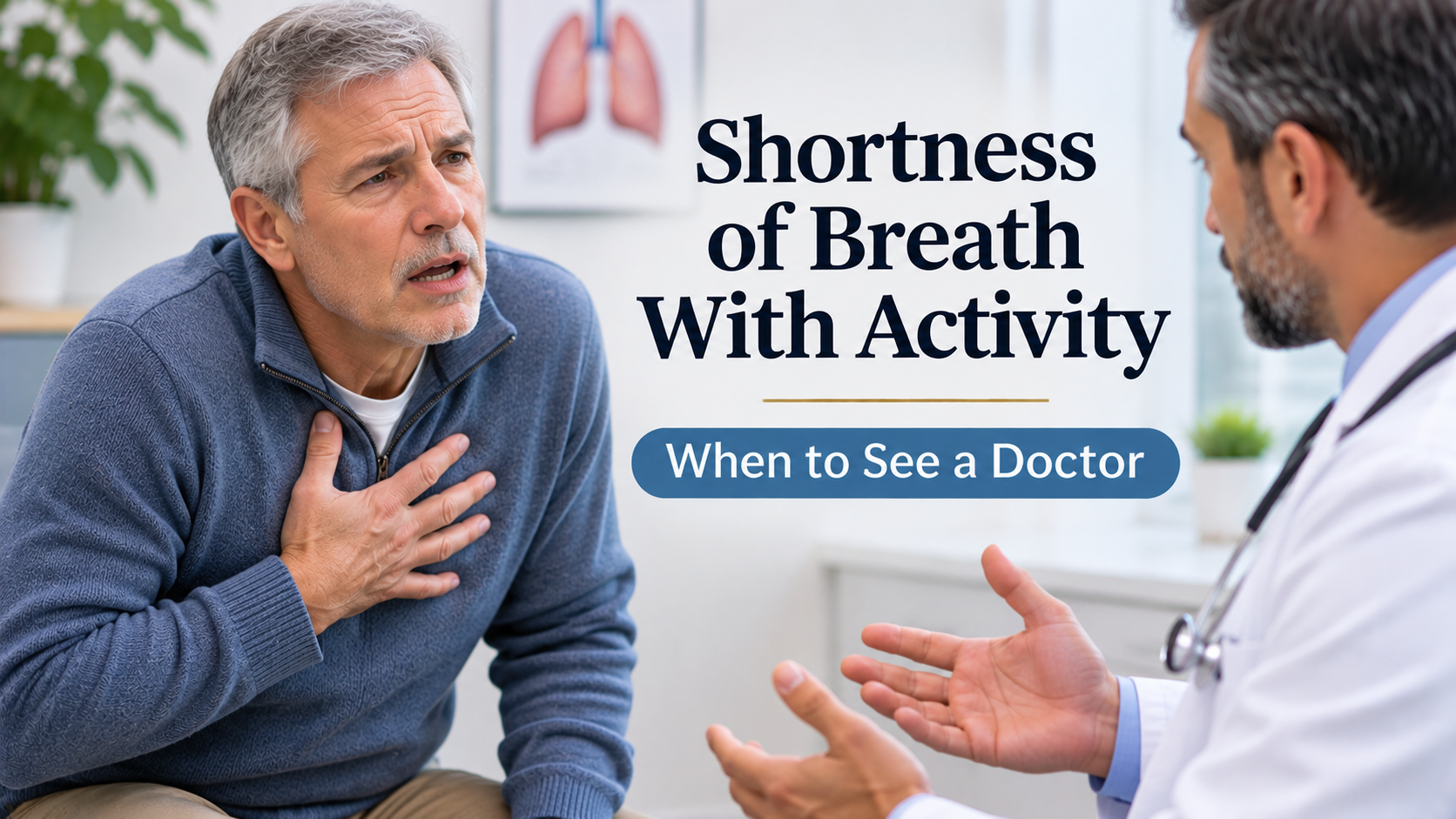
Why Am I Getting Short of Breath Doing Things That Used to Be Easy?
Written by Georgios Karanastasis, MD
Board-Certified Internal Medicine Physician & Founder of IASIS Boutique Health
What New Shortness of Breath With Activity Can Mean and When to See a Doctor
You walk up a flight of stairs and feel more winded than usual.
You carry groceries into the house and need to stop for a moment.
You take a walk you have done many times before, but now you feel unusually short of breath.
Sometimes this has a simple explanation.
You may have been less active recently.
You may be recovering from an illness.
You may be dehydrated, anemic, out of shape, or dealing with a medication effect.
But new or worsening shortness of breath can also be related to heart, lung, blood, or other medical conditions that deserve evaluation.
The most important question is whether your breathing has changed from what is normal for you.
What Does Shortness of Breath Feel Like?
Patients describe shortness of breath in different ways.
You may feel:
- winded
- unable to take a satisfying breath
- like you need to breathe faster
- tightness with breathing
- unable to keep up with your usual activity
- as though you need to stop and rest sooner than before
The medical term for shortness of breath is dyspnea.
What matters clinically is when it happens, how severe it is, how quickly it developed, and what other symptoms occur with it.
Is It Normal to Get Short of Breath Going Up Stairs?
It can be.
Climbing stairs requires more effort than walking on a flat surface.
Even healthy adults may breathe faster after several flights.
What matters more is whether:
- you suddenly become much more winded than before
- one flight now feels difficult when it never used to
- you need frequent stops
- other symptoms occur at the same time
A change in your normal exercise tolerance is often more useful than comparing yourself with someone else.
When Should You See a Doctor for Shortness of Breath?
Schedule medical evaluation when shortness of breath:
- is new
- keeps returning
- is gradually worsening
- occurs with less activity than before
- limits routine daily tasks
- occurs with palpitations
- occurs with leg swelling
- has no obvious explanation
You do not need to wait until breathing becomes severe before discussing a persistent change.
When Is Shortness of Breath an Emergency?
Seek urgent or emergency medical care if shortness of breath is severe, sudden, or occurs with symptoms such as:
- chest pain or pressure
- fainting
- blue or gray lips
- severe weakness
- new confusion
- coughing up blood
- significant one-sided leg swelling
- rapidly worsening breathing difficulty
Call 911 when symptoms may be life-threatening.
Why Am I Suddenly More Winded Than Usual?
There are many possible explanations.
Your physician may consider:
- reduced conditioning
- recent illness
- anemia
- asthma or other lung conditions
- heart rhythm problems
- heart conditions
- medication effects
- weight changes
- blood clots
- other medical causes
The pattern helps determine where to begin.
Can Being Out of Shape Cause Shortness of Breath?
Yes.
If your activity level decreases for weeks or months, your conditioning may decline.
You may notice that walking uphill, climbing stairs, or exercising feels harder than it used to.
But deconditioning should not automatically be assumed when breathing has changed significantly or suddenly.
Your doctor may need to rule out other causes first.
What If I Have Not Exercised in a Long Time?
That may explain some breathlessness.
But tell your physician if:
- the breathing difficulty is disproportionate to the activity
- you have chest discomfort
- you feel dizzy
- your heart races unusually
- you feel close to fainting
Those associated symptoms may change the evaluation.
Can Anemia Make You Short of Breath?
Yes.
Anemia means the blood has a reduced ability to carry oxygen effectively.
Symptoms can include:
- shortness of breath with activity
- fatigue
- weakness
- dizziness
- palpitations
If you are also unusually tired, read when persistent fatigue should be evaluated.
Can Low Iron Cause Shortness of Breath?
Iron deficiency can contribute when it causes anemia.
Your physician may consider:
- diet
- bleeding
- previous blood counts
- other symptoms
Do not begin high-dose iron simply because you are short of breath.
First determine whether iron deficiency is actually present.
Can Heart Problems Cause Shortness of Breath With Activity?
Yes.
The heart and lungs work together to deliver oxygen to your body during activity.
Certain heart conditions can make exertion more difficult.
Tell your physician if breathlessness occurs with:
- chest pressure
- palpitations
- ankle swelling
- rapid weight gain
- difficulty breathing when lying flat
- reduced exercise tolerance
Shortness of breath does not automatically mean heart disease.
But the possibility should be considered when the pattern fits.
Can Heart Palpitations Make You Feel Short of Breath?
They can.
A heart rhythm that becomes very fast or irregular may sometimes make you feel:
- winded
- lightheaded
- weak
- as though your heart is racing or fluttering
If those symptoms occur together, read when heart palpitations need medical evaluation.
What If My Ankles Are Swollen Too?
Tell your physician.
Shortness of breath combined with new or worsening leg swelling deserves attention because fluid balance or cardiovascular problems may be involved.
If swelling is also a recurring concern, read when swollen ankles and feet should be evaluated.
Can Lung Problems Cause Shortness of Breath?
Yes.
Lung conditions can make it more difficult to move oxygen efficiently.
Possible contributors may include:
- asthma
- respiratory infections
- chronic lung disease
- other pulmonary conditions
Your physician may ask whether you also have cough, wheezing, chest tightness, fever, or smoking history.
Can Asthma Start in Adulthood?
Yes.
Asthma is not limited to childhood.
Adults may develop symptoms such as:
- wheezing
- shortness of breath
- chest tightness
- cough
Symptoms may be triggered by exercise, allergens, respiratory infections, cold air, or other factors.
Testing may be needed to determine whether asthma is actually present.
Can a Respiratory Infection Leave You Short of Breath?
Yes.
Some people notice reduced exercise tolerance during or after a respiratory illness.
Your breathing should generally improve as recovery progresses.
If shortness of breath persists, worsens, or is accompanied by fever, chest pain, low oxygen levels, or other concerning symptoms, seek medical evaluation.
What If I Never Fully Recovered After Being Sick?
Tell your physician how long symptoms have lasted.
Persistent breathlessness after illness may need evaluation for:
- ongoing inflammation
- lung complications
- deconditioning
- anemia
- other contributing conditions
Can Anxiety Cause Shortness of Breath?
Yes.
Anxiety can cause faster breathing, chest awareness, palpitations, and the sensation that you cannot take a satisfying breath.
But new exertional shortness of breath should not automatically be labeled anxiety.
If walking, climbing stairs, or exercising consistently triggers symptoms, your physician should understand that pattern.
Can Stress Make You Feel Like You Cannot Catch Your Breath?
It can.
Stress may change breathing patterns and make you more aware of your breathing.
However, the presence of stress does not rule out a medical cause.
Both can exist at the same time.
Can Weight Gain Make You More Short of Breath?
Weight changes can affect how much effort is required during physical activity.
Significant weight gain may contribute to reduced exercise tolerance.
But rapid weight gain accompanied by swelling may represent fluid accumulation and deserves a different evaluation.
What If I Recently Lost Weight Without Trying?
Mention that too.
Shortness of breath with unintentional weight loss may require a broader evaluation than either symptom by itself.
If this applies to you, read when unexplained weight loss deserves medical evaluation.
Can Medications Cause Shortness of Breath?
Some medications may contribute directly or indirectly to breathing symptoms.
Medication effects may involve:
- heart rate
- blood pressure
- fluid balance
- sedation
- other physiological changes
If symptoms started after a new prescription or dose change, tell your physician.
Do not stop prescription medication on your own.
What If I Take Many Medications?
A complete medication review is important.
Bring an updated list of:
- prescriptions
- over-the-counter medications
- supplements
If your medication list has become difficult to manage, read what to ask when you are taking several medications.
Can Low Blood Pressure Make You Feel Short of Breath?
Low blood pressure may contribute to weakness or lightheadedness in some patients, particularly during activity.
If breathlessness occurs with dizziness when standing or walking, mention both symptoms.
Read when recurring dizziness or lightheadedness should be checked.
Can High Blood Pressure Cause Shortness of Breath?
Routine hypertension often causes no symptoms.
But severely elevated blood pressure or cardiovascular complications can occur with breathing problems.
If you have both unusual shortness of breath and very high blood-pressure readings, contact a healthcare professional promptly.
Can Prediabetes Cause Shortness of Breath?
Prediabetes by itself does not usually explain significant shortness of breath.
However, metabolic risk factors often occur together.
Your physician may still review:
- blood sugar
- blood pressure
- cholesterol
- weight
- overall cardiovascular risk
If you recently had an elevated A1C, read what to do after being told you have prediabetes.
Why Am I Short of Breath Only When Walking Uphill?
Walking uphill requires more cardiovascular and respiratory effort than walking on a flat surface.
The important question is whether this represents a change.
If you previously walked the same hill without difficulty and now need to stop frequently, tell your physician.
What If I Get Winded Carrying Groceries?
This is another useful example of functional change.
Instead of saying only:
“I feel short of breath sometimes,”
tell your physician:
“I used to carry groceries from the car without stopping, and now I have to sit down afterward.”
Specific examples make changes in exercise tolerance easier to understand.
What If I Get Short of Breath While Showering or Getting Dressed?
Breathlessness during basic daily activities deserves evaluation, especially if it is new.
Activities such as showering, dressing, or walking across a room require relatively little exertion for most adults.
A new inability to perform them comfortably may represent a significant change.
What If I Am Short of Breath at Rest?
Shortness of breath while sitting still is generally more concerning than mild breathlessness during strenuous exercise.
Seek prompt evaluation, particularly if the symptom is:
- new
- worsening
- severe
- associated with chest pain
- associated with fainting or confusion
Why Is It Harder to Breathe When I Lie Flat?
Difficulty breathing while lying flat is important to mention.
Tell your physician if you:
- need additional pillows to breathe comfortably
- prefer sleeping upright because of breathing
- wake suddenly feeling short of breath
These symptoms may influence how urgently your physician evaluates possible heart or lung causes.
What If I Wake Up Short of Breath at Night?
Tell your physician.
Possible explanations vary and can include:
- heart or lung conditions
- sleep-related breathing problems
- anxiety
- other causes
The timing and associated symptoms matter.
Can Sleep Apnea Cause Daytime Breathing Problems?
Sleep apnea primarily affects breathing during sleep.
It may contribute to daytime fatigue and cardiovascular risk, but it does not automatically explain new shortness of breath during activity.
Your physician should avoid assuming one diagnosis explains every symptom.
Can Smoking History Matter Even If I Quit Years Ago?
Yes.
Your physician should know:
- whether you currently smoke
- whether you smoked in the past
- approximately how much
- how long you smoked
This information can influence the evaluation of persistent respiratory symptoms.
Can a Blood Clot Cause Shortness of Breath?
Yes.
A pulmonary embolism occurs when a blood clot travels to the lungs.
Symptoms may include:
- sudden shortness of breath
- chest pain
- rapid heartbeat
- fainting or severe lightheadedness
- coughing up blood
Recent surgery, prolonged immobility, long travel, previous blood clots, and certain other factors can increase risk.
Possible pulmonary embolism requires emergency evaluation.
What If One Leg Is Swollen Too?
Sudden one-sided leg swelling combined with new shortness of breath requires urgent attention because a blood clot must be considered.
Do not wait for a routine office visit when symptoms are severe or sudden.
What Will Your Doctor Ask About Shortness of Breath?
Your physician may ask:
- When did it begin?
- Was the change sudden or gradual?
- What level of activity triggers it?
- Do you have chest pain?
- Do you have palpitations?
- Do your legs swell?
- Do you cough or wheeze?
- Have you recently been sick?
- Do you smoke or have a smoking history?
- What medications do you take?
The history often helps determine which tests actually make sense.
What Will Your Doctor Check During the Examination?
Depending on the situation, your physician may assess:
- heart rate
- blood pressure
- oxygen level
- heart sounds
- lung sounds
- leg swelling
- other relevant findings
What Tests Might Be Needed?
There is no single shortness-of-breath test panel.
Depending on the symptoms and examination, your doctor may consider:
- blood testing
- an electrocardiogram
- chest imaging
- lung-function testing
- heart testing
- other targeted evaluation
The appropriate workup depends on what the clinical picture suggests.
Why Might Your Doctor Order a CBC?
A complete blood count can help determine whether anemia may be contributing.
This can be particularly useful when shortness of breath occurs with:
- fatigue
- weakness
- dizziness
- palpitations
Why Might You Need an EKG?
An EKG records the electrical activity of the heart.
It can help evaluate:
- heart rate
- certain abnormal rhythms
- other cardiac electrical findings
An EKG is only one part of the evaluation and does not answer every possible cause of breathlessness.
Do You Need a Chest X-Ray?
Not everyone does.
Chest imaging may be useful when your physician is evaluating certain heart or lung causes.
The decision should be based on the symptoms, examination, medical history, and clinical concern.
Do You Need a Cardiologist?
Not automatically.
Primary care or internal medicine can often begin the evaluation.
Cardiology may be appropriate when:
- heart disease is suspected
- an abnormal rhythm is identified
- symptoms suggest a cardiovascular cause
- additional cardiac testing is needed
Do You Need a Pulmonologist?
Sometimes.
A pulmonologist may be appropriate when:
- a lung condition is suspected
- lung-function testing is abnormal
- respiratory symptoms persist
- specialized pulmonary evaluation is needed
If you are unsure where to begin, read Primary Care Doctor vs. Specialist.
What If My Heart and Lung Tests Are Normal?
That can be reassuring.
But if symptoms continue, follow up.
Your physician may need to reconsider:
- anemia
- conditioning
- medications
- weight changes
- other medical factors
If testing has become extensive but the plan remains unclear, read what to do when you keep getting medical tests but still do not know what comes next.
What Should You Track Before Your Appointment?
Write down:
- when symptoms began
- what activity triggers them
- how quickly you recover
- whether chest discomfort occurs
- whether your heart races
- whether your ankles swell
- whether you cough or wheeze
- whether your symptoms are getting worse
Specific examples are especially useful.
“I get winded walking from the parking lot to my office now” gives your physician more information than simply saying “I sometimes feel short of breath.”
What Questions Should You Ask Your Doctor?
Consider asking:
- Could anemia be contributing?
- Does this sound heart-related or lung-related?
- Could medication be causing this?
- Do I need an EKG?
- Do I need blood tests?
- Do I need lung-function testing?
- Do I need a cardiologist or pulmonologist?
- What symptoms should make me seek emergency care?
Why Continuity Matters When Your Exercise Tolerance Changes
A physician who knows your history may be able to compare your current symptoms with:
- previous blood counts
- weight
- blood pressure
- heart rate
- medications
- previous respiratory problems
- other recurring symptoms
A change from your normal baseline can sometimes be more meaningful than one isolated measurement.
This longitudinal view is part of adult primary care in Orland Park.
How IASIS Boutique Health Approaches New Shortness of Breath
At IASIS Boutique Health in Orland Park, Georgios Karanastasis, MD, provides membership-based adult primary care and internal medicine through a limited-panel practice.
When a patient reports becoming more short of breath than usual, the goal is not simply to assume the patient is out of shape or automatically attribute the symptom to the heart or lungs.
The pattern needs to be understood.
Depending on the individual situation, that may include reviewing:
- when the breathing change began
- what activities trigger it
- heart symptoms
- lung symptoms
- leg swelling
- medications
- blood-count history
- weight changes
- smoking history
Testing or specialist referral can then be considered based on the findings.
For adults who want more time to evaluate new or difficult-to-explain symptoms in context, learn more about internal medicine in Orland Park and concierge primary care at IASIS Boutique Health.
Frequently Asked Questions
Why am I getting out of breath so easily?
Possible causes include reduced conditioning, anemia, recent illness, lung conditions, heart conditions, medications, weight changes, or other medical factors. A new change from your usual exercise tolerance deserves evaluation.
Is it normal to be short of breath after climbing stairs?
Mild breathlessness can be normal after strenuous activity. What matters is whether the same activity suddenly feels much harder than it used to or causes additional symptoms.
Can anemia cause shortness of breath?
Yes. Anemia can reduce the blood's oxygen-carrying capacity and may cause breathlessness, fatigue, dizziness, weakness, or palpitations.
Can anxiety cause shortness of breath?
Yes, but new or persistent breathlessness should not automatically be attributed to anxiety without considering other medical causes.
Can heart problems cause shortness of breath without chest pain?
Yes. Some heart conditions can cause reduced exercise tolerance or breathlessness without classic chest pain. Your physician should interpret the symptom alongside your other risk factors and findings.
When is shortness of breath an emergency?
Seek emergency care for severe or sudden breathlessness, especially when it occurs with chest pain, fainting, blue or gray lips, confusion, coughing up blood, or other severe symptoms.
What doctor should I see for shortness of breath?
For non-emergency symptoms, primary care or internal medicine is often a reasonable starting point. Your physician can determine whether cardiology, pulmonology, or another specialty is appropriate.
What tests are done for unexplained shortness of breath?
Testing depends on the individual situation and may include blood work, an EKG, chest imaging, lung-function testing, or other targeted studies.
What if all my tests are normal but I still get winded?
Follow up. Continued symptoms may require reconsidering conditioning, medications, anemia, respiratory factors, cardiovascular factors, or whether further evaluation is appropriate.
The Bottom Line
Getting winded during strenuous activity can be normal.
What matters is when your normal changes.
Ask:
Am I more short of breath than I used to be?
Does less activity trigger it now?
Do I have chest discomfort?
Does my heart race?
Are my ankles swollen?
Am I dizzy or unusually tired?
Is the problem getting worse?
New or progressive shortness of breath deserves medical attention because several different conditions can produce the same symptom.
At IASIS Boutique Health, Dr. Georgios Karanastasis provides adult primary care in Orland Park through a limited-panel membership model centered on longer appointments, continuity, direct physician communication, preventive care, and thoughtful evaluation of new health concerns.
About the Author
Georgios Karanastasis, MD is a board-certified internal medicine physician and founder of IASIS Boutique Health in Orland Park, Illinois. He earned his medical degree from the University of Athens in Greece and completed his internal medicine residency at John H. Stroger Jr. Hospital of Cook County.
Dr. Karanastasis provides adult primary care with a focus on preventive medicine, cardiovascular health, medication management, chronic disease management, and long-term physician-patient relationships.
Through IASIS Boutique Health, he provides membership-based care through a limited-panel practice designed to allow longer appointments, direct physician communication, continuity, and more time to understand each patient's broader health picture.
Medical Review: Georgios Karanastasis, MD
Last Reviewed: November 9, 2026
Medical Disclaimer
This article is intended for general educational purposes only and does not replace individualized medical advice, diagnosis, or treatment. Shortness of breath has many possible causes, and the appropriate evaluation depends on the timing and severity of symptoms, medical history, medications, examination, and individual risk factors. Seek urgent or emergency medical care for severe or sudden breathing difficulty, chest pain, fainting, blue or gray lips, confusion, coughing up blood, or other severe or rapidly worsening symptoms.
Related posts
iasiscare My Heart Keeps Fluttering or Skipping Beats—Should I Be Worried? iasiscare
I Keep Feeling Dizzy or Lightheaded—When Should I See a Doctor?
 iasiscare
My Hands or Feet Keep Going Numb or Tingling—When Should I See a Doctor?
 iasiscare
Why Are My Ankles or Feet Swollen—and When Should I See a Doctor?
 iasiscare
Why Am I Bruising So Easily All of a Sudden?
 iasiscare
Why Do I Keep Waking Up to Pee at Night?
 iasiscare
Why Do I Keep Getting Headaches—and When Should I See a Doctor?