iasiscare
Why Do I Keep Waking Up to Pee at Night?
Written by Georgios Karanastasis, MD
Board-Certified Internal Medicine Physician & Founder of IASIS Boutique Health
What Frequent Nighttime Urination Can Mean and When to See a Doctor
You fall asleep, wake up a few hours later, and need to use the bathroom.
Then it happens again.
And maybe again before morning.
Occasionally getting up once during the night may not be unusual, especially if you drank a lot of fluid before bed.
But when nighttime urination starts interrupting your sleep repeatedly, it is worth understanding why.
The medical term for waking from sleep to urinate is nocturia.
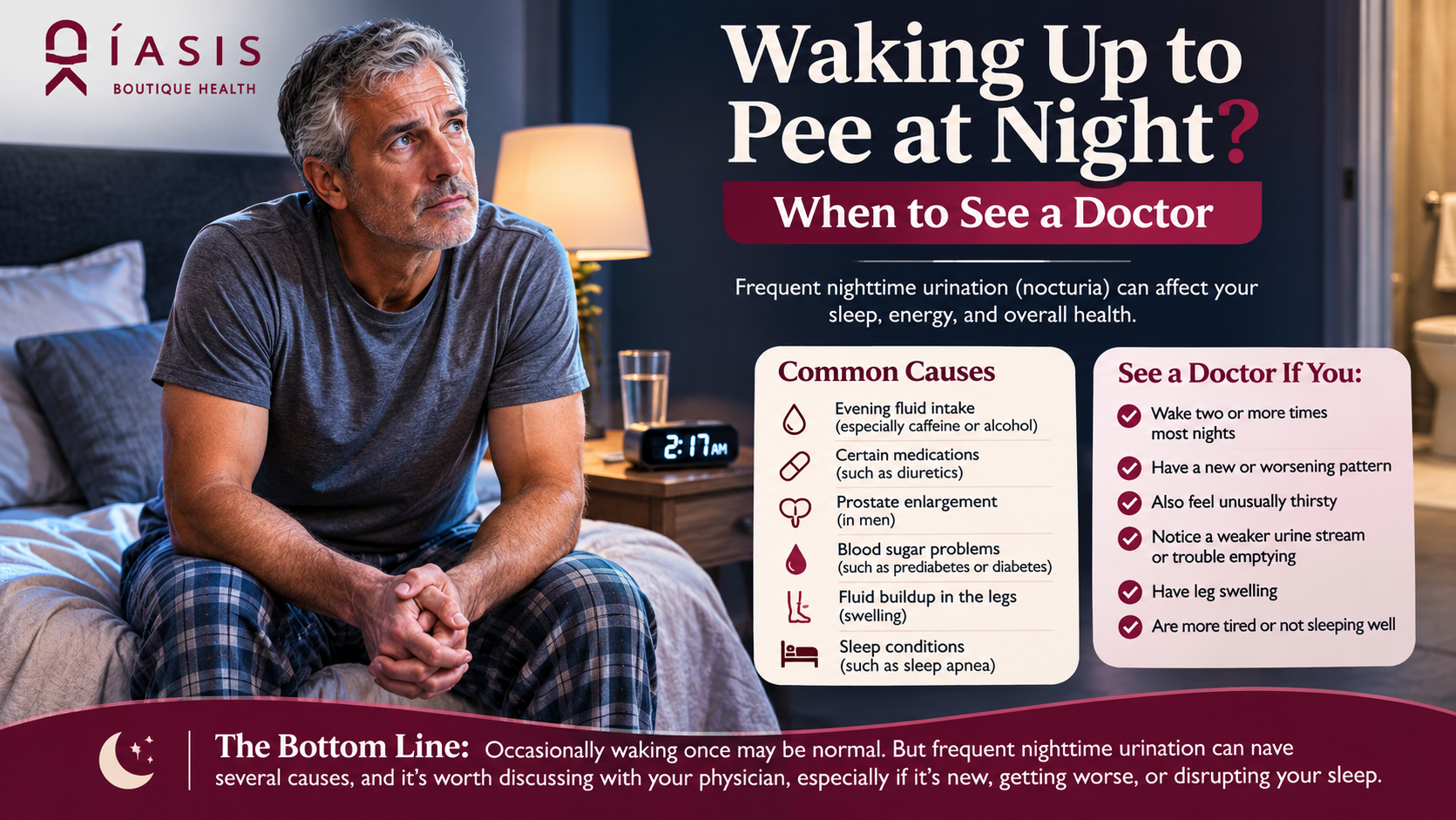
Nocturia can be related to fluid intake, medications, sleep problems, bladder issues, prostate enlargement, blood sugar abnormalities, swelling in the legs, or other medical conditions.
The important questions are how often you are waking up, whether the pattern is new, how much urine you are producing, and whether other urinary or medical symptoms are happening at the same time.
What Is Nocturia?
Nocturia means waking from sleep because you need to urinate.
It is different from simply going to the bathroom before bed or after waking for another reason.
Some people wake once.
Others wake several times every night.
The more frequently it happens, the more it can affect:
- sleep quality
- daytime energy
- concentration
- mood
- fall risk in older adults
Is It Normal to Wake Up Once a Night to Pee?
It can be.
Many adults occasionally wake once during the night, especially after:
- drinking a lot before bed
- having alcohol in the evening
- taking a diuretic
- sleeping lightly
What matters more is whether the pattern is changing.
If you used to sleep through the night and now wake two or three times regularly, that deserves more attention.
When Should You See a Doctor for Nighttime Urination?
Make an appointment when nocturia:
- starts happening frequently
- wakes you several times every night
- is getting worse
- is affecting your sleep or daytime function
- occurs with urinary pain or urgency
- occurs with increased thirst
- occurs with leg swelling
- has no obvious explanation
You do not need to wait until the symptom becomes severe before discussing it with your physician.
Why Am I Producing More Urine at Night?
There are several possible explanations.
Your body may be producing more urine overnight because of:
- evening fluid intake
- alcohol
- caffeine
- certain medications
- blood sugar problems
- fluid shifting from swollen legs
- other medical conditions
Or you may have a bladder or prostate issue that makes you feel the need to urinate even when the bladder is not very full.
Can Drinking Too Much Water Before Bed Cause Nocturia?
Yes.
If you drink several glasses of water, tea, or another beverage shortly before bed, waking up to urinate may simply reflect that intake.
Try paying attention to:
- how much you drink in the evening
- what time you stop drinking
- whether reducing late-night fluids changes the pattern
Do not severely restrict fluids without medical guidance, especially if you have other health conditions.
Can Caffeine Make You Urinate More at Night?
Yes.
Caffeine can increase urine production and may also interfere with sleep.
Possible sources include:
- coffee
- tea
- energy drinks
- some sodas
- pre-workout products
Late-day caffeine may contribute to both lighter sleep and more frequent urination.
Can Alcohol Cause Nighttime Urination?
Yes.
Alcohol can increase urine production and disrupt normal sleep architecture.
That means you may both produce more urine and wake more easily.
If nocturia happens mainly on evenings when you drink alcohol, that pattern is useful to notice.
Can Medications Make You Wake Up to Urinate?
Yes.
Some medications increase urine production or affect bladder function.
Diuretics, sometimes called water pills, are a common example.
If you take a diuretic, the timing of the dose may matter.
Other medications may also affect:
- bladder function
- sleep
- blood sugar
- fluid balance
Do not change medication timing or stop a prescription on your own.
If your medication list has become complicated, read what to ask your doctor when you are taking several medications.
Can Prediabetes Cause Frequent Urination at Night?
Prediabetes often causes no symptoms.
But when blood sugar becomes more elevated, increased thirst and urination may occur.
If nighttime urination happens together with:
- increased thirst
- frequent daytime urination
- fatigue
- unintentional weight loss
tell your physician.
If you were recently told your A1C is elevated, read what to do after a prediabetes diagnosis.
Can Diabetes Cause You to Wake Up to Pee?
Yes.
When blood glucose is significantly elevated, the kidneys may remove more glucose through the urine.
This can increase urine production and lead to:
- frequent urination
- nighttime urination
- increased thirst
Frequent urination alone does not diagnose diabetes.
Your physician can determine whether blood sugar testing is appropriate.
What If I Am Very Thirsty Too?
Tell your doctor.
The combination of increased thirst and increased urination may provide more useful information than either symptom alone.
Your physician may want to review:
- blood sugar
- medications
- fluid intake
- other symptoms
Can an Enlarged Prostate Cause Nocturia?
Yes.
In men, an enlarged prostate can affect urine flow and bladder emptying.
Symptoms may include:
- frequent urination
- nighttime urination
- weak urine stream
- hesitancy
- feeling that the bladder did not completely empty
- urgency
Nocturia alone does not prove that the prostate is the cause.
The full urinary pattern matters.
What If My Urine Stream Has Become Weaker?
Mention that specifically.
A weak stream, difficulty starting, dribbling, or incomplete emptying may suggest an obstruction or bladder-emptying issue.
Your physician may ask whether these symptoms occur during both the day and night.
Can a Urinary Tract Infection Cause Nighttime Urination?
Yes.
A urinary tract infection may cause:
- frequent urination
- urgency
- burning
- lower abdominal discomfort
- blood in the urine
Some infections may also cause fever or back pain.
If these symptoms are present, medical evaluation may be appropriate.
What If It Burns When I Urinate?
Burning or pain with urination is not typical simple nocturia.
Tell your physician because infection, inflammation, or another urinary issue may need evaluation.
If symptoms are severe or occur with fever, vomiting, or significant back pain, seek more prompt care.
What If I Feel Like I Have to Urinate All the Time?
Urinary frequency means needing to urinate more often than usual.
This may occur because:
- you are producing more urine
- your bladder capacity is reduced
- your bladder feels urgent before it is full
- you are not emptying completely
Your physician may ask whether the urine volumes are large or small.
That distinction can help narrow the possibilities.
What If I Urinate Frequently During the Day Too?
Tell your physician.
Daytime frequency plus nighttime urination may suggest a different pattern than nocturia alone.
Potential contributors include:
- high fluid intake
- blood sugar problems
- bladder irritation
- infection
- prostate problems
- medications
Can Overactive Bladder Cause Nocturia?
Yes.
Overactive bladder may cause:
- urgency
- frequency
- nighttime urination
- occasional leakage
But other causes should be considered before assuming the bladder itself is the only issue.
Can Leg Swelling Make You Pee More at Night?
Yes.
Fluid can accumulate in the legs during the day.
When you lie down at night, some of that fluid may return to the bloodstream and eventually be processed by the kidneys.
This can increase nighttime urine production.
If you also have recurring ankle or foot swelling, read when swollen ankles and feet should be evaluated.
What If My Legs Swell During the Day and I Urinate All Night?
That pattern is important to mention.
Your physician may want to review:
- heart symptoms
- kidney function
- medications
- blood pressure
- fluid intake
The combination may provide more information than either symptom alone.
Can Heart Problems Cause Nocturia?
Certain heart conditions can affect fluid balance.
In some patients, fluid that accumulates in the legs during the day shifts back into circulation while lying down.
That may increase nighttime urination.
Tell your physician if nocturia occurs with:
- ankle swelling
- shortness of breath
- rapid weight gain
- difficulty breathing when lying flat
If you are also becoming more winded than usual, read when shortness of breath with activity should be evaluated.
Can Kidney Problems Cause Nighttime Urination?
They can in some situations.
The kidneys regulate fluid and produce urine.
Changes in kidney function may alter urination patterns.
Your physician may consider kidney testing if nocturia occurs with:
- swelling
- high blood pressure
- known kidney disease
- abnormal previous laboratory results
Can High Blood Pressure Be Related?
High blood pressure does not usually cause nocturia by itself.
But hypertension may occur alongside:
- kidney disease
- heart disease
- medications that increase urination
Your physician may therefore review blood pressure as part of the broader picture.
Can Sleep Apnea Cause Frequent Nighttime Urination?
It can be associated with nocturia in some patients.
If you wake to urinate frequently and also have:
- loud snoring
- gasping during sleep
- witnessed breathing pauses
- morning headaches
- significant daytime sleepiness
tell your physician.
The problem may not be only the bladder.
What If I Wake Up First and Then Decide to Pee?
This is an important distinction.
Sometimes a person wakes because of insomnia, pain, noise, or sleep apnea and then notices they could use the bathroom.
That is different from being awakened specifically by a full bladder.
Your physician may ask:
“Did the urge to urinate wake you, or were you already awake?”
The answer can help clarify whether the primary issue may be urinary or sleep-related.
Can Poor Sleep Make Nocturia Seem Worse?
Yes.
If your sleep is light or fragmented, you may wake more often and become more aware of bladder sensations that would not have awakened you during deeper sleep.
Nocturia and poor sleep can also reinforce each other.
Frequent bathroom trips disrupt sleep, and fragmented sleep creates more opportunities to urinate.
Can Anxiety Cause Frequent Urination?
Stress and anxiety can affect bladder awareness and urinary urgency in some people.
But persistent nighttime urination should not automatically be blamed on anxiety.
Your physician may still need to consider urinary, metabolic, medication, or sleep-related causes.
Can Constipation Affect Urination?
It can.
Significant constipation may place pressure on the bladder or affect pelvic function in some patients.
If urinary symptoms and bowel changes started around the same time, mention both.
Can Weight Gain Make Nocturia Worse?
Weight changes may influence several conditions associated with nighttime urination, including sleep apnea and metabolic risk.
Your physician may consider the entire pattern rather than treating weight and urinary symptoms as completely separate issues.
What If I Am Losing Weight and Urinating More?
Tell your physician promptly.
Frequent urination combined with unintentional weight loss and increased thirst can occur with significant blood sugar elevation.
Other causes are possible as well.
If weight loss is also unexplained, read when unintentional weight loss should be evaluated.
Does Age Make Nocturia More Common?
Yes.
Nighttime urination becomes more common with age.
Possible reasons include changes in:
- bladder capacity
- sleep
- prostate size in men
- medications
- fluid balance
- other chronic conditions
Common does not mean you simply have to accept severe sleep disruption without discussing it.
Why Does Nocturia Matter More in Older Adults?
Repeatedly getting out of bed at night can increase the risk of falls, particularly when someone is:
- dizzy
- taking sedating medication
- using a walker or cane
- experiencing balance problems
If an older parent is waking repeatedly at night, mention both the urinary symptoms and any fall risk.
If you are helping coordinate care for a parent, read how to find a primary care doctor for an aging parent.
What If I Get Dizzy When I Stand Up to Use the Bathroom?
Tell your physician.
Nighttime standing can sometimes reveal blood-pressure or medication-related lightheadedness.
This becomes particularly important if you have almost fallen or fainted.
If this happens regularly, read when dizziness or lightheadedness should be evaluated.
Can Nocturia Cause Daytime Fatigue?
Yes.
Repeated awakenings can fragment sleep even if you spend enough total hours in bed.
You may notice:
- morning fatigue
- daytime sleepiness
- poor concentration
- irritability
That does not necessarily mean fatigue is caused only by nocturia.
If fatigue is persistent, read when ongoing fatigue deserves medical evaluation.
Should You Stop Drinking Water at Night?
Reducing excessive late-evening fluid intake may help some patients.
But completely avoiding fluids is not appropriate for everyone.
A better first step is often to look at:
- how much you drink
- what you drink
- when you drink it
- whether you are actually thirsty
If you have heart, kidney, or other conditions that affect fluid recommendations, follow your physician's guidance.
Should You Stop Caffeine After Lunch?
Reducing late-day caffeine may be useful if it appears to contribute to nocturia or poor sleep.
There is no universal cutoff time that applies to every patient.
The key is whether changing the timing improves your symptoms.
Should You Keep a Bladder Diary?
This can be very useful.
For several days, track:
- when you drink fluids
- what you drink
- how often you urinate
- whether urine volumes are small or large
- how many times you wake overnight
- urgency or leakage
This can help your physician distinguish increased urine production from increased bladder sensitivity or reduced bladder capacity.
What Will Your Doctor Ask About Nocturia?
Your physician may ask:
- How many times do you wake each night?
- When did this begin?
- Do you urinate frequently during the day?
- Are the urine amounts large or small?
- Are you unusually thirsty?
- Do you have burning or urgency?
- Has your urine stream changed?
- Do your legs swell?
- Do you snore?
- What medications do you take?
The pattern often determines which testing is appropriate.
What Tests Might Be Needed?
There is no single nocturia test panel.
Depending on the patient, your physician may consider:
- urinalysis
- blood sugar testing
- kidney function
- electrolytes
- other targeted laboratory tests
- prostate or bladder evaluation when appropriate
Testing should be guided by the symptoms rather than ordered automatically.
Why Might Your Doctor Check Your Urine?
A urinalysis can provide information about:
- infection
- blood in the urine
- glucose
- other urinary abnormalities
Whether it is necessary depends on your symptoms.
Why Might Blood Sugar Be Checked?
Blood sugar testing may be appropriate when frequent urination occurs with:
- increased thirst
- fatigue
- weight loss
- previous elevated A1C
- other diabetes risk factors
Do You Need to See a Urologist?
Not always.
Primary care or internal medicine can often begin the evaluation.
A urologist may be appropriate when:
- prostate obstruction is suspected
- bladder problems are significant
- blood appears in the urine
- urinary symptoms remain unexplained
- specialized testing is needed
If you are unsure where to begin, read Primary Care Doctor vs. Specialist.
What If All My Tests Are Normal but I Still Wake Up Several Times?
Follow up.
Normal initial testing can be reassuring, but it does not necessarily explain the symptom.
Your physician may need to reconsider:
- fluid timing
- medications
- sleep quality
- bladder function
- prostate symptoms
- leg swelling
If you have already had repeated testing but still do not understand the plan, read what to do when medical testing continues without a clear answer.
What Questions Should You Ask Your Doctor?
Consider asking:
- Could my medications be contributing?
- Should my blood sugar be checked?
- Could my prostate or bladder be involved?
- Could leg swelling be contributing?
- Could sleep apnea be part of the problem?
- Do I need a urine test?
- Should I keep a bladder diary?
- Do I need a urologist?
Why Continuity Matters When Urinary Symptoms Change
An established physician may already know:
- your previous blood sugar results
- kidney function
- medications
- blood pressure
- prostate history
- previous urinary symptoms
- weight changes
That context can make a new nighttime urinary pattern easier to interpret.
This broader view is part of adult primary care in Orland Park.
How IASIS Boutique Health Approaches Frequent Nighttime Urination
At IASIS Boutique Health in Orland Park, Georgios Karanastasis, MD, provides membership-based adult primary care and internal medicine through a limited-panel practice.
When a patient reports waking repeatedly to urinate, the goal is not simply to say “drink less water.”
The pattern needs to be understood.
Depending on the individual situation, that may include reviewing:
- fluid intake
- medications
- blood sugar
- urinary symptoms
- prostate symptoms
- leg swelling
- sleep quality
- kidney history
Testing or specialist referral can then be considered based on what the history and examination suggest.
For adults who want more time to evaluate recurring or difficult-to-explain health changes in context, learn more about internal medicine in Orland Park and concierge primary care at IASIS Boutique Health.
Frequently Asked Questions
Is it normal to wake up once a night to pee?
It can be, especially after drinking a lot of fluid in the evening. What matters more is whether the pattern is new, worsening, or disrupting your sleep regularly.
Why do I wake up three or four times a night to urinate?
Possible causes include evening fluid intake, medications, bladder problems, prostate enlargement, blood sugar abnormalities, sleep disorders, leg swelling, and other medical conditions.
Can diabetes cause nighttime urination?
Yes. Significantly elevated blood sugar can increase urine production and may also cause increased thirst.
Can an enlarged prostate make you pee more at night?
Yes. Prostate enlargement can interfere with urine flow and bladder emptying, leading to frequency and nocturia in some men.
Can swollen legs make you urinate more at night?
Yes. Fluid that collects in the legs during the day may return to circulation when you lie down, increasing nighttime urine production.
Can sleep apnea cause nocturia?
It can be associated with frequent nighttime urination in some patients, particularly when loud snoring, witnessed breathing pauses, or daytime sleepiness are also present.
What tests are done for frequent nighttime urination?
Testing depends on the symptoms and may include urinalysis, blood sugar testing, kidney-function testing, or further bladder or prostate evaluation.
Should I see a urologist for nocturia?
Not necessarily as the first step. Primary care or internal medicine can often begin the evaluation and determine whether urology is appropriate.
When should frequent nighttime urination concern me?
See your physician when it is new, worsening, occurs several times nightly, significantly disrupts sleep, or occurs with increased thirst, urinary pain, weak stream, swelling, weight loss, or other new symptoms.
The Bottom Line
Waking up once occasionally may be normal.
Waking repeatedly every night deserves a closer look.
Ask:
How many times am I waking?
Is this new?
Am I urinating frequently during the day too?
Am I more thirsty than usual?
Did a medication change?
Is my urine stream weaker?
Are my legs swollen?
Am I waking because I need to urinate, or am I already awake?
Nocturia can come from the bladder, prostate, medications, blood sugar, sleep, fluid balance, or several other factors.
The goal is to understand the pattern rather than simply accepting poor sleep as part of getting older.
At IASIS Boutique Health, Dr. Georgios Karanastasis provides adult primary care in Orland Park through a limited-panel membership model centered on longer appointments, continuity, direct physician communication, preventive care, medication review, and thoughtful evaluation of recurring health concerns.
About the Author
Georgios Karanastasis, MD is a board-certified internal medicine physician and founder of IASIS Boutique Health in Orland Park, Illinois. He earned his medical degree from the University of Athens in Greece and completed his internal medicine residency at John H. Stroger Jr. Hospital of Cook County.
Dr. Karanastasis provides adult primary care with a focus on preventive medicine, cardiovascular health, medication management, chronic disease management, and long-term physician-patient relationships.
Through IASIS Boutique Health, he provides membership-based care through a limited-panel practice designed to allow longer appointments, direct physician communication, continuity, and more time to understand each patient's broader health picture.
Medical Review: Georgios Karanastasis, MD
Last Reviewed: November 16, 2026
Medical Disclaimer
This article is intended for general educational purposes only and does not replace individualized medical advice, diagnosis, or treatment. Frequent nighttime urination has many possible causes, and the appropriate evaluation depends on urinary symptoms, fluid intake, medications, sleep, medical history, examination, and individual risk factors. Seek prompt medical care for severe urinary symptoms, inability to urinate, significant blood in the urine, severe weakness, confusion, or other serious or rapidly worsening symptoms.
Related posts
iasiscare My Heart Keeps Fluttering or Skipping Beats—Should I Be Worried? iasiscare
I Keep Feeling Dizzy or Lightheaded—When Should I See a Doctor?
 iasiscare
My Hands or Feet Keep Going Numb or Tingling—When Should I See a Doctor?
 iasiscare
Why Are My Ankles or Feet Swollen—and When Should I See a Doctor?
 iasiscare
Why Am I Bruising So Easily All of a Sudden?
 iasiscare
Why Am I Getting Short of Breath Doing Things That Used to Be Easy?
 iasiscare
Why Do I Keep Getting Headaches—and When Should I See a Doctor?